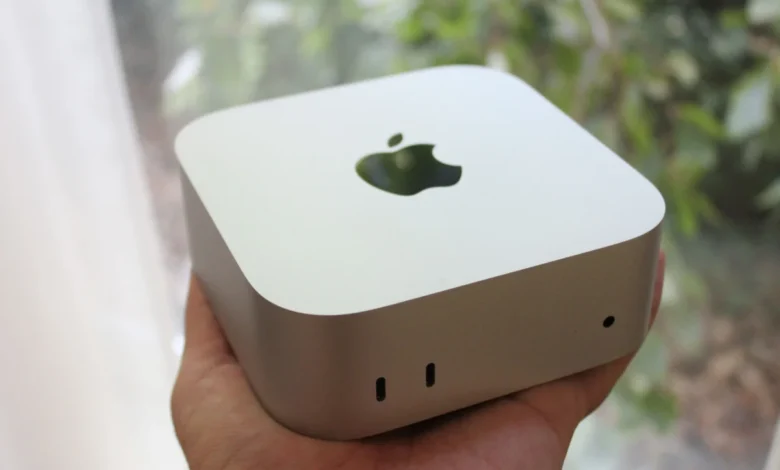
The latest iteration of the Apple Mac Mini marks a significant milestone in the evolution of desktop computing, signaling the industry’s transition into a new era of 2-nanometer silicon fabrication. By integrating the M6 chip, Apple has sought to refine the balance between compact form factor and high-performance throughput. While the exterior design remains a familiar silhouette in the landscape of small-form-factor (SFF) PCs, the internal architecture represents a calculated move to push the boundaries of transistor density and thermal management. This transition, which follows a rapid, iterative release cycle over the last several years, positions the Mac Mini not merely as an entry-level desktop, but as a robust machine capable of handling intensive professional workloads that were previously reserved for the Mac Studio or MacBook Pro lines.
A Chronology of Apple Silicon Evolution
To understand the significance of the M6, one must examine the rapid progression of Apple Silicon since the historic departure from Intel processors in 2020. The original M1, released in late 2020, introduced the world to the efficiency of unified memory architecture. By 2022, the M2 series expanded on this, followed by the M3’s transition to a 3-nanometer process in 2023. The M4, released as a bridge for AI-focused workflows, set the stage for the current M6.
The release of this M6-equipped Mac Mini follows a consistent biennial update cadence. However, the move to a 2-nanometer process is the most significant leap since the introduction of the 5-nanometer M1. Industry analysts note that this shift is not merely a marketing metric; it represents a fundamental change in how logic gates are arranged, allowing for the 46 billion transistors found on the M6 die. This density increase is the primary driver behind the performance metrics observed in early benchmarks, marking a clear departure from the incremental updates seen in the M4 and M5 series.
Technical Specifications and I/O Versatility
The physical design of the Mac Mini maintains the legacy of the "well-built, compact mini PC" that has defined the product line for nearly two decades. The front panel remains clean, featuring two USB-C 3 ports capable of data transfer speeds up to 10 gigabytes per second, alongside a standard headphone jack and the discreet power indicator light. The rear I/O array serves as the primary hub for professional workflows, boasting three Thunderbolt 4 ports, an HDMI 2.1 port, and an Ethernet jack.
The capability to drive external displays has seen a notable upgrade. Users can now support up to two 5K 120-Hz external displays simultaneously—such as the Studio Display XDR or the BenQ 5K MA270S—or daisy-chain up to three 4K monitors. This connectivity suite is designed to accommodate the needs of creative professionals who require expansive screen real estate. However, the absence of a front-facing SD card slot remains a point of contention. While the Mac Studio includes this feature to assist photographers and videographers in rapid data offloading, Mac Mini users must continue to rely on external docks or dongles, a design choice that persists despite feedback from the prosumer community.
Ergonomics and the Power Button Controversy
A recurring subject of debate regarding the Mac Mini’s hardware design is the placement of the power button. Situated on the underside of the rear left corner, the button requires a specific tactile approach: tilting the unit to access the switch. While Apple’s design philosophy prioritizes aesthetic minimalism—ensuring that the front and sides of the device remain unbroken by hardware buttons—this placement has been criticized for its lack of accessibility.
In a professional environment, where the Mac Mini is often tucked into a rack or situated behind a monitor array, this design necessitates a physical adjustment of the machine. When compared to the ergonomic standards of competing workstation PCs, the decision stands out as a unique design choice. While it does not impede the functional performance of the device, it represents a friction point for users who frequently power down their machines, highlighting a tension between Apple’s commitment to "clean" design and user-centric ergonomics.
Analyzing the M6 Performance Architecture
The transition to a 2-nm manufacturing process is the headline feature of the M6 chip. With 46 billion transistors, the M6 boasts a 35 percent increase in transistor density compared to its predecessors. This density allows for more efficient instruction processing and reduced power consumption, which is critical for a device with a compact chassis and limited thermal headroom.
The CPU architecture has been bolstered by the addition of two extra cores, bringing the total to 12. Benchmarking data reveals a 21 percent increase in single-thread performance and a 36 percent improvement in multi-threaded tasks compared to the M4 model. When measured against the M5 chip found in current MacBook Air models, the M6 Mac Mini displays a clear advantage in multi-threaded workflows, largely due to the sustained power delivery provided by the desktop-class power supply and active cooling system.
The presence of an active cooling fan is a vital differentiator. Unlike the fanless MacBook Air, the Mac Mini’s thermal management allows the M6 chip to sustain peak clock speeds for longer durations during heavy rendering or computational tasks. While the fan is audible during intensive processing, it ensures that the M6 maintains performance consistency, preventing the thermal throttling that often occurs in ultra-thin portable hardware.
Broader Implications for the Desktop Market
The M6 Mac Mini serves as a bellwether for the future of desktop computing. By democratizing 2-nanometer performance in a sub-liter volume chassis, Apple is setting a new performance-per-watt benchmark for the industry. The implications are significant for small-business owners, creative freelancers, and office environments that require high-compute capabilities without the space requirements of a traditional workstation tower.
The decision to avoid color options, opting instead for the classic aesthetic, suggests that Apple views the Mac Mini as a utility-focused, professional-grade tool rather than a consumer-lifestyle product. This is a stark contrast to the iMac line, which leans heavily into vibrant colorways and integrated display designs. The Mac Mini remains a modular component in a wider ecosystem, designed to be paired with third-party peripherals, monitors, and storage arrays.
Future-Proofing and Market Positioning
As Apple looks toward the future, the M6 Mac Mini sets a high bar for what can be expected in the 2026-2027 fiscal cycle. The current model acts as a bridge; it satisfies the immediate need for increased compute power in AI-driven applications while maintaining the established form factor that users have come to rely on.
The absence of an integrated SD card reader and the continued use of the bottom-mounted power button remain the only significant ergonomic criticisms of an otherwise high-performing machine. From an engineering perspective, the M6 Mac Mini is a masterclass in thermal optimization and silicon density. For the average user, the gains in multi-threaded performance are substantial enough to warrant a consideration for those upgrading from M1 or M2-based hardware.
As the industry waits for the eventual release of the M6 MacBook Air, the Mac Mini remains the primary testbed for this new architecture. Its performance, connectivity, and compact design solidify its place as a cornerstone of the Apple ecosystem, effectively bridging the gap between the portable convenience of the MacBook and the power-intensive demands of the Mac Studio. Whether this architecture will continue to scale linearly remains to be seen, but the initial results from the M6 indicate that Apple’s commitment to internal silicon development remains the most significant competitive advantage in the desktop computing space.
Related posts: