The Intersection of Art and Code: How Diverse Skill Sets Drive WordPress Open Source Contribution

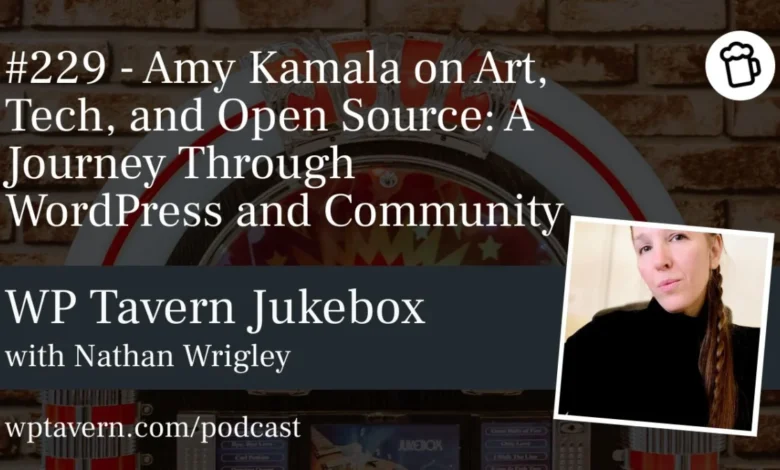
The evolution of modern web development has increasingly relied on a convergence of disparate disciplines. While the technical foundations of the internet are built on logic, binary, and algorithmic precision, the user experience—the critical interface between human and machine—is inherently rooted in artistic principles such as composition, color theory, and narrative flow. Amy Kamala, a long-time WordPress contributor and veteran of the tech industry, embodies this interdisciplinary approach, demonstrating how a background in fine arts can provide a unique competitive advantage in the complex landscape of open-source software development.
A Non-Traditional Path to Technical Leadership
Amy Kamala’s professional trajectory serves as a case study in the value of transferable skills. Holding a Master of Fine Arts from UCLA, her early career was centered on creative expression, sculpture, and video installation. However, as the digital landscape expanded, the tools required for artistic production—HTML, CSS, and eventually backend scripting—became inseparable from her creative process.
Her transition into the tech sector was pragmatic and rapid. Starting in 2015, she began at DreamHost in social support, a role that acted as a gateway to technical operations. Over the next decade, her career trajectory saw a series of rapid advancements: from technical support and live chat to product development, DevOps, and team management. She has held key roles at major industry players including InMotion Hosting, Pantheon, and Canopy Studios, in addition to contributing her expertise to local government digital infrastructure projects.
This "zigzag" career path, as Kamala describes it, was not a product of rigid planning but rather an opportunistic response to emerging challenges. By integrating her understanding of visual composition with the logical demands of system architecture, she found that her ability to bridge the gap between design and development made her an asset in leadership roles, where she was tasked with managing both UI/UX designers and technical engineering staff.
The WordPress Ecosystem: A Chronology of Contribution
Kamala’s involvement in the WordPress project began in 2018, a period during which many hosting companies were actively formalizing their commitment to the open-source community. Her primary focus has been the WordPress Hosting Team, a collective dedicated to improving the performance and reliability of the platform for end-users across thousands of hosting environments.
- 2017–2018: The Hosting Team experiences a surge in institutional support as companies like DreamHost prioritize active contribution to the WordPress Core project.
- 2019: Kamala is elected as a team representative for the Hosting Team, a position she has held for six non-consecutive years.
- 2020: The COVID-19 pandemic reshapes the landscape of open-source contribution, moving all collaborative efforts to remote, asynchronous channels and accelerating the need for digital infrastructure stability.
- 2021–2022: Kamala expands her reach, participating in Core release squads and contributing to the Release Model Working Group to refine the software deployment lifecycle.
- 2023: A milestone year marked by a presentation at WordCamp Europe, which leads to her current role as a sponsored contributor via Elementor, a leading website builder platform.
Data and Infrastructure: The Role of Sponsored Contributors
The sustainability of the WordPress project relies heavily on the "Five for the Future" initiative, which encourages organizations to dedicate at least 5% of their resources to WordPress development. Kamala’s role is a direct beneficiary of this ecosystem. Currently sponsored by Elementor for 10 hours per week, her work highlights the shifting paradigm of open-source maintenance.
While companies often seek a return on investment through marketing, PR, and brand alignment, the reality of open-source contribution is often far more granular. It involves documentation updates, bug triaging, meeting facilitation, and mentorship. Data from the WordPress Make community indicates that for every developer writing new features, dozens of contributors are required to maintain documentation, support forums, and community governance. Kamala’s work as a team representative falls into the latter category, acting as the connective tissue that allows the project to scale.
The Philosophy of "Willingness to Fail"
One of the most profound aspects of Kamala’s contribution style is her advocacy for "failing publicly." In the high-stakes environment of global software development, the fear of making mistakes in front of thousands of peers can paralyze new contributors. Kamala argues that this fear is the primary barrier to entry for many potential volunteers.
Her philosophy centers on the idea that the WordPress community, which numbers in the tens of thousands of participants on platforms like Slack, is inherently supportive. By embracing the "stupid question"—a term used to describe the initial confusion every learner feels—she has managed to bypass the ego-driven resistance that often halts professional development. In her view, the technical community is not a monolith of experts, but a collaborative space where the audience is, in fact, rooting for the success of the individual.
Broader Implications for the Open Source Community
The integration of artistic mindsets into technical teams has significant implications for the future of software. As Artificial Intelligence and automation take over routine coding tasks, the human-centric skills of empathy, user experience design, and intuitive communication become more valuable.
Kamala’s career demonstrates that the "artist-turned-coder" possesses a unique ability to view software not merely as a series of functions, but as an experience. This perspective is critical for WordPress, a platform that powers over 40% of the web. If the platform is to remain accessible to non-technical users, it must be guided by people who understand the nuance of human interaction, not just the efficiency of the underlying code.
Official Responses and Community Governance
While organizations like Elementor and DreamHost provide the financial scaffolding for contributors like Kamala, the governance of WordPress remains decentralized. The role of a "Team Rep" is inherently diplomatic. It requires balancing the needs of corporate sponsors with the needs of the volunteer community, ensuring that the platform remains open and neutral.
According to community leaders, the success of the WordPress project is not measured by the speed of development, but by the health of its contributor ecosystem. By fostering an environment where individuals from non-technical backgrounds—like art, psychology, or the humanities—can find meaningful work, the community ensures its long-term viability.
Conclusion: The Future of Collaborative Development
The story of Amy Kamala serves as a template for the next generation of open-source contributors. It challenges the conventional wisdom that success in technology requires a linear, academic, or purely engineering-focused background. Instead, it suggests that the most effective contributors are those who are "force multipliers"—individuals who can synthesize information across different fields and who possess the social intelligence to navigate complex, distributed organizations.
As the WordPress ecosystem moves toward its next major iterations, the demand for contributors who can bridge the "logical-creative" divide will only grow. For those considering contributing to open source, the takeaway is clear: the technical barrier to entry is lower than perceived, and the value of a curious, empathetic, and persistent mindset is higher than ever. The future of the web will not be built by coders alone, but by those who understand the artistry of the experience they are creating for the global public.
Related posts: