The first episode of the Ads Decoded podcast dives into how marketers can leverage analytics and AI for better results.


The debut of the Ads Decoded podcast series marks a strategic pivot in how Google communicates its evolving advertising infrastructure to a global user base. Hosted by Ads Product Liaison Ginny Marvin, the inaugural season aims to bridge the communication gap between the architects of Google’s advertising platforms and the marketers tasked with deploying them. In the first installment, Marvin engages with Eleanor Stribling, Group Product Manager for Google Analytics, to dissect the shifting paradigm of data measurement in an environment increasingly dominated by artificial intelligence. This discussion arrives at a critical juncture as the advertising industry grapples with the transition from traditional, manual campaign management to automated, machine-learning-driven ecosystems.
The Evolution of Google Analytics in an AI-First Era
For years, Google Analytics functioned primarily as a tool for retrospective observation—a dashboard where marketers would analyze the past to inform future decisions. However, the integration of advanced machine learning models has fundamentally altered the utility of the platform. Stribling emphasizes that the current iteration of Google Analytics is no longer merely a repository for historical metrics but is designed to serve as an "activation engine."
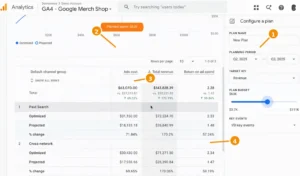
This shift requires marketers to move beyond passive reporting. By leveraging AI-driven predictive modeling, the platform can now anticipate user behavior, identify churn risks, and pinpoint high-value customer segments before a campaign is even fully deployed. The conversation highlights that the modern marketer’s role is evolving from a data observer to a data orchestrator, where the objective is to feed the AI high-quality signals that allow for autonomous, real-time campaign optimization.
Data Strength as a Competitive Prerequisite
A central theme of the episode is the concept of "data strength." In the context of AI-driven advertising, the output of any algorithm is inherently dependent on the quality of the input. Stribling notes that many businesses struggle with fragmented or "noisy" data, which hampers the ability of Google’s AI models to accurately predict conversions or optimize bidding strategies.
Data strength, as defined in the discussion, is the culmination of three core components: data accuracy, data completeness, and data relevance. Accuracy ensures that the events being tracked—such as purchases, sign-ups, or form completions—are mapped correctly to business objectives. Completeness involves ensuring that no critical customer touchpoints are missing from the funnel, while relevance refers to the strategic selection of data points that actually drive business growth rather than vanity metrics.
For marketers, achieving high data strength is no longer an optional technical task but a fundamental requirement for performance. When a brand feeds a Google Ads campaign high-quality, first-party data, the AI models can iterate more efficiently, leading to lower acquisition costs and higher return on ad spend (ROAS). Conversely, organizations that fail to audit their measurement setups risk "garbage-in, garbage-out" scenarios where machine learning algorithms optimize for the wrong signals, ultimately eroding the efficiency of the marketing budget.
Chronology of the Measurement Transition
To understand the urgency of this conversation, one must look at the recent timeline of Google’s analytics ecosystem. The industry witnessed a massive disruption with the sunsetting of Universal Analytics (UA) and the mandatory migration to Google Analytics 4 (GA4).
- October 2020: Google introduces Google Analytics 4, built on the foundation of the App+Web property, signaling a move toward event-based tracking rather than session-based tracking.
- March 2022: Google announces the formal deprecation of Universal Analytics, setting a hard deadline for the industry to transition.
- July 2023: Universal Analytics properties cease processing new data, effectively forcing the entire Google ecosystem into the GA4 model.
- 2024–Present: The focus shifts from the technical migration to the mastery of GA4’s machine learning capabilities and the integration of AI-driven insights into Google Ads.
This timeline reflects a broader, industry-wide trend toward privacy-centric, model-based measurement. As third-party cookies face increasing restriction, companies are relying more heavily on the conversion modeling capabilities inherent in Google Analytics to fill in the gaps left by missing user identifiers.
Industry Implications and Strategic Analysis
The implications of this shift are profound for both small-to-medium enterprises (SMEs) and large-scale advertisers. For smaller businesses, the automated features within Google Analytics represent a democratization of data science. Historically, only enterprises with dedicated data teams could utilize predictive analytics; today, those same capabilities are baked into the standard interface.
However, this ease of use brings a new set of challenges. When a system is automated, it can be opaque. If a campaign fails to perform, the marketer must understand the underlying data architecture to diagnose the issue. Stribling’s focus on "effective optimization" suggests that the most successful marketers will be those who can audit their setup to ensure that the AI is being directed by the correct business logic.
From a macroeconomic perspective, the reliance on AI for ad performance has changed the nature of advertising competition. Because AI models optimize for performance in real-time, the "speed to insight" has become a key differentiator. Brands that can automate the feedback loop between their CRM, their website analytics, and their ad spend will naturally outperform those that rely on manual, weekly manual optimizations.
Official Responses and Future Outlook
While Google has not released specific performance data for the Ads Decoded podcast, the series serves as a critical internal communication channel for the company. By featuring Product Managers like Eleanor Stribling, Google provides a layer of transparency that is often absent in the relationship between tech giants and their advertising clients.
Industry analysts suggest that this content strategy is a direct response to the complexity of the current digital marketing landscape. As the "black box" nature of AI increases, marketers have become increasingly anxious about their lack of control. By providing clear, actionable guidance on how to manage measurement, Google is attempting to foster trust in its automated products while simultaneously improving the overall quality of the ecosystem.
The conversation between Marvin and Stribling serves as a reminder that technology is only as effective as the human strategy behind it. For the coming year, the focus will likely remain on the refinement of first-party data strategies. With privacy regulations such as the GDPR and CCPA continuing to evolve, the ability to collect, process, and act upon data in a compliant and robust manner will be the defining factor for business growth in the digital age.
Conclusion: Preparing for the Future of Measurement
As the Ads Decoded series continues, it is expected to tackle further complexities, such as cross-platform attribution, privacy-preserving measurement, and the integration of emerging generative AI tools. For now, the takeaway from the first episode is clear: the era of manual, static reporting has concluded.
Marketers are encouraged to view their analytics setup not as a chore, but as a strategic asset. By ensuring that their data is robust, their events are accurately defined, and their measurement strategies are aligned with their long-term business goals, they can effectively harness the power of AI to drive measurable results. The transition to this new model of "activation-focused" analytics is the foundational step for any brand aiming to remain competitive in an increasingly automated marketplace. As the industry moves forward, the ability to bridge the gap between technical data integrity and strategic business outcomes will be the primary measure of a successful marketing organization.
Related posts: