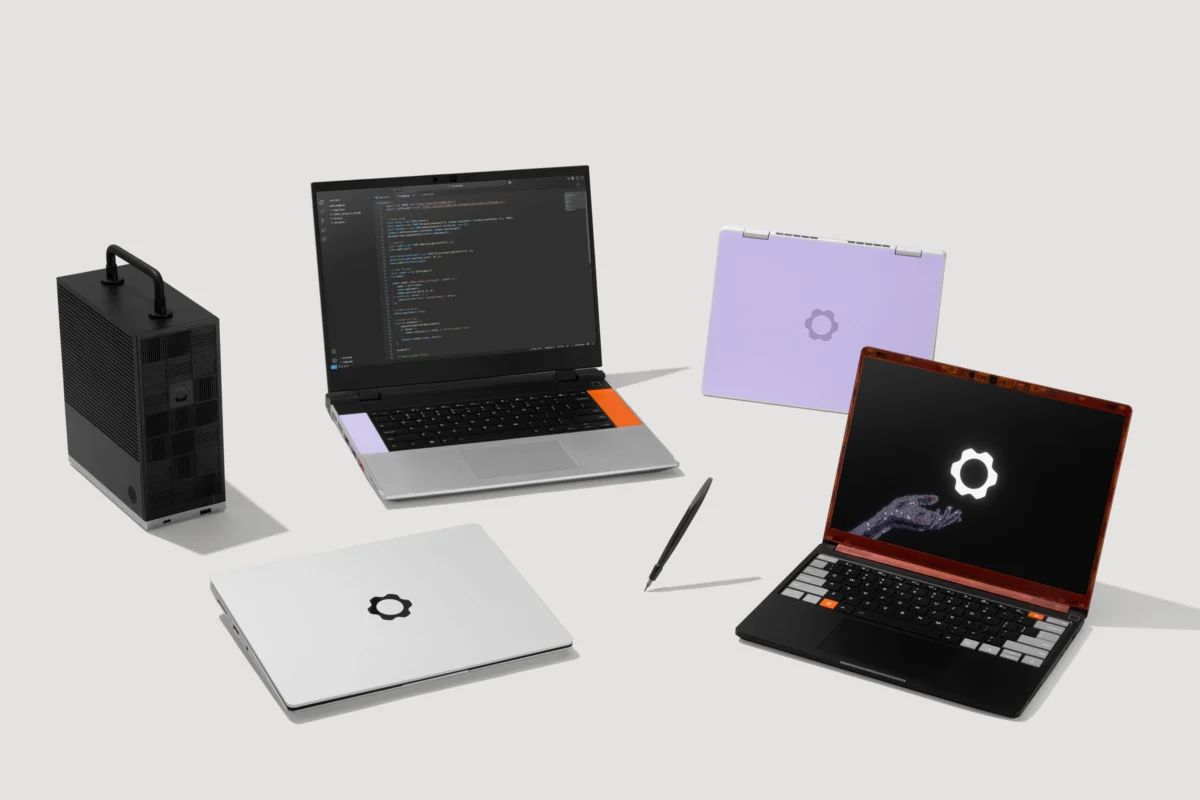
Framework, the San Francisco-based technology firm that has positioned itself as the primary disruptor in the consumer electronics market through modular design, officially announced the Framework Laptop 13 Pro during a high-profile press event in San Francisco today. The new flagship model represents a significant leap forward for the company, introducing Intel’s latest Core Ultra Series 3 processors, a high-resolution touchscreen, and a haptic touchpad, all while maintaining the brand’s core ethos of user-led repairability and hardware longevity. CEO Nirav Patel addressed a crowded room of developers and enthusiasts, framing the release not just as a product launch, but as a defensive move against an industry increasingly focused on software-as-a-service and non-repairable hardware.
The event opened with a pointed critique of the current state of the technology industry, specifically the rapid pivot toward artificial intelligence. Patel joked about launching "Framework AI," a move he clarified the company has no intention of making. Instead, he underscored the philosophical divide between Framework and other tech giants. Patel argued that the broader industry is "fighting for you to own nothing," referring to the trend of locked-down hardware and subscription-based ecosystems. Framework’s mission, by contrast, remains centered on the physical autonomy of the user. "We’re fighting for a future where you can own everything and be free," Patel stated, emphasizing that physical control over hardware is the ultimate form of digital sovereignty.
Technical Specifications and Performance Benchmarks
The Framework Laptop 13 Pro marks a strategic shift in the company’s internal architecture. While previous iterations offered a choice between Intel and AMD, the "Pro" designation for the 13-inch model is currently defined by its integration of Intel Core Ultra Series 3 processors. Framework described these chips as "insanely efficient," a claim supported by the company’s internal testing. According to official data, the efficiency of the new Intel silicon, combined with a higher-capacity battery, allows the Laptop 13 Pro to achieve more than 20 hours of battery life during 4K video streaming. This represents a nearly 150% improvement over the previous Framework 13 model, which typically averaged approximately eight hours under similar conditions.
The display has also received a substantial overhaul. The 13.5-inch panel now features a 3K resolution (2880 x 1920), placing it in direct competition with high-end tablets and workstations like the iPad Pro and Microsoft Surface Pro. Beyond resolution, the screen offers a peak brightness of 700 nits, making it one of the brightest displays in its class. To address the needs of professional coders and outdoor workers, the display is equipped with an anti-glare matte polarizer. Framework representatives noted that the 3:2 aspect ratio was retained specifically to maximize vertical screen real estate for programming and document editing, which remains the primary use case for their core demographic.

Pricing, Availability, and Modular Architecture
Framework continues its tradition of offering two distinct purchasing paths. The DIY Edition of the Laptop 13 Pro starts at $1,199, a price point that requires the user to assemble the internal components themselves. For users seeking a more traditional consumer experience, prebuilt units start at $1,499. The company confirmed that pre-orders are open as of today, with shipping expected to commence in June.
The defining feature of the 13 Pro remains its modularity. The chassis includes four Thunderbolt 4 interfaces that utilize Framework’s proprietary Expansion Card system. This allows users to hot-swap ports—such as USB-C, HDMI, DisplayPort, or MicroSD—depending on their immediate needs. Furthermore, Framework has doubled down on its promise of "cross-generation compatibility." Owners of the original Framework 13 can purchase the 13 Pro’s mainboard, display, or battery separately and install them into their existing chassis. This backward compatibility is a rarity in the laptop industry, where manufacturers typically change internal layouts every two to three years to encourage new hardware purchases.
Design Refinements and New Input Methods
While the exterior of the 13 Pro retains the familiar aluminum chassis of its predecessors, several refinements have been made to the user interface. This is the first Framework laptop to feature a haptic touchpad, moving away from the traditional mechanical click-pad. Haptic touchpads use vibration motors to simulate the sensation of a click, allowing for a more uniform input experience across the entire surface of the pad and reducing mechanical wear over time.
Additionally, the audio system has been upgraded to include Dolby Atmos-certified speakers, addressing a common criticism of earlier models regarding sound quality. The laptop also introduces a new "anodized graphite" color option, providing a sleeker, more professional aesthetic than the standard silver finish. In a move aimed at the developer community, the Laptop 13 Pro is the first in the lineup to be officially Ubuntu-certified, ensuring that all hardware components work out-of-the-box with the popular Linux distribution, though it remains fully compatible with Windows 11.
Updates to the Framework Laptop 16 and Ecosystem Expansion
The 13-inch model was not the only focus of the San Francisco event. Framework also announced a series of iterative updates for the Framework Laptop 16, the company’s larger, performance-oriented machine. The 16-inch model will now receive a haptic touchpad option and a new entry-level configuration featuring the AMD Ryzen 5 processor, aimed at making the larger form factor more accessible to budget-conscious buyers.

A significant addition to the 16-inch ecosystem is the preview of the OCuLink Developer Kit. OCuLink (Open Copper Link) is an interface that allows for high-bandwidth connections to external graphics cards (eGPUs). While the 16-inch model already supports discrete graphics modules, the OCuLink kit provides an alternative for users who want to use desktop-class GPUs for intensive rendering or gaming without the overhead of Thunderbolt protocols.
Framework also teased a future product: a wireless mechanical keyboard. This peripheral uses the same mechanical switch architecture found in the Laptop 13 and Laptop 16 but is housed in a standalone chassis. It can be used via a wireless dongle, allowing users to control their laptops from a distance—a setup often used for home theater PCs or "couch gaming." Interestingly, Framework has invited the community to participate in the keyboard’s development by utilizing ZMK, an open-source keyboard firmware. This move reinforces the company’s commitment to open-source hardware and community-driven innovation.
The Right to Repair Context and Industry Implications
The launch of the Framework Laptop 13 Pro comes at a pivotal moment for the "Right to Repair" movement. Legislators in various US states and the European Union have recently passed laws requiring manufacturers to make parts, tools, and manuals available to consumers. Framework has long been the poster child for this movement, achieving a perfect 10/10 repairability score from iFixit for its previous models.
By introducing a "Pro" model that competes directly with the specifications of the MacBook Pro and Dell XPS 13, Framework is attempting to prove that high performance and sleek design do not have to come at the cost of repairability. Industry analysts suggest that if Framework can successfully scale its production and maintain its modular promises, it could force larger OEMs (Original Equipment Manufacturers) to reconsider their "planned obsolescence" business models.
The environmental impact of this modular approach is also significant. According to the Global E-waste Monitor, the world generated 62 million metric tons of electronic waste in 2022, a figure projected to rise by 32% by 2030. Framework’s model, which encourages upgrading individual components (like a mainboard) rather than replacing an entire machine, directly counters the e-waste crisis. If a user can keep the same chassis and screen for a decade while only upgrading the processor, the carbon footprint of their computing life is drastically reduced.

Conclusion and Future Outlook
"We took six years of learning how to build the most repairable and upgradable computers on the planet and brought this one to a new level of refinement," Nirav Patel said during his closing remarks. "It’s the ultimate expression of our vision."
The Framework Laptop 13 Pro represents a maturation of the company. It moves Framework from a niche provider of "tinker" laptops to a serious contender in the premium laptop market. By addressing previous weaknesses—such as battery life, display brightness, and audio quality—while maintaining its unique modular architecture, Framework is positioning itself as a viable alternative for professionals who are tired of the disposable nature of modern electronics. As the company prepares to ship the first units in June, the tech industry will be watching closely to see if this modular dream can maintain its momentum in an era increasingly dominated by integrated AI and cloud-based computing.