The Critical Necessity of Modernizing PHP Versions to Safeguard the WordPress Ecosystem

The stability and security of the global web infrastructure rely heavily on the underlying technologies that power content management systems. WordPress, which currently powers over 43% of all websites on the internet, is built primarily on the PHP programming language. While the platform has historically prioritized backwards compatibility to ensure a seamless experience for a diverse user base, this commitment has inadvertently created a significant security debt. As of 2024, a substantial portion of the WordPress ecosystem remains tethered to end-of-life (EOL) versions of PHP, specifically the 7.x branch, which ceased receiving official security support years ago. This reliance on legacy code has emerged as a primary vector for automated cyber-attacks, prompting industry experts to call for a systemic shift toward modern development practices and server-side standards.
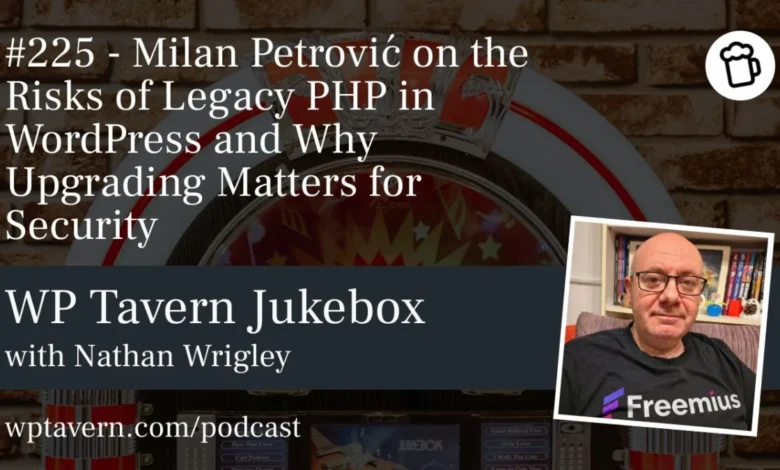
The discourse surrounding this technical debt took center stage at the recent WordCamp Europe, one of the largest gatherings of WordPress professionals, developers, and hosting providers in the world. Milan Petrović, a seasoned developer and contributor within the WordPress ecosystem since 2007, delivered a seminal presentation titled "Secure by Design: Hardening Plugins with PHP 8.x." His session aimed to bridge the gap between the perceived convenience of legacy support and the stark reality of the modern threat landscape, where outdated server environments serve as an open invitation to malicious actors.
The Security Implications of Legacy PHP
The core of the issue lies in the life cycle of the PHP language. The PHP development team maintains a strict support schedule, typically providing active security patches for a version for two years after its release, followed by an additional year of security-only updates. Once a branch reaches its end-of-life date, no further security fixes are issued. PHP 7.4, which remains in widespread use across millions of WordPress installations, reached its final end-of-life milestone in November 2022.
According to research presented by Petrović, there are currently thousands of documented, open security vulnerabilities associated with legacy PHP versions that will never be patched by the official language maintainers. When a website continues to operate on these versions, it effectively functions with known, publicly cataloged security flaws. Because these exploits are automated—meaning they are executed by bots scanning the internet for unpatched servers—the size or popularity of a website is irrelevant to the risk. A small, personal blog is just as likely to be compromised as a large e-commerce site if both are running vulnerable software.
The Performance and Efficiency Dividend
Beyond the critical security imperative, the transition to modern PHP versions, specifically PHP 8.0 and above, offers tangible performance and operational benefits. Modern PHP releases are characterized by significant optimizations in the Zend Engine, the heart of the PHP language. These advancements result in lower memory consumption, faster execution times, and improved overall responsiveness.
Empirical data suggests that moving from PHP 7.4 to PHP 8.x can yield a performance increase of up to 50% for standard WordPress operations. This is not merely a theoretical gain; for hosting companies, this translates into increased server density, allowing them to host more websites on the same hardware while simultaneously reducing the carbon footprint and electricity consumption of their data centers. For the end user, the benefit is a faster-loading website, which is a critical factor in search engine optimization (SEO) and user retention.
The Role of WordPress Core and Backwards Compatibility
The WordPress community faces a complex balancing act. The platform’s mission to "democratize publishing" has historically been achieved by supporting the lowest common denominator of hosting environments. By allowing users to run older, cheaper, and less secure server configurations, WordPress has achieved unprecedented market adoption. However, this policy now acts as a tether that prevents the platform from fully leveraging the modern features of PHP 8, such as strict typing, union types, and named arguments, which can fundamentally prevent common programming errors.
While WordPress developers can theoretically write code that utilizes modern PHP features, the core software must remain compatible with older versions to ensure that millions of existing sites do not break upon a core update. This creates a "stagnation loop" where developers are discouraged from modernizing their plugins for fear of losing customers who are stuck on legacy hosting environments.
Bridging the Gap: The Vulnerability Lab Plugin
To illustrate the tangible risks of legacy code, Petrović introduced a tool titled the "Vulnerability Lab" plugin. Designed specifically for developers and agencies, the tool allows users to test the same piece of code against different PHP versions. The results provide a visceral demonstration of how modern PHP acts as a "native shield" against exploits.
In controlled environments, the plugin displays how common security vulnerabilities—such as authentication bypasses and server-side request forgery (SSRF)—can be successfully executed on PHP 7.4, while being completely neutralized when the exact same code is run on PHP 8.x. By visualizing these differences, the plugin serves as an educational tool for agencies that need to explain the "why" behind the necessity of server upgrades to non-technical clients.
Industry Responses and Future Directions
The reaction from the development community at WordCamp Europe underscored a growing consensus: the status quo is unsustainable. While the transition to PHP 8.x presents challenges—such as the potential for older, unmaintained plugins to become incompatible—it is viewed as a necessary evolution.
Some managed hosting providers have already begun to take a proactive stance, mandating that their customers migrate to newer versions of PHP. This "forced migration" model is often met with initial friction but is widely regarded as the most effective method for ensuring site security. The prevailing sentiment among industry experts is that the WordPress ecosystem must accelerate its adoption rate. Many suggest that the platform should move toward a model where PHP 8.0 or 8.1 is established as the minimum required version for all new installations, with a clear timeline for sunsetting support for the 7.x branch entirely.
Implications for the Future of the Web
The broader implication of this technological inertia is a potential erosion of trust in the WordPress brand. If the platform is perceived as inherently less secure due to its reliance on outdated infrastructure, it risks losing market share to newer, more restrictive, or "SaaS-first" competitors that enforce strict environment standards by design.
Moving forward, the responsibility for this transition lies with a triad of stakeholders:
- Hosting Providers: They must continue to invest in educating their users and simplifying the migration process, while perhaps implementing clearer, more persistent warnings for customers on insecure PHP versions.
- Plugin and Theme Developers: They are encouraged to drop support for EOL PHP versions in their products. As more developers set PHP 8 as a requirement, the pressure on the rest of the ecosystem to modernize will increase.
- The End User: While the average user may view their website as a "static object" that does not require maintenance, the reality of the digital landscape is that security is a dynamic process. Just as physical assets require maintenance to prevent decay, digital infrastructure requires regular updates to defend against evolving threats.
In conclusion, the path toward a more secure WordPress ecosystem is not found in a single, radical change, but in a gradual, committed effort toward modernization. By embracing the performance and security advantages of modern PHP, the community can ensure that WordPress remains a viable, robust, and safe foundation for the web for the next two decades. As the technology continues to advance, the message from the development community is clear: the cost of inaction is simply too high to ignore.
Related posts: