Lachy Groom Backs Indian Startup Pronto with Twenty Million Dollar Investment as Valuation Surges to Two Hundred Million Dollars

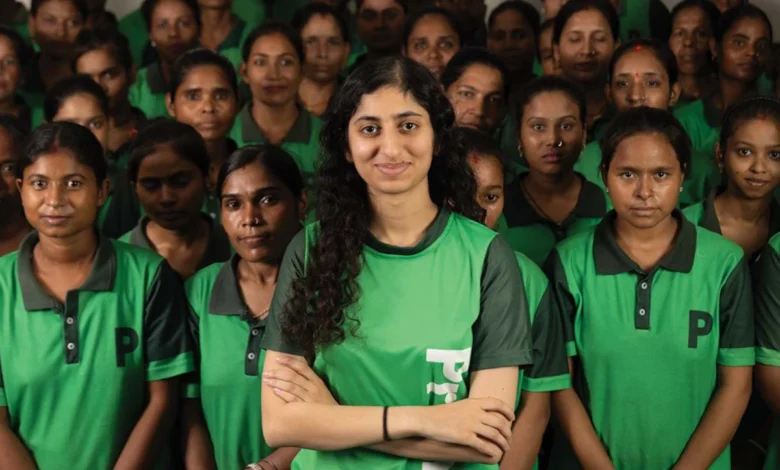
The landscape of India’s burgeoning on-demand home services sector has received a significant vote of confidence from one of Silicon Valley’s most influential solo capitalists. Lachy Groom, a former Stripe executive turned prolific investor, has finalized a $20 million investment in Pronto, a Bengaluru-based startup focused on formalizing and scaling domestic labor services. The deal, structured as an extension of Pronto’s Series B funding round, was reportedly catalyzed by a single twenty-minute meeting between Groom and the startup’s 24-year-old founder, Anjali Sardana. This capital infusion has propelled Pronto’s valuation to $200 million, effectively doubling its market cap in just over two months and signaling a period of hyper-growth for the domestic services industry in the world’s most populous nation.
The investment highlights a growing trend of high-profile international investors turning their attention toward India’s informal economy. By leveraging technology to organize a historically fragmented and unregulated workforce, Pronto aims to create a reliable infrastructure for household tasks ranging from cleaning to general domestic assistance. Groom’s decision to back the company so swiftly underscores the high degree of conviction in Sardana’s leadership and the scalability of the business model in a market ripe for digital disruption.
The Genesis of the Deal and Founder-Centric Investment
The partnership between Lachy Groom and Pronto was facilitated through a strategic introduction by Paul Hudson, the founder of Glade Brook Capital. Hudson, who has a history of backing high-growth ventures in both the United States and India, connected Groom with Sardana during her visit to San Francisco in early 2024. The synergy between the parties was immediate; Groom, known for his "founder-first" investment philosophy, found Sardana’s vision for the domestic labor market uniquely compelling.
Sardana’s background provided a robust foundation for her entrepreneurial journey. Before launching Pronto in 2025, she held positions at Bain Capital and the venture firm 8VC. These experiences offered her a dual perspective on institutional investing and the operational rigors required to scale a high-growth startup. According to Sardana, Groom’s investment style is heavily weighted toward the character and capability of the founder. She noted that approximately 95% of his decision-making process is indexed on the founder’s potential, with the remaining 5% focused on the total addressable market and the specific mechanics of the business.
Groom himself has lauded the operational discipline exhibited by the Pronto team. He noted that while many companies have attempted to organize adjacent categories in the service sector, most have struggled with the immense logistical and operational hurdles inherent in managing a large-scale, distributed workforce. Groom remarked that Pronto is operating at a level of sophistication rarely seen in the domestic labor space, particularly given the complexities of the Indian market.
Market Dynamics: The Rise of Instant Home Services in India
Pronto’s rapid ascent occurs against the backdrop of a seismic shift in urban Indian consumption patterns. As the middle class expands and the number of dual-income households rises in major metropolitan areas like Bengaluru, Mumbai, and Delhi, the demand for reliable, on-demand domestic help has skyrocketed. This shift has given rise to the "instant home services" category, a market that financial institutions are now monitoring closely.
A recent analysis by Bank of America suggests that the instant home services market in India is on a trajectory to become a $15 billion to $18 billion industry by the end of the decade. This growth is driven by the increasing professionalization of the gig economy and the integration of digital payment systems, which provide a layer of trust and transparency previously missing from informal labor arrangements.
Currently, the market is characterized by intense competition among three primary players:
- Urban Company: The established incumbent, which recently launched its "InstaHelp" vertical to compete directly in the high-frequency domestic task segment.
- Snabbit: A well-funded challenger that recently closed a $56 million funding round to expand its footprint.
- Pronto: The fast-moving specialist that is focusing on high-frequency, habit-driven usage to carve out a sustainable niche.
Market share estimates suggest that Urban Company’s InstaHelp and Snabbit each command approximately 40% of the current market, while Pronto holds a 20% share. However, Pronto’s growth rate and its ability to secure premium valuations suggest that the competitive landscape remains fluid.
Operational Scaling and Supply-Side Management
The core of Pronto’s value proposition lies in its ability to convert occasional service requests into a frequent, habit-based consumer behavior. The company’s data indicates that its top 10% of users account for roughly 40% of total bookings, highlighting a strong core of "power users" who rely on the platform for daily or weekly household management.
In terms of raw volume, Pronto has demonstrated remarkable scalability. The startup grew its daily booking volume from 18,000 to 26,000 in a period of just over 30 days. To meet this surging demand, the company has had to aggressively expand its supply side—the network of service workers. Between January and April, Pronto increased its registered worker base from 1,440 to 6,500.
Despite this 350% increase in the workforce, Sardana admits that demand continues to outpace supply. This imbalance presents a significant hurdle for the company: forecasting capacity and managing the logistics of a human-centric service. Unlike "quick commerce" (the delivery of physical goods), home services require the physical presence of a trained individual, making the "supply" far less elastic and more difficult to manage than inventory in a warehouse.
Strategic Context: The Influence of the "Zepto" Connection
The investment in Pronto is also notable for the web of connections between its backers and other high-growth Indian startups. Both Paul Hudson of Glade Brook Capital and Lachy Groom have been early and significant backers of Zepto, the Indian quick-commerce giant that recently reached a $7 billion valuation.
The success of Zepto has provided a blueprint for how hyper-local logistics and rapid delivery can capture the Indian consumer’s wallet. Investors are now betting that the same logic can be applied to services. If Zepto proved that Indians would pay for 10-minute grocery delivery, Pronto is betting they will pay for 20-minute domestic help.
Furthermore, Groom’s involvement in other cutting-edge ventures, such as the robotics startup Physical Intelligence, suggests he sees a long-term convergence between labor, automation, and platform-based management. By backing Pronto, he is securing a foothold in the human-led labor market of today, which may eventually serve as the data foundation for automated home services of the future.
Challenges and the "Burn-Heavy" Road Ahead
While the growth metrics are impressive, the path to profitability in the on-demand service sector is fraught with financial risk. Industry analysts expect the category to remain "burn-heavy" for the next two to three years. This is due to several factors:
- Customer Acquisition Costs (CAC): Aggressive pricing and marketing are required to lure users away from traditional, word-of-mouth domestic help arrangements.
- Worker Retention: In a competitive market, startups must offer incentives, insurance, and better pay to prevent workers from migrating to rival platforms or returning to the informal sector.
- Operational Overheads: Managing thousands of mobile workers requires a massive investment in middle-management technology and local hubs.
Pronto’s strategy to mitigate these costs involves focusing on "repeat usage." By becoming an indispensable part of a household’s daily routine, the company hopes to lower its long-term CAC and increase the lifetime value (LTV) of its customers. The $20 million from Lachy Groom provides the necessary runway to continue this aggressive expansion while the company fine-tunes its unit economics.
Conclusion and Future Outlook
Lachy Groom’s $20 million investment in Pronto represents more than just a capital infusion; it is a signal that the "Silicon Valley playbook" is being applied with full force to India’s service economy. By doubling its valuation in two months, Pronto has set a high bar for its competitors and heightened expectations for the entire sector.
As the company scales toward the $15 billion market opportunity projected for 2030, the focus will shift from mere user acquisition to operational sustainability. For Anjali Sardana and her team, the challenge will be to maintain the "operational discipline" that Groom praised while navigating the volatile socio-economic landscape of urban India. If Pronto can successfully bridge the gap between the massive demand for domestic help and the need for a dignified, organized supply of labor, it may well become the definitive platform for the Indian household in the digital age.
The deal also cements Lachy Groom’s status as a pivotal figure in the cross-border investment pipeline between San Francisco and Bengaluru. As more solo investors and boutique firms bypass traditional multi-stage VC processes to back founders directly, the speed of innovation in emerging markets is likely to accelerate, turning 20-minute meetings into $200 million milestones.