Riding Horses on the Highway: Why Modern Google Ads Mandates an AI-First Maturity Framework

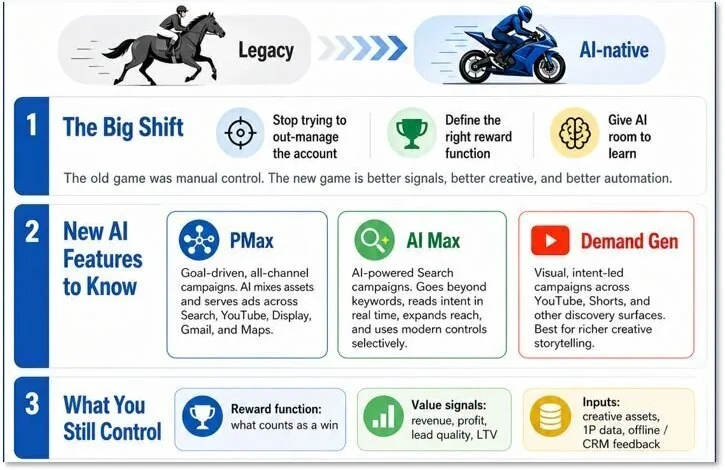
The evolution of digital advertising over the past decade has transitioned from a manual, human-heavy operational model to a machine-learning-dominated ecosystem. Yet, a significant portion of marketing agencies and corporate search teams continue to operate legacy strategies that resemble archaic methods in a modern landscape. This friction between traditional tactics and artificial intelligence automation has prompted industry experts to develop diagnostic frameworks, such as the Google Ads maturity model, designed to evaluate whether enterprises are genuinely prepared for an automated future.
Background and Context of Platform Evolution
For years, search engine marketing was defined by meticulous human intervention. Practitioners spent countless hours adjusting exact match keywords, setting manual bid modifiers by device, and restructuring accounts to micro-targeted granularities. However, major digital advertising platforms, led primarily by Google and Meta, have progressively integrated machine learning algorithms to automate these exact functions.
Platforms argue that modern consumer intent is too complex, fragmented, and fast-moving for human manual management. Consequently, automated solutions have shifted from experimental features to core infrastructure. Despite this industry-wide pivot, many marketing professionals remain entrenched in legacy habits. Agencies often validate their billable hours by implementing micro-adjustments multiple times a day—a practice that analysts argue runs counter to algorithmic optimization and often diminishes overall campaign profitability.
Core AI Offerings and Ecosystem Shift
To understand the necessity of an updated operational framework, companies must evaluate the primary automated campaign structures currently dominating the digital advertising landscape.
Google’s Performance Max (PMax) represents the shift toward a unified, automated campaign type. Advertisers provide core business objectives, budgetary constraints, and a repository of creative assets—including text, images, videos, and logos. The underlying artificial intelligence then dynamically mixes and matches these components to deliver contextual advertisements across search results, YouTube, display network sites, Gmail, and Google Maps.
Similarly, AI Max functions as an automated, search-exclusive campaign architecture that eliminates traditional human constructs such as rigid brand versus non-brand segmentation and explicit match types. Instead, AI Max evaluates user intent in real time, expanding audience reach beyond statically typed keywords to capture relevant search queries dynamically. Demand Gen campaigns complement these offerings by utilizing predictive intelligence to distribute visual media assets across engaging platforms like YouTube Shorts.
Across all these architectures, human responsibility has fundamentally shifted. Rather than executing tactical adjustments, the marketer’s role is to control the reward function—defining what constitutes a successful conversion or business outcome—and feeding the algorithm comprehensive first-party data signals.
Structuring the Maturity Model: Capability and Depth
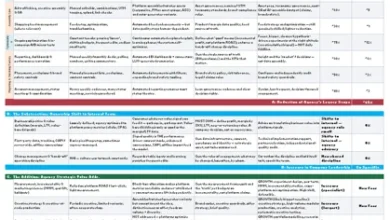
To combat the phenomenon of organizations paying lip service to artificial intelligence while continuing legacy micro-management, structured diagnostic tools have emerged. A comprehensive maturity model evaluates an organization across two critical dimensions: capability scoring, which measures technical sophistication on a scale from zero (legacy) to four (AI-native), and depth scoring, which calculates how widely those capabilities are deployed across the enterprise budget (ranging from zero percent to full execution default).
Industry analysts emphasize that organizations must evaluate depth before capability to prevent institutional bias or ego from inflating scores. By auditing the top eighty percent of ad spend rather than isolated pilot projects, businesses can establish an objective baseline. The framework typically partitions corporate operations into six essential dimensions: Measurement and Value Architecture, Search Operating Model, First-Party Data and Audience Intelligence, Surface Breadth and Campaign Mix, Creative and Landing Page Adaptability, and Operating Cadence and Governance.
Dimension Breakdown: Measurement and Value Architecture
The foundational pillar of any modern advertising strategy is measurement architecture, carrying the heaviest weight in diagnostic evaluations. Automated systems optimize exclusively toward the signals they receive. If an organization measures success using superficial proxies such as page views, general session durations, or undifferentiated leads, the machine learning algorithms will aggressively optimize for low-quality volume rather than genuine business profitability.
A mature measurement architecture integrates enhanced conversions, data-driven attribution models, and offline conversion imports or Customer Relationship Management (CRM) feedback loops. This ensures that bidding algorithms are dictated by true economic indicators, such as lifetime value, actual revenue, or closed-won sales metrics, rather than raw click counts.
Dimension Breakdown: Search Operating Model
The second major dimension focuses on the search operating model. Legacy operations are characterized by Manual Cost-Per-Click (CPC) bidding, granular device modifiers, and an obsession with exact-match keyword structures. In contrast, a modern, AI-integrated operating model relies on smart bidding strategies, broad-matching logic, responsive search ads, and full utilization of automated platforms like AI Max.
Rather than viewing algorithmic controls as a loss of power, mature organizations utilize governance controls selectively—such as brand exclusions and location-of-interest parameters—while allowing the machine learning infrastructure to manage auction-by-auction intent matching.
Broader Industry Implications and Strategic Pivot
The transition toward an automated, AI-first ecosystem carries profound implications for digital marketing labor markets and agency business models. Historically, agencies justified retainer fees through sheer volume of manual labor: constant keyword pruning, daily bid adjustments, and extensive reporting spreadsheets.
As artificial intelligence absorbs these mechanical responsibilities, the value proposition of marketing professionals is shifting toward strategic oversight, data hygiene, creative asset development, and defining accurate business reward functions. Enterprises that fail to adapt risk operating at a severe competitive disadvantage, as manual workflows cannot match the speed, scale, and multi-signal processing capabilities of modern neural networks.
Ultimately, industry experts suggest that organizations achieving high maturity scores—typically crossing established benchmark thresholds into advanced tiers—experience dramatic efficiency gains. By surrendering the illusion of human superiority in auction-level management and focusing instead on feeding algorithms superior data and creative inputs, businesses can unlock significant improvements in return on ad spend, transforming digital marketing from an operational chore into a streamlined, high-yield growth engine.
Related posts: