How to Build a High-Engagement Private Members-Only Community Using PeepSo and WordPress

The landscape of digital community management has undergone a significant transformation as content creators and business owners shift away from fragmented social media platforms in favor of self-hosted, private environments. While traditional WordPress configurations have historically relied on "patchwork" plugins—typically one to manage the entry gate and another to manage the internal infrastructure—this often results in a disjointed user experience that feels more like a restricted data repository than a dynamic social space. PeepSo has emerged as a consolidated solution that integrates social networking capabilities directly into the WordPress core, allowing for a seamless transition from a public-facing site to a secure, private community.

The Shift Toward Sovereign Digital Spaces
Recent industry data suggests that community-led growth is becoming a cornerstone of sustainable business models. According to industry reports from platforms like G2 and Capterra, the demand for community-management software has increased by approximately 22% annually since 2022. This trend is driven by a desire for data ownership, reduced reliance on third-party algorithms, and the ability to monetize content directly without platform-imposed fees. By moving a community to a self-hosted WordPress environment, administrators retain full control over user data, moderation policies, and the architectural design of their interaction spaces.
The fundamental challenge with early WordPress community setups was the lack of synergy between membership plugins and social features. Users often reported that the "gatekeeper" plugins—designed to restrict access—frequently conflicted with social plugins meant to facilitate engagement. PeepSo addresses this by building the community architecture from the ground up, with features such as activity streams, group dynamics, and private messaging functioning as native components rather than external additions.

Chronology of Implementation
Building a robust, private community on WordPress typically requires a sixty-minute investment of time for the core structure, with additional time allocated for the integration of payment gateways and custom role management.
- Initial Deployment (Minutes 0–15): The process begins with the installation of the PeepSo Foundation plugin. Upon activation, the built-in setup wizard automatically configures essential pages such as user activity feeds, member directories, and profile dashboards. This wizard serves as the foundation for the community’s first 90 days, ensuring that the necessary infrastructure is present from day one.
- Security and Access Configuration (Minutes 15–30): Once the core is established, the focus shifts to account security. Administrators must define the registration flow, balancing stringent security requirements—such as email verification and administrative approval—against the need for a seamless user experience to prevent registration drop-offs.
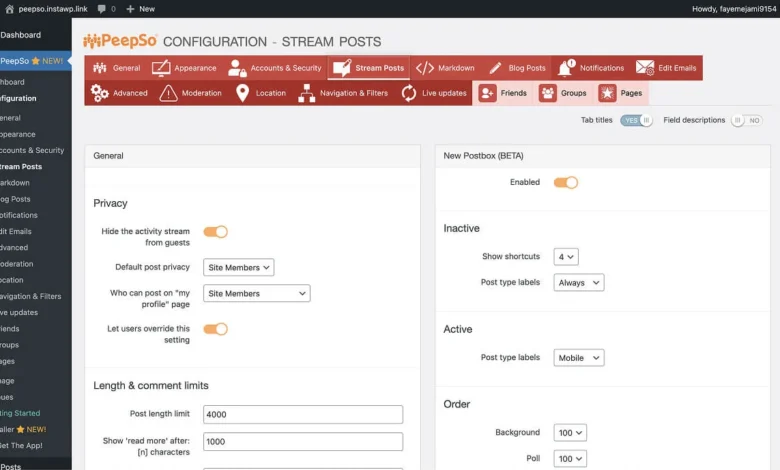
- Engagement Infrastructure (Minutes 30–45): The activity stream is the engine of the community. Administrators configure which media types (videos, GIFs, links, or polls) are permissible. During this phase, the creation of initial "rooms" or groups occurs. It is recommended to launch with three to four thematic groups to focus engagement rather than diluting activity across too many channels.
- Role-Based Access and Testing (Minutes 45–60): The final step before launch involves testing the user journey from the perspective of an unregistered visitor and a standard member to ensure the "private" configuration is functioning correctly.
Technical Analysis of Member Access Controls
A critical component of any private community is the ability to segment members based on their engagement level or subscription status. PeepSo’s "User Limits" feature provides a granular approach to this requirement. By leveraging the standard WordPress user role system, administrators can define specific permissions for different tiers of users. This capability allows for the implementation of "earned access," where members can be rewarded with elevated privileges—such as the ability to create groups or share specific media types—as they contribute more to the community.

This system functions as a precursor to formal monetization. By establishing these tiers, an administrator can easily transition from a free, invite-only community to a paid subscription model. When paired with the Paid Memberships Pro (PMPro) plugin, these WordPress roles map directly to payment tiers, ensuring that a user’s access level is automatically adjusted based on their subscription status.
Implications for Monetization and Sustainability
The integration of payment gateways like Stripe and PayPal via the PMPro-PeepSo ecosystem offers a scalable pathway to revenue generation. Unlike third-party membership platforms that charge a percentage of revenue, a self-hosted WordPress site allows the owner to retain 100% of the subscription income, minus standard payment processor fees.

Market analysis indicates that community monetization is increasingly shifting toward tiered membership models. By utilizing the "Roles for Membership Levels" add-on, site owners can create complex ecosystems where VIP tiers gain access to exclusive content, private groups, or specialized support, while entry-level members maintain baseline access. This tiered structure not only stabilizes monthly recurring revenue but also fosters a sense of prestige within the community, encouraging long-term retention.
Strategic Considerations for Community Architects
When configuring the activity stream, administrators are cautioned against over-notifying members. Research into user engagement patterns suggests that excessive push notifications—whether on-site or via email—can lead to "notification fatigue," eventually causing users to disable alerts or disengage from the platform entirely. Therefore, the most successful communities implement a "sensible defaults" approach, notifying users only of high-priority interactions such as direct mentions, private messages, or replies to their own content.

Furthermore, the choice of required profile fields at the point of registration acts as a significant lever for community quality. While collecting data is beneficial for segmenting audiences, every mandatory field acts as a barrier to entry. Industry best practices suggest limiting registration to two or three essential fields, allowing members to flesh out their personal profiles at their own pace once they have been accepted into the fold.
Broader Impact on the Digital Creator Economy
The move toward self-hosted social environments is a direct reaction to the volatility of social media giants. When a community is built on a third-party network, the owner is subject to sudden changes in terms of service, algorithm updates, or account bans, any of which can effectively destroy the community overnight. By hosting a community on one’s own domain, the owner exercises total sovereignty over their intellectual property and their direct line of communication with their audience.

This architectural shift also impacts data privacy. In an era of increasing GDPR and CCPA compliance requirements, holding user data on a private, self-hosted WordPress site allows for more transparent data handling practices. Administrators can guarantee that member data is not being mined for advertising purposes by the platform provider, a major selling point for high-intent, professional, or niche communities.
Ultimately, the successful implementation of a private community is not merely a technical task but a strategic one. By selecting tools like PeepSo that offer both flexibility and structural integrity, creators can focus on the human element of their community—the conversations, the connections, and the shared knowledge—secure in the knowledge that the digital infrastructure supporting them is robust, private, and fully under their command. The question that remains for every administrator is not just how to build the room, but who the room is intended for, and how those members will contribute to the evolving identity of the space.