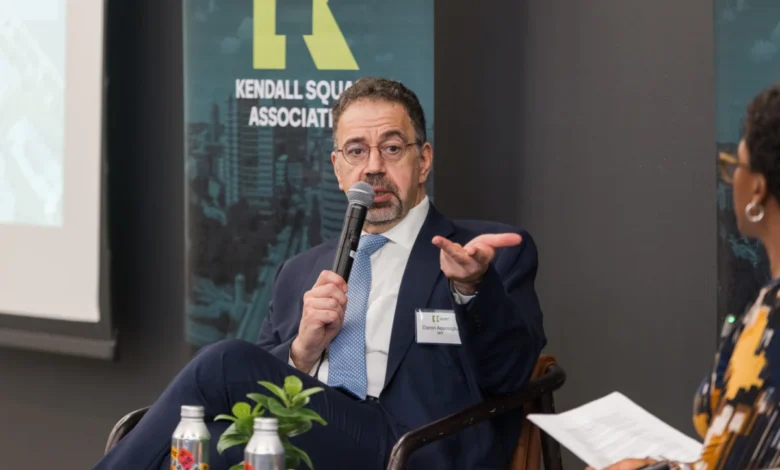
Kendall Square in Cambridge, Massachusetts, long celebrated globally as the densest square mile of innovation, biotechnology, and scientific discovery, recently shifted its gaze inward. Rather than solely spotlighting venture capital milestones, patent counts, or clinical trial approvals, the Kendall Square Association (KSA) dedicated its 18th Annual Meeting to examining the human ecosystem that makes these breakthroughs possible. Gathering local stakeholders, business leaders, elected officials, students, and neighborhood residents at The Engine—the prominent nonprofit startup incubator founded by the Massachusetts Institute of Technology (MIT)—the evening was defined by a singular, pressing theme: innovation in the context of community responsibility.
The event blended celebration with serious discourse. Attendees engaged in discussions regarding the rapid commercialization of artificial intelligence, the preservation of liberal democratic institutions, and the socio-economic obligations of the tech sector. Featuring musical performances by the Kendall Square Orchestra, elections for new KSA board members, and accolades for organizations driving positive community impact, the gathering served as a microcosm of Cambridge’s unique civic identity—one where cutting-edge scientific ambition intersects directly with municipal and social engagement.
The Foundation of Collaboration: A Legacy Rooted in Compromise
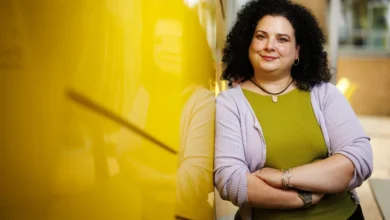
To understand the unique social contract of Kendall Square, one must look backward as well as forward. Cambridge Mayor Sumbul Siddiqui, addressing the packed crowd, anchored her remarks in the historical foundations of the district’s biotechnology prominence. She recalled a pivotal era in the 1970s when community residents, recognizing both the potential and the biosafety risks of emerging recombinant DNA research, collaborated directly with academic labs to forge a pioneering municipal regulatory framework.
This cooperative framework did not stifle innovation; rather, it established a model of public trust and safety that laid the groundwork for Kendall Square to eventually evolve into the premier life sciences hub on the planet. According to Mayor Siddiqui, this foundational spirit remains the district’s greatest asset.
"All these years later, I think that story captures what makes Kendall Square so special: It’s our willingness to work together even when we face big challenges," Siddiqui stated during her address. She emphasized that the district’s global reputation is not merely a product of elite universities or venture-backed laboratories, but rather a deeply ingrained culture of cross-sector collaboration involving nonprofits, municipal government, and everyday residents.
This sentiment was reinforced by Lee McGuire, Chief Communications Officer at the Broad Institute. McGuire directed the audience’s attention to a seminal 2009 economic and social report that analyzed the core drivers behind Kendall Square’s explosive growth. The report identified critical variables—including elite talent density, world-class educational proximity, robust institutional infrastructure, and a unified collective voice—that continue to sustain the district’s preeminence.
"This report was brilliant in that it captures so many of the special things that matter for a place like Kendall," McGuire noted. He issued a call to action for the KSA network to actively protect these intangible assets. "It is the job of the Kendall Square Association and all of us to help protect those things, make sure we name them, understand them, and see them as essential elements of making sure this community stays what it is no matter what happens. As long as there’s a good idea, this is the place that’s going to get that idea moving and scale it up to change the world."
The KSA Ecosystem: Balancing Corporate Giants and Local Character
Operating as a vital nonprofit nexus, the Kendall Square Association comprises more than 150 diverse entities. Its membership spans a broad spectrum of the local economy: massive multinational pharmaceutical corporations, prestigious higher education institutions, specialized research facilities, and the independent retail shops, cafes, and restaurants that inject daily vitality and neighborhood character into the district.
Beth O’Neill Maloney, Executive Director of the KSA, captured this ethos during her opening remarks, framing the district as a beacon of purpose-driven achievement.
"People come to Kendall Square to make the world better," O’Neill Maloney told the audience. "People come here to improve the human condition, people come here to solve big problems, and people come here to innovate for good."
This mission-driven focus is increasingly critical as Kendall Square navigates rapid physical and economic expansion. Over the past two decades, the district has transformed from a largely industrial rail yard and manufacturing zone into an architectural forest of glass-paneled research towers, luxury residential units, and urban green spaces. Yet, this meteoric rise has not been without growing pains. Housing affordability, income inequality, commercial rent pressures, and the socio-economic displacement of long-term Cambridge residents remain persistent challenges that local leaders and the KSA must navigate.
Artificial Intelligence and the Future of Work
While biotechnology and life sciences formed the bedrock of Kendall Square’s historical identity, the contemporary conversation increasingly centers on artificial intelligence, machine learning, and algorithmic automation. As AI technologies begin to permeate every sector—from drug discovery and materials science to finance and software engineering—concerns over workforce displacement have taken center stage in public discourse.
Addressing this anxiety directly, MIT Institute Professor Daron Acemoglu delivered a keynote address that challenged deterministic views of technological unemployment. Acemoglu, who was jointly awarded the 2024 Nobel Prize in Economic Sciences for his groundbreaking research into how societal institutions shape national prosperity, focused his remarks on harnessing AI to elevate human capital rather than rendering workers obsolete.
"How can we make AI not an enemy of work, but a tool for workers to expand their capabilities and build new expertise or do new things?" Acemoglu asked the audience. "The world is at a point in time where we need new innovations and new adaptations to growing challenges."
Acemoglu’s research, conducted alongside co-laureates Simon Johnson and James Robinson, emphasizes that technological progress is not an autonomous force operating independently of human choice. Instead, the trajectory of technology is shaped by the institutional choices made by societies. By steering AI development toward "machine usefulness"—augmenting human productivity, improving decision-making, and fostering new forms of expertise—rather than pure labor replacement, economies can avoid the pitfalls of jobless growth and deepening inequality.
Defending Liberal Democracy in an Era of Polarization
Beyond economic theory and technological disruption, Acemoglu used his platform at the KSA annual meeting to address the central thesis of his recent book, What Happened to Liberal Democracy?. In an era marked by rising populism, declining institutional trust, intense political polarization, and widespread voter disillusionment across Western democracies, Acemoglu offered a sobering yet hopeful assessment of the socio-political landscape.
He acknowledged candidly that liberal democracies have frequently fallen short of delivering their promised shared prosperity, pointing to structural economic stagnation for median-income households over the past half-century. However, he forcefully rejected fatalistic cynicism, arguing that liberal democratic governance remains humanity’s most resilient and successful framework for managing diversity and conflict.
"I believe liberal democratic institutions, together with the norms that support them, are one of the greatest human achievements," Acemoglu asserted. "It would be unthinkable for people who lived 300 years ago that we could live in societies consisting of hundreds of millions of people with diverse interests, different views, doing different things, and people still participate in politics and reach compromises, and we have state institutions that, by and large, actually provide services and do things for the people, and that we build opportunities for prosperity from which most people benefit while social freedoms are largely upheld."
For an audience deeply embedded in the mechanics of problem-solving and technological scale, Acemoglu’s message served as a timely reminder that the scientific and entrepreneurial revolutions incubating within Kendall Square rely fundamentally upon the stability, rule of law, and free exchange of ideas guaranteed by democratic institutions. Without a stable civic foundation, the long-term horizons required for deep-tech research and venture investment become untenable.
Broader Implications: The Responsibility of Innovation Hubs
The 18th Annual Meeting of the Kendall Square Association underscores a broader evolutionary trend occurring within elite innovation clusters globally. Historically, technology hubs operated under a technocratic assumption that mere innovation—the creation of new products, faster computing, or more effective therapeutics—was inherently beneficial to society.
Today, that presumption is increasingly scrutinized. Events like the KSA gathering signal an ideological maturation within premier innovation districts. Stakeholders in Kendall Square are recognizing that the concentration of immense intellectual and financial capital carries proportional civic responsibilities.
By proactively engaging with the societal implications of artificial intelligence, grappling with the health of democratic institutions, and preserving the tripartite collaboration between academia, private industry, and local government, Kendall Square is attempting to model a sustainable urban ecosystem. The challenge moving forward will be translating these high-level philosophical dialogues into tangible urban policies—ensuring housing access, mitigating economic polarization, and guiding technological advancement to serve the broader public good.
As the evening at The Engine concluded, the dialogue among business executives, municipal leaders, and community residents reinforced a shared conviction: that the ultimate metric of Kendall Square’s success will not be measured merely by market valuations or patent portfolios, but by its enduring capacity to improve the human condition while preserving the democratic community that makes innovation possible in the first place.