Meta upgrades Muse personal AI agent with real-time voice interaction and dynamic avatars to challenge industry leaders

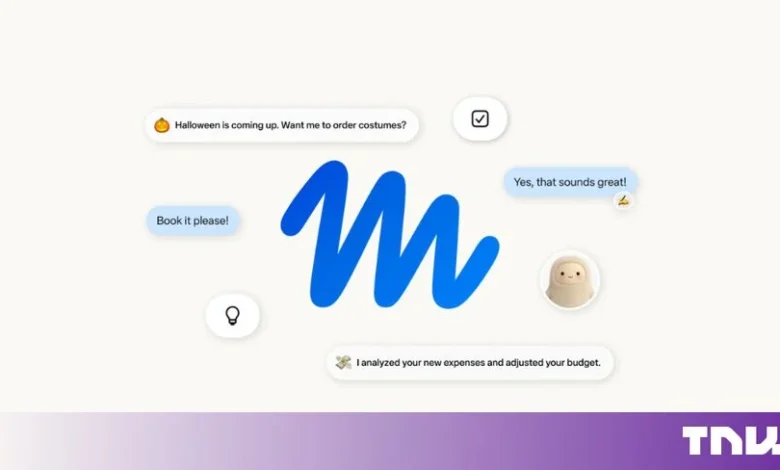
Meta has officially inaugurated a new chapter in human-computer interaction by integrating live, real-time voice capabilities into its flagship AI agent, Muse. This significant update, which transitions the platform from a text-centric utility to a conversational partner, arrives alongside the introduction of sophisticated, animated avatars designed to mirror the nuances of human speech. By enabling users to speak naturally—complete with the ability to interrupt the AI mid-sentence—Meta is positioning Muse as a direct competitor to the advanced voice modes offered by OpenAI’s ChatGPT, Google’s Gemini, and other emerging AI-first interfaces.
The feature is currently available to users across the Muse mobile application, the web interface, and macOS, though access is presently restricted to the United States. Users can trigger the conversational mode by selecting the phone icon located in the upper-right corner of the interface. This rollout represents a critical milestone in Meta’s overarching strategy to weave artificial intelligence into the fabric of daily productivity, moving beyond simple text queries toward a more intuitive, multisensory experience.
A Chronology of Meta’s AI Evolution
The arrival of Muse’s voice functionality is the culmination of a rapid development cycle that began in earnest earlier this year. In April 2026, Meta introduced the Muse Spark family of large language models, a suite specifically architected to prioritize human-centric interaction and task-oriented reasoning. Unlike general-purpose models that often struggle with agency, the Muse Spark architecture was engineered to handle complex, multi-step workflows, such as managing email correspondence, executing retail transactions, and controlling desktop applications on Mac devices.
Following the foundation laid in April, Meta hosted its annual Connect conference in September. It was during this event that the company first provided a public demonstration of the Muse Realtime Avatar technology, developed by Meta Superintelligence Labs. The demonstration showcased an AI capable of near-instantaneous facial animation, which synchronizes with speech patterns and emotional intonation. Since that September unveiling, the company has focused on refining latency and visual fidelity to ensure the experience feels fluid rather than robotic.
Technical Architecture and Avatar Fidelity
The avatars integrated into Muse are powered by the proprietary Muse Realtime Avatar model. According to Meta, this model is designed to analyze the user’s speech and the AI’s own generated responses to produce facial expressions, gestures, and micro-movements that align with the conversational context. Unlike earlier iterations of synthetic avatars that relied on pre-recorded clips, the Muse Realtime Avatar renders expressions dynamically while the user is still speaking, allowing for a back-and-forth dialogue that mimics human engagement.
Meta has prioritized user autonomy regarding the visual representation of the AI. Users can choose to engage in "voice-only" mode, keep a minimized avatar in a side window, or expand the animation to full-screen, immersive view. Furthermore, the company has expanded the auditory landscape of the agent, providing hundreds of unique voices that vary in tone, pitch, and personality. Looking ahead, Meta intends to provide users with even greater granular control, allowing individuals to shape the AI’s voice by providing descriptive prompts—requesting, for instance, a specific accent, a more formal cadence, or a faster pace of speech.
Competitive Landscape and Market Positioning
The decision to launch this feature comes amid a fierce race for AI dominance. The market for personal AI agents has become increasingly crowded, with rivals such as Runway and HeyGen establishing strong footholds in the synthetic media and avatar generation space. Meta’s internal testing suggests a competitive edge; company-provided data indicates that testers favored the responsiveness and emotional intelligence of the Muse avatars over those produced by industry peers. However, the company has issued a caveat, noting that current app-based demonstrations may differ slightly from the high-fidelity prototypes shown in lab settings, a move likely intended to manage expectations regarding network latency and processing constraints.
Meta’s investment in this technology is immense. The deployment of Muse is supported by a massive infrastructure buildout, most notably the $200 billion Hyperion data center project in Louisiana. This facility is part of a broader capital expenditure campaign aimed at securing the computational power necessary to train and host large-scale, real-time AI models. By investing heavily in its own hardware, Meta is attempting to reduce its reliance on third-party cloud providers, thereby gaining tighter control over the performance and security of its AI services.
Practical Applications and User Utility
Meta envisions Muse serving as more than a novelty; the company is positioning the tool as a multi-purpose assistant for both professional and personal tasks. Potential use cases cited by the company include:
- Brainstorming and Ideation: Acting as a sounding board for creative projects or business strategies.
- Logistical Planning: Coordinating complex travel itineraries or managing calendars in real-time.
- Professional Development: Serving as a simulation partner for high-stakes scenarios, such as practicing for a job interview or rehearsing a presentation.
- Background Productivity: Because Muse can continue executing tasks in the background while the user is engaged in conversation—such as walking or commuting—it functions as a hands-free executive assistant.
This capability to multitask while maintaining a conversation is a key differentiator. While many AI voice modes require the application to remain in the foreground to process requests, Muse is built to maintain state, allowing users to move between tasks without losing the thread of their ongoing conversation.
Future Expansion and Hardware Integration
While the current rollout is confined to software platforms, Meta has confirmed that it intends to bring these voice and avatar capabilities to its hardware ecosystem. Specifically, the company plans to integrate these features into its AI-enabled smart glasses and the "Muse Charm," a compact, wearable device that was teased during the September Connect event.
The Muse Charm represents a significant shift in Meta’s hardware strategy. By decoupling the AI agent from the smartphone, Meta aims to create an "always-on" companion that can assist users in the physical world without requiring them to pull out a screen. While the company has yet to provide a firm release date for these integrations, the progress made on the software side suggests that hardware-based AI agents are the next major frontier for the company.
Implications for the AI Industry
The integration of real-time voice and animation into Muse marks a pivotal turn in the industry’s trajectory. By lowering the barrier to entry for complex AI interaction—moving away from the "command-line" style of text input—Meta is democratizing access to high-level productivity tools.
Industry analysts observe that this move is a calculated response to the "agentic" shift in AI. As users grow accustomed to speaking to their devices, the quality of the interaction—specifically the latency of the response and the naturalism of the voice—becomes the primary metric for consumer loyalty. If Meta can maintain low-latency performance at scale, it could significantly erode the market share currently held by text-first AI interfaces.
However, challenges remain. The reliance on advanced data centers like Hyperion highlights the environmental and financial costs associated with these technologies. Furthermore, as AI agents become more "human" in their appearance and interaction style, the ethical considerations regarding deepfakes and the psychological impact of parasocial relationships with AI entities will undoubtedly require increased regulatory and public scrutiny.
As it stands, Meta is signaling that it does not intend to be a mere participant in the AI revolution. By synthesizing its work in language models, hardware, and data infrastructure into a single, cohesive user experience, the company is betting that the future of the internet is not found on a screen, but in a conversation. Whether the public is ready for this level of integration—and whether Meta can maintain this momentum as it scales to global markets—remains the central question for the coming year. For now, users in the US have a front-row seat to one of the most ambitious experiments in modern technology.