Media Heavyweights Descend on Capitol Hill to Push for Federal Crackdown on Unauthorized AI Web Scraping

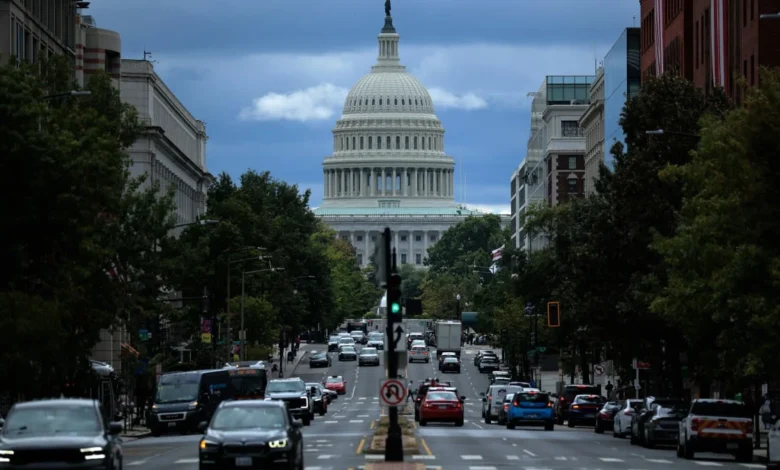
The landscape of modern digital publishing is facing an existential crisis, prompting top executives from some of the world’s most iconic media companies—including Condé Nast and Hearst Magazines—to converge on Washington, D.C. Their mission is to lobby lawmakers for the swift passage of rigorous federal legislation aimed squarely at curbing unauthorized artificial intelligence web scraping. Publications like Vogue, Vanity Fair, Esquire, and Cosmopolitan find themselves on the front lines of a high-stakes battle against technological disruption that threatens not only their long-term financial viability, but also the fundamental integrity of the open internet.
At the center of this legislative push is the Stealth Bot Prohibition Act, a bipartisan bill introduced in the House of Representatives. If enacted, this legislation would fundamentally alter how artificial intelligence developers harvest online data. Specifically, it would outlaw the deployment of "stealth bots"—unidentified or masked AI agents that systematically scrape and index website content without proper disclosure. Under the proposed framework, any entity deploying a bot for web scraping would be legally required to transparently identify itself and state the explicit purpose of its data collection to website publishers. Failure to comply would expose violators to significant civil penalties enforced by the Federal Trade Commission (FTC), alongside granting state attorneys general the legal authority to take direct enforcement action against illicit scrapers.
The legislative effort is heavily backed by the News/Media Alliance, a prominent trade nonprofit representing hundreds of publishers across the United States. Media executives argue that federal intervention has become an absolute necessity to level a playing field that has been heavily skewed by the meteoric rise of generative artificial intelligence. As AI-driven search engines, conversational chat interfaces, and automated discovery tools increasingly dominate web traffic, traditional publishers are seeing their referral traffic plummet while their proprietary content is harvested without compensation or consent.
The Rising Tide of Unauthorized Bot Traffic
The frustration among publishers is rooted in the sheer volume of automated web traffic currently overwhelming digital infrastructure. Industry leaders point out that existing technical defenses—such as robots.txt files, paywalls, and basic anti-scraping software—are entirely inadequate against sophisticated, malicious actors capable of dynamically disguising their digital fingerprints and spoofing user-agent strings.
Danielle Coffey, president of the News/Media Alliance, highlighted the severity of the crisis during the bill’s initial introduction. She emphasized that the digital ecosystem is currently drowning in predatory bot traffic that severely degrades publishers’ ability to serve their core audiences. According to Coffey, the industry is not inherently opposed to technological innovation, but rather demands basic transparency, accountability, and enforceable legal standards to rein in bad actors who operate under a veil of anonymity.
This sentiment was echoed by Debi Chirichella, president of Hearst Magazines, who characterized the Stealth Bot Prohibition Act as a vital, foundational step toward establishing a cleaner, more equitable internet. Hearst, which publishes widely read lifestyle and culture magazines such as Esquire, Elle, and Men’s Health, alongside numerous regional newspapers like the Houston Chronicle, has seen its journalistic output routinely vacuumed up by large language model developers without permission.
Roger Lynch, CEO of Condé Nast, took an even more direct aim at the AI sector. Lynch publicly accused artificial intelligence companies of deploying disguised bots to systematically scrape and misappropriate original journalism with absolute impunity and zero accountability. Condé Nast’s stable of publications—including Vogue, Vanity Fair, and The New Yorker—represents decades of high-value, deeply reported editorial content that has increasingly served as training fodder for commercial AI systems.
A Complex Paradigm: Lobbying for Regulation While Signing Licensing Deals
The aggressive lobbying campaign in Washington highlights a fascinating paradox at the heart of the contemporary media industry. While media conglomerates are fiercely advocating for federal oversight and stricter penalties against stealth scrapers, many of these exact same media heavyweights have simultaneously pursued lucrative commercial partnerships with the very technology companies they are seeking to regulate.
Over the past several years, the economic reality of declining digital advertising revenues has forced publishers to seek alternative monetization streams, leading to a wave of high-profile content licensing agreements between news organizations and AI developers. Rather than engaging in endless and costly copyright litigation, several major outlets chose to monetize their archives by licensing them directly for AI training and retrieval-augmented generation.
The chronology of these deals reveals a rapid consolidation of the AI-publishing marketplace:
- 2023 to Early 2024: Early pioneers such as the Associated Press, The Atlantic, and TIME broke ranks to ink content-sharing and licensing agreements with OpenAI. These early deals set a precedent for how legacy media could extract financial value from the AI boom.
- Late 2024: The partnership trend accelerated rapidly. The Guardian and Axios finalized multi-year licensing deals with OpenAI, while the Washington Post entered into an agreement that allowed ChatGPT to surface and cite its original daily reporting directly to users.
- January 2025: The Associated Press expanded its footprint in the artificial intelligence sector by signing its first dedicated AI licensing deal with Google. Concurrently, the AP maintained ongoing agreements with Microsoft, People Inc., and the USA Today Co.
- Recent Months: Meta entered the licensing arena later than its competitors, securing a multi-year content and training contract encompassing seven major publishers, including CNN and Fox News. Meanwhile, tech giant Amazon secured valuable content agreements with the New York Times, Condé Nast, and Hearst.
This web of partnerships demonstrates that while top-tier media companies with substantial negotiating leverage can carve out profitable arrangements, smaller independent publishers, regional newspapers, and niche digital outlets lack the resources to secure similar corporate deals. Consequently, these smaller entities are left uniquely vulnerable to unchecked scraping, making federal legislation like the Stealth Bot Prohibition Act an essential safeguard for the broader journalistic ecosystem.
Legal Battles Beyond Capitol Hill
The legislative push in Washington is occurring concurrently with an escalation in formal legal battles winding through federal courts. Media organizations and technology publishers are increasingly testing the boundaries of United States copyright law, arguing that the large-scale ingestion of copyrighted articles to train commercial generative AI models constitutes copyright infringement rather than fair use.
The stakes for the publishing industry were further underscored by actions taken by digital media entities themselves. Notably, Ziff Davis—the parent company of Mashable—filed a comprehensive federal lawsuit against OpenAI in April 2025. The legal complaint alleges that OpenAI systematically infringed upon Ziff Davis copyrights by utilizing its extensive digital archives to train, develop, and operate its artificial intelligence systems without authorization or financial compensation. This litigation mirrors similar high-profile lawsuits brought by other major content creators, including the New York Times, signaling that the legal definition of fair use in the age of generative AI will be fiercely contested in the courts for years to come.
Broader Industry Implications and Economic Fallout
The intersection of federal lobbying, legislative proposals, and copyright litigation points toward a profound structural transformation in the relationship between technology platforms and content creators.
As artificial intelligence systems evolve from simple text generators into autonomous agents capable of browsing the live web, synthesizing data, and executing complex tasks on behalf of users, the traditional economic model of the web is being severely disrupted. For decades, the foundational bargain of the internet relied on open access: publishers provided free or ad-supported journalism, and search engines directed human users back to publisher websites, driving the impressions and ad revenue necessary to sustain investigative reporting.
Generative AI bypasses this traffic loop entirely. By extracting facts, summaries, and direct answers from web pages and presenting them directly to the user within a chat interface, AI models reduce the incentive for users to click through to the original source. Without referral traffic or direct monetization, the economic foundation of independent journalism faces severe contraction.
By pushing for the Stealth Bot Prohibition Act, the News/Media Alliance and its members are attempting to reassert control over their digital domains. If passed, the legislation would force AI developers out of the shadows, mandating a formal acknowledgment of automated data collection and creating a legal pathway for publishers to negotiate or block unwanted extraction.
Whether Congress will act swiftly to pass the bill remains an open question, given the complex political landscape surrounding technology regulation and innovation. However, the unified front presented by executives from Hearst, Condé Nast, and other media giants makes it clear that the publishing industry is no longer willing to quietly watch its intellectual property harvested without a fight. The outcome of this legislative battle will fundamentally shape the economic and operational reality of digital publishing, determining whether the future of the internet rewards original content creation or incentivizes unchecked automated extraction.