Masayoshi Son Signals Shift Toward Global AI Governance Amid Record-Breaking $64.6 Billion OpenAI Investment

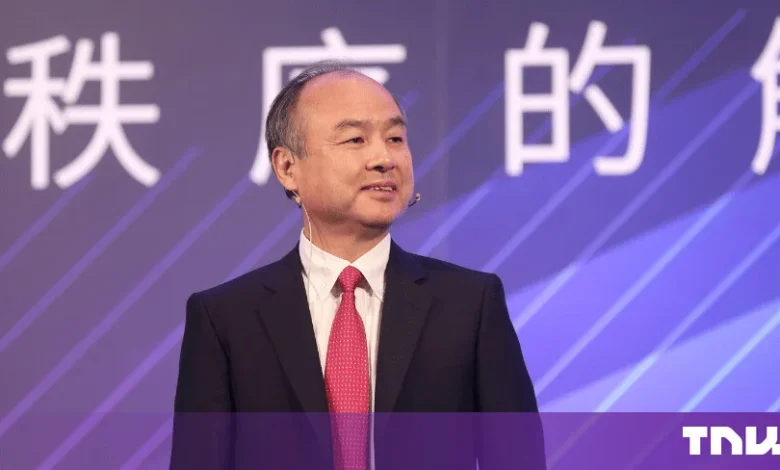
In a notable departure from his characteristic bullishness, SoftBank Group CEO Masayoshi Son has issued a rare, sobering warning regarding the unchecked proliferation of artificial superintelligence. Speaking in Kyoto this past Sunday, the high-profile financier—who has funneled an staggering $64.6 billion into OpenAI since 2024—asserted that if this transformative technology falls into the wrong hands, it could pose a “super dangerous” threat to global stability. His comments, delivered alongside U.S. White House science advisor Michael Kratsios, mark a significant pivot for an investor who has spent the better part of the last year vehemently dismissing concerns that the current AI boom is an economic bubble.
Son’s remarks were made during a high-level summit focused on the international oversight of advanced computing. His message was stark: “We don’t have any more luxury of having human fight against human.” According to Son, the rapid advancement of artificial intelligence necessitates an unprecedented level of international cooperation to establish trust and guardrails, ensuring that the technology serves as a tool for progress rather than a catalyst for conflict.
A Financial Heavyweight’s Growing Exposure
To understand the weight of Son’s words, one must look at the depth of SoftBank’s financial commitment to the sector. The firm finalized a $30 billion investment tranche earlier this month, solidifying its position as a primary backer of OpenAI. This capital infusion, which included a record-breaking $10 billion raised through a high-yield corporate bond sale just two weeks ago, brings SoftBank’s total stake in OpenAI to approximately 13%.
For the better part of two years, Son has been the primary evangelist for the AI-driven economy. In July, he projected that AI-related industries would account for roughly one-fifth of global economic output by 2040, a figure he now estimates at $46 trillion. Despite his recent cautionary note on safety, Son’s spending strategy remains aggressive. He continues to view the physical integration of AI as the next frontier, evidenced by SoftBank’s $200 million lead investment in Zurich-based Gravis Robotics in August and ongoing negotiations with Munich’s Agile Robots. Son anticipates that the transition of AI from digital environments to physical-world applications will accelerate significantly beginning next year.
The Kyoto Vision: A New Framework for Scientific Research
While Son addressed the existential risks of the technology, Michael Kratsios arrived in Kyoto with a forward-looking agenda centered on the practical application of superintelligence in scientific research. Kratsios, who leads the White House Office of Science and Technology Policy, introduced the “Kyoto Vision for a Golden Age of Science.”
The declaration envisions a future where autonomous, AI-driven robotic laboratories conduct hundreds of simultaneous experiments, drastically shortening the timeline for scientific breakthroughs in fields like medicine, materials science, and energy. Notably, the document utilizes the term “super intelligence” throughout, aligning with recent administrative directives from the White House, including a sweeping executive order signed just five days prior that formally adopts the terminology as the official U.S. government standard for advanced AI systems.
The Kyoto Vision received endorsements from 17 nations. The list includes the United Kingdom, Poland, Greece, Bulgaria, Cyprus, and two of Europe’s largest economies, Germany and Italy. Outside of the European sphere, the pact was joined by Argentina, Chile, Indonesia, Kazakhstan, and New Zealand. The notable absence of China from the list of signatories suggests a widening geopolitical divide regarding how the world’s leading powers intend to regulate and harness the potential of next-generation AI.
Navigating the Regulatory Landscape
The inclusion of six European Union member states in the Kyoto Vision is particularly significant given the current regulatory climate. These nations are currently operating under the framework of the EU AI Act, which began implementing strict labeling and transparency requirements in August. The intersection of the EU’s prescriptive, law-based approach and the more collaborative, aspirational language of the Kyoto Vision presents a complex challenge for international tech policy.
The Kyoto declaration itself is intentionally broad. It states that participating nations “endeavour to act” to secure the benefits of AI, a phrase repeated four times within the text. While the White House press office characterized these commitments as “pledges” and “firm commitments,” the text lacks the binding legal enforcement mechanisms typically found in international treaties. To date, none of the endorsing nations have contested the White House’s more robust interpretation of their participation, suggesting a tacit agreement to move toward closer alignment on AI security standards.
Implications of the Shift
Industry analysts observe that Son’s newfound caution is a pragmatic response to recent security breaches involving large-scale AI models. As these systems become more capable, the potential for misuse—whether through weaponization, cyber-espionage, or automated disinformation campaigns—has transitioned from theoretical risk to immediate concern.
The timing of Son’s comments suggests that the investment community is beginning to reconcile the massive capital inflows into AI with the reality that the technology’s speed of deployment is outpacing current security frameworks. By publicly advocating for international cooperation, Son may be attempting to preemptively shape a global regulatory environment that protects his massive investments while mitigating the systemic risks that could otherwise trigger a catastrophic market correction.
Chronology of Recent Developments
- August 2026: SoftBank leads a $200 million investment round in Gravis Robotics, signaling a shift toward physical-world AI application.
- August 2026: Mandatory labeling rules under the EU AI Act officially take effect for member states.
- Late September 2026: The White House issues an executive order officially adopting the term “super intelligence” for advanced AI systems.
- Early October 2026: SoftBank completes a $30 billion tranche of funding into OpenAI, utilizing a record-breaking $10 billion high-yield bond sale.
- October 4, 2026: Masayoshi Son delivers his warning on AI safety and the necessity of international cooperation in Kyoto.
- October 4, 2026: Seventeen nations endorse the “Kyoto Vision for a Golden Age of Science,” outlining a roadmap for AI-integrated research.
Fact-Based Analysis of the Path Forward
The convergence of massive private capital and state-level policy coordination in Kyoto underscores a fundamental truth about the current era of technology: the divide between private corporate interest and public security is narrowing. SoftBank’s $64.6 billion bet on OpenAI is not merely a financial play; it is a high-stakes gamble on the future of global infrastructure.
However, the efficacy of the Kyoto Vision remains to be seen. While the declaration provides a common vocabulary for governments to discuss AI development, it does not address the fundamental friction points of global AI competition, particularly the race for compute power and talent. As machines begin to act in the physical world—a transition Son predicts will begin in earnest next year—the reliance on soft, non-binding declarations may prove insufficient.
The path forward will likely require a move from “endeavoring to act” to concrete, verifiable mechanisms for global AI oversight. Whether the current coalition of 17 nations can maintain its unity in the face of the inevitable geopolitical tensions surrounding AI remains the defining question of the next decade. For now, Masayoshi Son’s pivot from pure financier to a proponent of controlled development signals that even the most aggressive proponents of the AI revolution are beginning to look toward the horizon with a newfound sense of urgency and caution.