Evolve your marketing with new AI tools to streamline workflows and accelerate business growth.

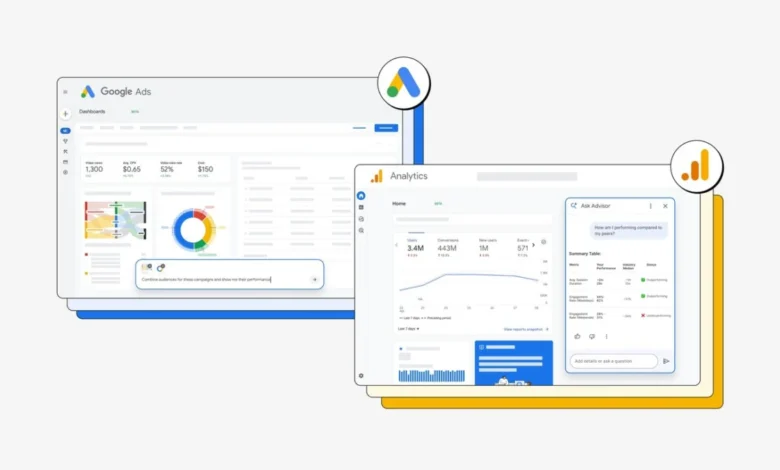
In an era where digital marketing complexity is outpacing human capacity for manual analysis, Google has announced a significant expansion of its agentic AI capabilities within the Google Ads and Google Analytics ecosystems. By integrating advanced machine learning—specifically the Gemini model architecture—into the core interface of its advertising and measurement platforms, Google aims to reduce the time-to-insight for marketers. This move represents a shift from passive data reporting to proactive, AI-driven strategic partnership, allowing businesses to move faster in highly volatile market environments.
The Evolution of Ask Advisor
The foundation of these new capabilities is the ongoing development of "Ask Advisor," Google’s in-product generative AI agent. First introduced to bridge the gap between raw data collection and actionable strategy, the tool was designed to act as a digital consultant for marketers who may lack the resources for deep data science teams.
Historically, digital marketing required a dual competency: technical expertise in data extraction and strategic agility in campaign execution. By embedding an agentic AI directly into the platforms, Google is effectively lowering the barrier to entry for high-level marketing analytics. The latest updates allow these agents to perform more than just retrieval tasks; they are now capable of synthesizing disparate data points into cohesive narratives that suggest specific business actions.
Real-Time Intelligence: The AI Overviews
One of the most notable technical shifts is the deployment of AI Overviews at the top of the Google Analytics homepage. For large-scale enterprises and SMBs alike, the challenge of "data fatigue" is profound. Analysts often spend hours sifting through dashboards to identify why a specific metric—such as conversion rate or session duration—has fluctuated.
The new AI Overviews provide a summarized executive brief of performance shifts since the user’s last login. This includes automated detection of seasonal sales spikes, traffic anomalies, and conversion funnel bottlenecks. The integration is seamless: if a summary identifies a trend, a single click allows the user to drill down into the Ask Advisor interface to interrogate the data further. By offering push notifications via email or phone, Google is moving the platform from a "pull" model—where the user must log in to seek information—to a "push" model, where the system proactively alerts the user to critical business events.
Contextual Personalization in Google Ads
The Google Ads homepage has undergone a parallel transformation. Recognizing that generic insights often fail to account for the nuances of specific business verticals, Google has introduced personalized insight cards. These cards function as a real-time command center, highlighting market opportunities, competitor behavior, and impression share fluctuations.
A key feature of this update is the conversational prompt box positioned above the insight cards. This allows marketers to move beyond pre-populated reports. For instance, a retail manager can query the system regarding the impact of specific competitor pricing on their own campaign impression share. The AI processes these natural language queries against real-time bid data and external market trends, providing a custom report that would have previously required complex manual data manipulation in secondary spreadsheet software.
The New Standard in Reporting: Dashboards and Visualization
Reporting has long been a bottleneck in marketing operations. The traditional process of exporting data to external visualization tools like Looker or Tableau is often slow and prone to errors. Google is now introducing "Dashboards" within Google Ads—with a forthcoming rollout to Google Analytics—that allow for the generation of complex visual reports through simple text prompts.
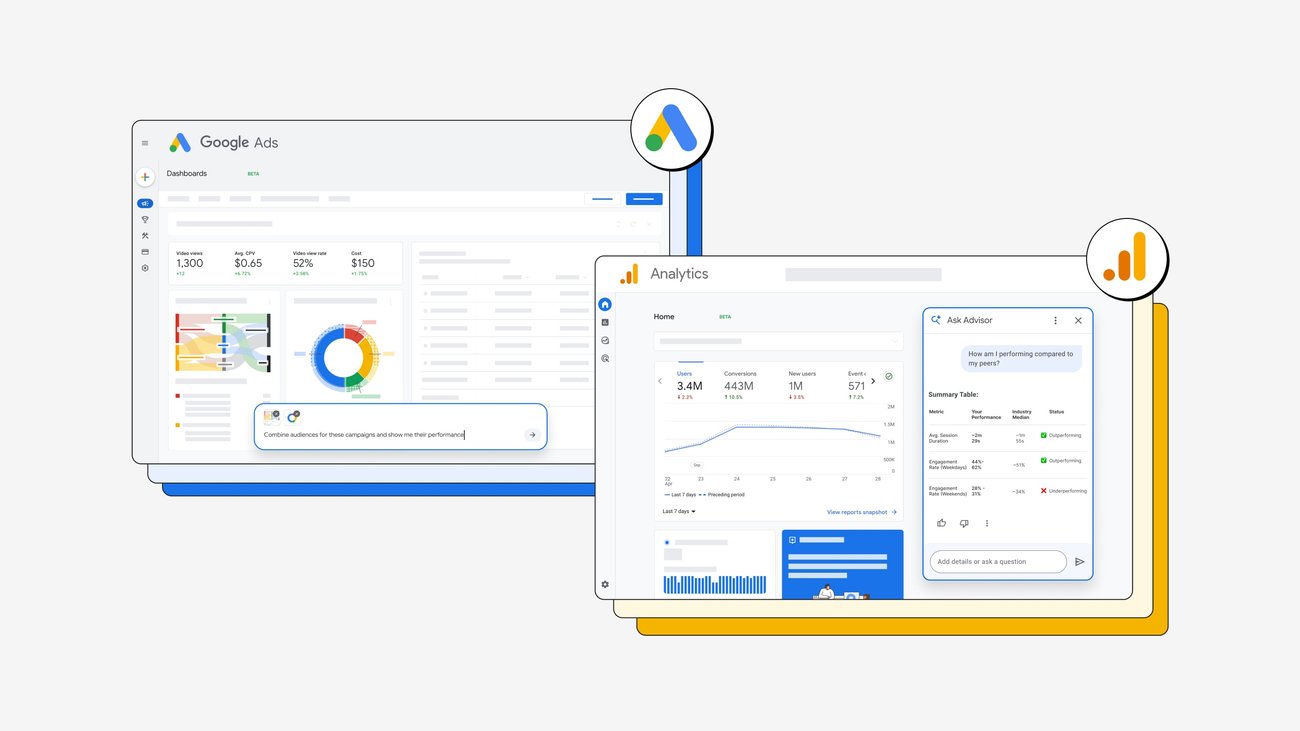
This is a significant leap toward "democratized data." A user can type, "Show me a comparison of performance between my top three campaign categories over the last quarter," and the system will instantly generate the relevant charts and a written summary explaining the "why" behind the numbers. By automating the narrative construction, these tools assist marketers in presenting performance data to stakeholders, effectively acting as an automated reporting assistant.
Strategic Benchmarking and Competitive Analysis
Perhaps the most significant addition for strategic planning is the new benchmarking feature within Ask Advisor. In the past, marketers were largely confined to comparing their performance against their own historical data. While useful, this approach ignores the broader market context—such as whether a dip in performance is specific to their business or an industry-wide trend.
By leveraging anonymized, aggregated data from similar businesses, Google’s benchmarking tool provides a comparative lens. This allows for more objective goal setting. If a business sees a 5% decline in engagement, the benchmarking tool can contextualize whether that decline is an outlier or part of a wider industry contraction. This, in turn, allows for more precise budget allocation and risk mitigation.
Industry Implications and Expert Perspectives
The market reaction to the integration of generative AI in advertising platforms has been largely positive, particularly among small-to-medium enterprises (SMEs) that lack the scale to employ dedicated data scientists. Kevin Marshall, the Paid Media Director at Gardyn, has noted that Ask Advisor has become essential for a "directional check" on paid media performance. According to Marshall, the speed of these AI tools allows his team to reallocate their time toward higher-level creative and strategic shifts that yield longer-term performance gains.
From an economic perspective, these tools are likely to compress the "strategy-to-execution" cycle. In the digital advertising industry, the ability to pivot campaigns within minutes rather than days can result in significantly higher return on ad spend (ROAS). By reducing the friction involved in analyzing data, Google is encouraging a more agile marketing ecosystem.
Future Outlook and Ethical Considerations
As Google continues to roll out these agentic capabilities, the broader implication is a shift in the role of the digital marketer. The focus is moving away from manual data entry and report building toward "curation and validation." Marketers must now act as editors and overseers of AI-generated insights, ensuring that the machine-provided logic aligns with the overarching business strategy.
While these tools are currently experimental, the trajectory is clear: the future of advertising will be driven by the synergy between human creativity and machine-speed data processing. As Google continues to refine the Gemini-powered infrastructure, the platform is expected to integrate even deeper into the business operations layer, moving from providing "insights" to potentially suggesting and executing automated bidding adjustments or creative asset rotations based on real-time market responses.
For now, the immediate focus for businesses should be on familiarizing their teams with the new Ask Advisor interfaces in Google Ads and Google Analytics. By integrating these tools into daily workflows, marketers can begin to reclaim the hours once spent on manual reporting, shifting their focus back to the core tenets of their business growth.