Beyond the Blog Loop: How Hybrid Architecture is Transforming Content Aggregation

The traditional WordPress-based content aggregator has reached a critical inflection point in the modern digital landscape. For years, the standard architecture for news sites—utilizing theme-based feed importers to generate endless vertical scrolls of headlines—has been the industry default. However, search engine algorithms, particularly those employed by Google, have become increasingly sophisticated in identifying "thin" or low-value content. When a website simply aggregates external links without adding synthesis or unique value, it is frequently penalized with reduced visibility and lower search rankings. This reality prompted a fundamental redesign of the crypto-focused news platform, CryptoHeadlines.com, shifting away from a passive link-repository model toward a dynamic, intelligence-driven briefing service.
The evolution of this site demonstrates a broader trend in web development: the rise of the hybrid stack. By retaining the robust data management capabilities of WordPress while offloading the user experience and analytical processing to a "headless" edge layer, publishers can achieve a level of sophistication previously reserved for high-budget media conglomerates.
The Limitations of Traditional Aggregation
The primary failure of conventional RSS-based aggregators lies in their inability to perform contextual synthesis. A standard WordPress theme treats every incoming feed item as an equal data point, sorting content chronologically rather than by importance. In a high-velocity sector like cryptocurrency, this approach is insufficient. If five different outlets report on a single regulatory shift, a traditional aggregator displays five separate, disconnected links. This creates a fragmented user experience that fails to answer the reader’s most basic question: "What is happening, and why does it matter?"
To solve this, the architecture was reconfigured to treat WordPress as a sophisticated backend content management system (CMS) while delegating the presentation and analytical layers to a Cloudflare Worker—an edge computing environment that processes data in real-time before it reaches the end user. This separation of concerns allows for the clustering of news, the ranking of stories based on impact rather than just time, and the integration of large language models (LLMs) to provide executive-level summaries.
Chronology of the Redesign
The project followed a distinct three-phase implementation strategy designed to minimize downtime while maximizing data integrity:
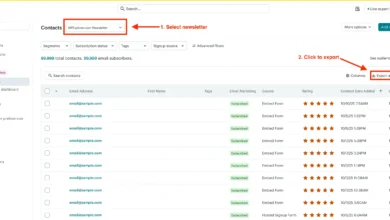
- The Data Foundation (Weeks 1-2): Utilizing WP RSS Aggregator Pro, the site continued to handle the "heavy lifting" of fetching, parsing, and deduplicating feeds. By maintaining the WordPress admin interface, the editorial team retained the ability to manage source URLs, swap out dead feeds, and configure cron-based fetching without requiring custom software deployments.
- Edge Implementation (Weeks 3-5): Developers deployed a Cloudflare Worker to act as a traffic controller. By utilizing the Worker to handle incoming requests, the system was able to intercept traffic, query a D1 database (which caches the processed feed data), and serve a completely custom-rendered page. Crucially, legacy URLs that previously contributed to "thin content" penalties were redirected to a 410 "Gone" status, signaling to search engines that the low-value pages were permanently removed.
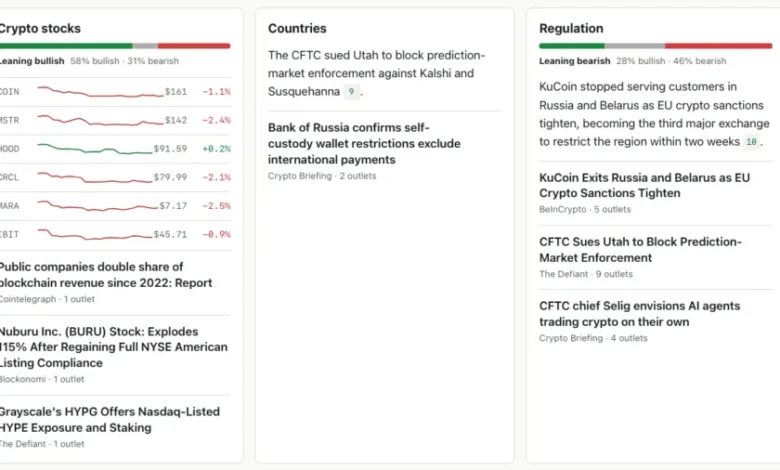
- Intelligence Integration (Weeks 6-8): The final phase involved layering in Workers AI. By implementing Llama 3.3 70B, the system began automatically tagging news by sector (e.g., DeFi, Regulation, Markets) and sentiment (bullish, bearish, neutral). A secondary model, GLM 5.3, was then introduced to synthesize the hourly market summary, operating under strict programmatic guardrails to prevent hallucination.
Data-Driven Synthesis: The Role of AI Guardrails
One of the most significant challenges in automating news synthesis is the risk of misinformation. In a volatile market, an AI that "invents" news is not merely a technical error; it is a liability. The solution implemented here was to enforce a strict validation loop. When the AI drafts a market commentary, it is subjected to a set of non-negotiable rules: it must not cite prices not present in the live data feed, it must verify the existence of the source, and it must adhere to a predetermined tone.

If the model produces a draft that fails these validation checks, the system rejects the output and retains the previous commentary. This ensures that the page remains reliable even if the LLM encounters a generation error. Furthermore, by weighting the "News Mood" based on the volume of reporting rather than mere keyword matching, the platform provides a more nuanced view of the market than simple sentiment analysis tools, which often struggle with the irony or context of financial reporting.
Supporting Data and Technical Architecture
The efficiency of this model is best illustrated by the distribution of labor between the CMS and the edge layer.
| Functional Task | WordPress + Plugin Layer | Edge/Worker Layer |
|---|---|---|
| Source Management | Primary | None |
| Parsing/Deduplication | Primary | None |
| Headline Clustering | None | Primary |
| Sentiment/Categorization | None | Primary |
| Real-time Market Summaries | None | Primary |
| Page Serving | Passive | Active |
By offloading the "experience" to the edge, the site achieves sub-millisecond response times for global users. The data is pulled from the WordPress database into a local D1 cache, allowing the page to load almost instantaneously regardless of the underlying complexity of the API calls being processed behind the scenes.
Broader Implications for Content Publishers
The success of this hybrid model suggests a shift in the philosophy of web publishing. For a decade, the "WordPress as an all-in-one" approach was the standard. However, as the demand for AI-augmented, hyper-relevant content increases, the limitations of monolithic CMS themes have become apparent.
This model of "headless" aggregation offers several key advantages for publishers in any niche:
- Search Engine Optimization: By providing a structured, summarized, and unique take on aggregated news, the site offers significant "value-add" that distinguishes it from the original sources, a key factor in avoiding duplicate content penalties.
- Editorial Scalability: By automating the clustering and sentiment analysis, a small editorial team can oversee a much larger volume of sources than would be possible manually.
- Resilience: The separation of the "source" (WordPress) and the "presentation" (Edge) ensures that if the CMS goes down or undergoes maintenance, the live news site remains operational.
Conclusion and Future Outlook
As the digital news landscape continues to favor platforms that offer concise, high-signal information, the days of the "infinite scroll" aggregator are numbered. The transition to a hybrid architecture—where the CMS manages the pipeline and the edge manages the intelligence—represents the next evolution in content distribution.
The strategy employed by CryptoHeadlines.com provides a blueprint for any publisher managing a high-volume niche. By defining a specific "question" the site answers for its readers, and using modern edge computing to synthesize information rather than just list it, publishers can create a sustainable, high-value product that survives in the age of AI-driven search. Whether the niche is local government, specialized research, or commodity tracking, the recipe remains the same: let the CMS handle the data, and let the edge build the intelligence.