Fixing Cumulative Layout Shift: How Real User Monitoring Transformed DavidWalshBlog Performance

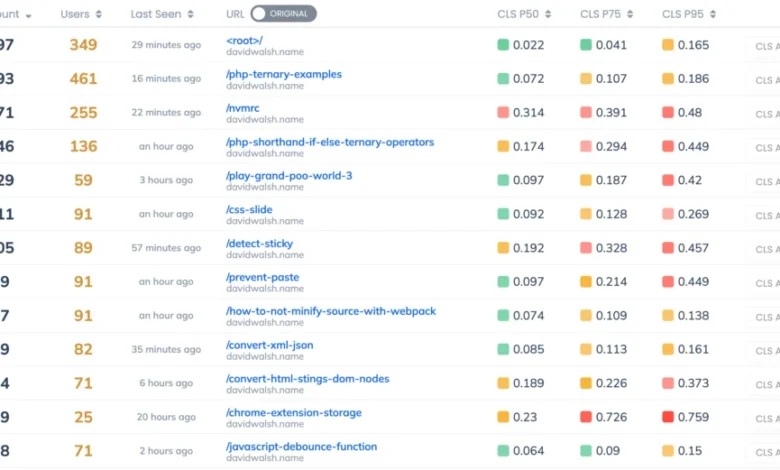
Every month, more than 50,000 developers from across the globe visit DavidWalshBlog to troubleshoot code, learn advanced JavaScript techniques, and stay abreast of evolving web standards. As a repository for technical expertise, the site is a vital resource, yet its utility is often dictated by the underlying performance of its delivery. Recent diagnostic data indicated that a significant portion of the global audience was experiencing latency and visual instability—specifically, high Cumulative Layout Shift (CLS)—which compromised the site’s overall accessibility and user experience.
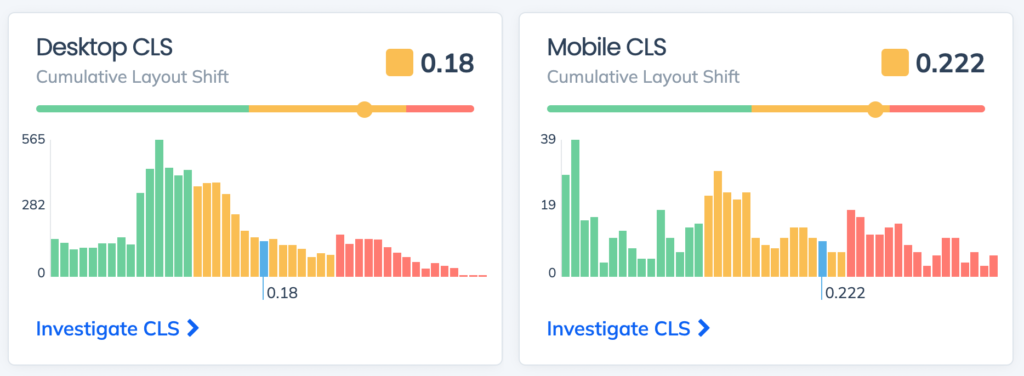
The identification of these performance bottlenecks highlights a critical shift in how modern developers evaluate web health. By leveraging Request Metrics, a real user monitoring (RUM) platform, the site’s administrators were able to pivot from simulated testing to data-driven, user-centric optimization. This initiative serves as a case study for the broader web development community on the necessity of prioritizing Core Web Vitals to satisfy both user expectations and search engine ranking algorithms.
The Significance of Cumulative Layout Shift
Cumulative Layout Shift is one of the three primary pillars of Google’s Core Web Vitals, an initiative launched to quantify the user experience of a webpage. Unlike metrics that track raw loading speed, such as Largest Contentful Paint (LCP) or First Input Delay (FID), CLS focuses exclusively on visual stability. It measures the cumulative score of all unexpected layout shifts that occur during the entire lifespan of a page.
When an element moves from its original position without user intervention, it creates a "layout shift." For a reader, this manifests as text jumping or buttons moving just as they are about to be clicked, leading to frustration and accidental interactions. From an engineering perspective, this instability is often the result of resources—such as images, ads, or fonts—loading asynchronously without reserved space, forcing the browser to reflow the document once the asset dimensions are finally determined.
The implications for publishers are significant. Since 2021, Google has integrated Core Web Vitals into its page experience signals, which directly influence search engine rankings. For platforms that rely on organic traffic, a poor CLS score is not merely a technical nuisance; it is a direct threat to the discoverability and long-term viability of the content.
The Pitfall of Synthetic Testing
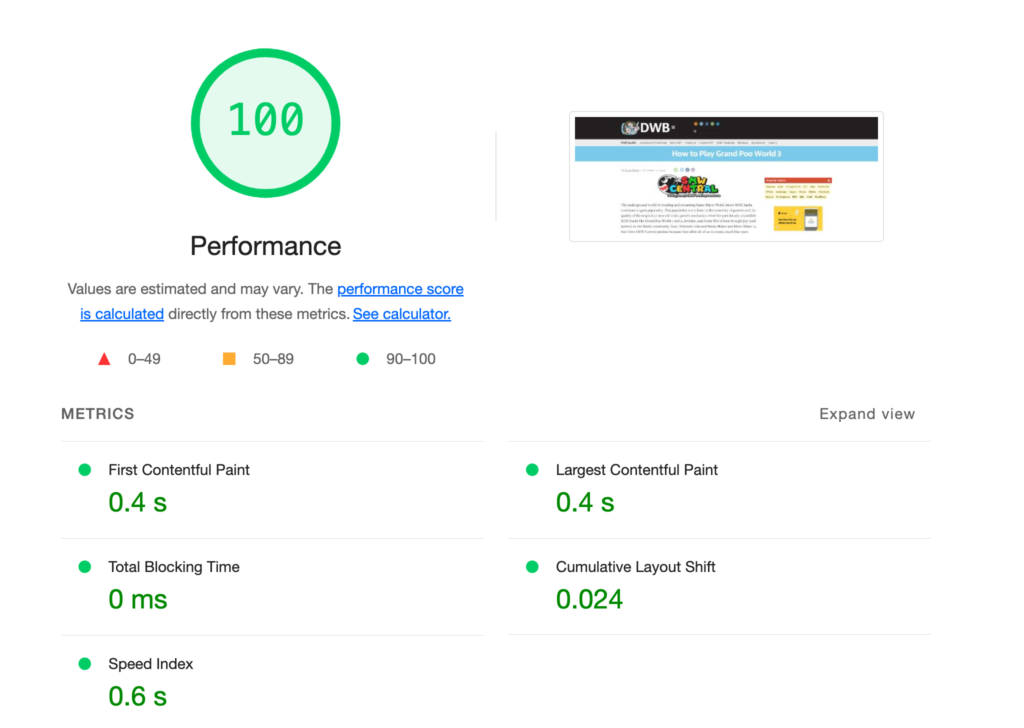
The diagnostic journey began with an attempt to benchmark the site using Google Lighthouse, a popular automated tool for auditing web performance. Initial reports from Lighthouse suggested that the site was performing optimally, returning near-perfect scores. However, this result presented a paradox: the synthetic data contradicted the negative feedback provided by real-world analytics.
The discrepancy lies in the nature of synthetic versus real user monitoring. Lighthouse tests are conducted in a controlled environment—a high-speed connection on a powerful workstation in a specific geographic location. These conditions represent an "ideal" scenario that rarely mirrors the reality of a global audience. Real users, by contrast, access the site from diverse environments: mobile devices on unstable cellular networks, aging hardware with limited processing power, and varied geographic distances from the site’s origin servers.
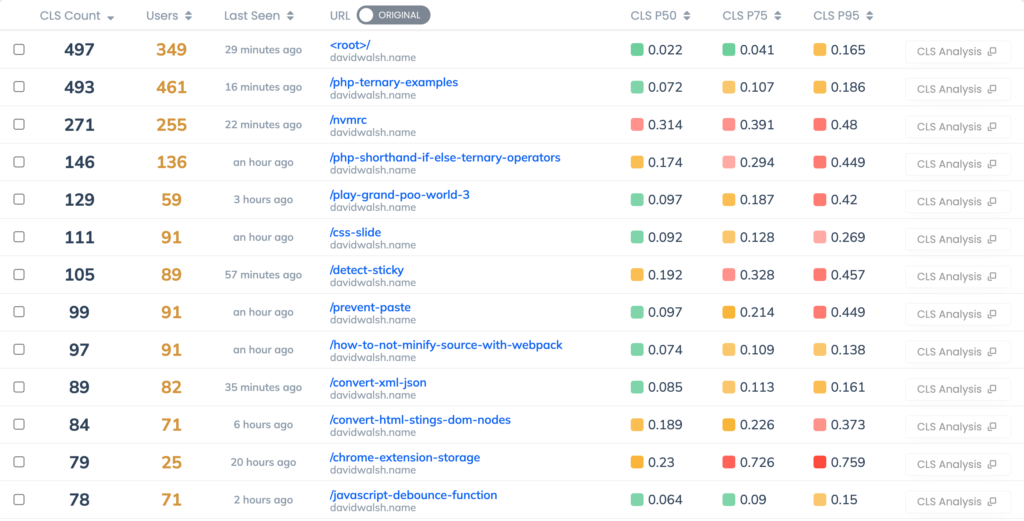
By relying solely on synthetic tools, developers often fall into a trap of "optimization theater," where a site is fast for the developer but slow for the user. Real user monitoring corrects this by aggregating performance data from actual site visitors. In the case of DavidWalshBlog, the RUM data provided granular insights that synthetic tools missed, identifying that specific posts—particularly those with high image densities—were suffering from significant layout instability.
Chronology of Performance Remediation
The diagnostic phase revealed that the primary culprits behind the site’s poor CLS scores were images lacking defined dimensions. Browsers typically assume an image has zero width and zero height until the file has been fully downloaded and parsed. Once the dimensions are known, the browser forces a layout reflow to accommodate the image, causing the surrounding text to jump.

Following the identification of these patterns, a targeted remediation strategy was implemented:
- Data Analysis (Week 1): Utilizing Request Metrics, developers isolated the specific pages and DOM elements contributing to the highest CLS scores. Data confirmed that the
main > article > pselectors were the most frequent points of shift, caused by images rendering within the text flow. - Implementation (Week 2): The team moved to rectify the underlying markup. By incorporating explicit
widthandheightattributes into the<img>tags, they provided the browser with the necessary "hints" to reserve space before the images arrived. - Automated Scaling (Week 3): Leveraging WordPress’s native functionality, specifically
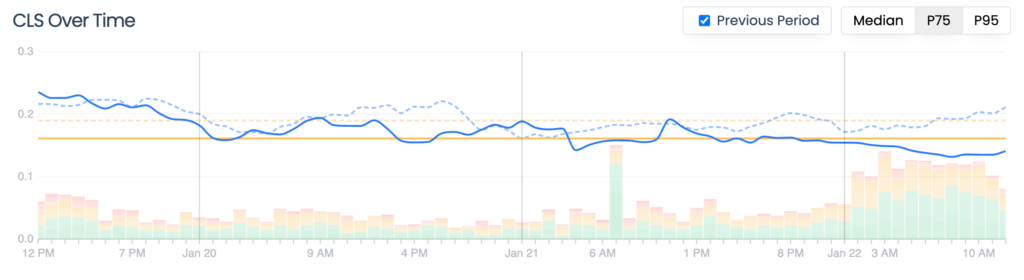
wp_image_src_get_dimensions, the site began dynamically injecting these attributes into existing content, ensuring that legacy posts were updated without manual intervention. - Verification (Week 4): Post-implementation monitoring showed an immediate improvement. Within days of the changes, the site recorded a 20% reduction in its aggregate CLS score, moving the metric significantly closer to the "Good" threshold of 0.1 or lower.
Technical Analysis: The Role of Aspect Ratio
The effectiveness of this fix lies in how modern browsers handle intrinsic aspect ratios. By setting the width and height attributes, the developer provides the browser with the exact aspect ratio required for the image container. This allows the browser to calculate the space needed on the page layout immediately upon parsing the HTML, effectively "locking in" the white space before the image binary is fetched.

Crucially, this approach does not prevent the use of CSS for responsive design. Developers can still use CSS properties like max-width: 100% and height: auto to ensure the image scales gracefully on mobile devices. The HTML attributes serve only as a blueprint for the layout engine, while the CSS handles the fluid presentation. This separation of concerns is fundamental to modern performance engineering.
Implications for the Digital Ecosystem
The successful optimization of DavidWalshBlog underscores a broader trend in web development: the professionalization of user experience metrics. As the web becomes increasingly crowded, search engines and users alike are demonstrating a preference for platforms that prioritize performance. The "speed-first" approach is no longer a luxury for e-commerce giants or high-traffic media conglomerates; it is a standard requirement for individual bloggers and small-to-medium businesses.

The transition from a "perfect" Lighthouse score to a data-informed performance strategy serves as a warning against over-reliance on single-point audits. True performance is a moving target, constantly influenced by the diversity of the global web. As the industry moves forward, the adoption of tools that provide actionable insights based on actual user experience will likely become the standard for maintaining competitive search rankings and sustaining audience engagement.
While the current efforts have successfully addressed the most immediate CLS concerns, the work of performance optimization is inherently cyclical. Future initiatives for the site will likely focus on secondary factors, such as web font rendering—where text flashes or shifts during the transition from system fonts to custom web fonts—and the refinement of JavaScript execution paths.

By consistently applying these rigorous diagnostic and remediation techniques, developers can ensure that their platforms remain both functional and accessible, regardless of the user’s device or network conditions. This shift toward "performance as a feature" is the most effective way to protect the integrity of content in an increasingly competitive digital landscape.
Related posts: