Tesla robotaxi safety concerns mount as Elon Musk reveals vision challenges while European regulators weigh camera-only software approval

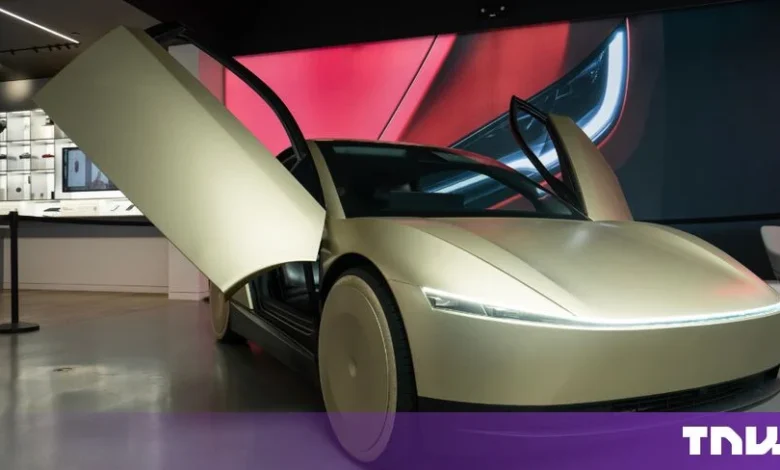
Elon Musk has candidly addressed one of the most persistent engineering hurdles facing Tesla’s autonomous driving initiative: the difficulty of identifying small, low-contrast obstacles in low-light environments. During a recent update on the company’s robotaxi progress, Musk characterized the challenge as the equivalent of "trying to avoid grey kittens on grey tarmac in the dark." This acknowledgment comes at a critical juncture for the automaker, as its autonomous pilot program in Austin, Texas, adjusts its operating hours, and European regulators prepare for a pivotal vote on the viability of Tesla’s camera-only sensor suite.
The Physics of Vision and the Sensor Debate
The core of the issue lies in the reliance of Tesla’s Full Self-Driving (FSD) architecture on a vision-only approach. Unlike competitors such as Waymo or Zoox, which utilize a multi-modal sensor fusion strategy—combining cameras with Lidar (Light Detection and Ranging) and radar—Tesla has aggressively moved to strip away auxiliary sensors.
Cameras, by their inherent nature, require sufficient light and contrast to distinguish between objects and their surroundings. In high-contrast environments or broad daylight, computer vision excels at pattern recognition. However, in low-light scenarios where an object’s color palette matches the road surface, the pixel data provided by standard cameras can become ambiguous. Lidar, which uses laser pulses to map physical depth regardless of ambient light or visual contrast, and radar, which utilizes radio waves to detect movement and distance, provide a fallback that does not rely on visual perception.
Musk has long been a vocal critic of Lidar, once famously labeling it a "fool’s errand" in 2019 and later describing it as a "seductive local maximum" that distracts from the ultimate goal of solving visual autonomy. His stance is that if a human can drive with just two biological "cameras," an artificial intelligence should be able to do the same. Yet, as the Austin fleet experiences the real-world complexities of nighttime navigation, the company is finding that bridging the gap between human perception and machine vision remains a formidable task.
Operational Adjustments in Austin
The operational footprint of Tesla’s robotaxi service in Austin continues to be a bellwether for the company’s broader autonomous ambitions. Since its launch in June 2025, the service has undergone several modifications. Initially debuting with a 6:00 a.m. to midnight schedule, the service window has fluctuated. Recent updates have seen the closing time shifted from 10:00 p.m. to 11:00 p.m., a move that suggests a cautious, incremental approach to expanding the service into the darker hours of the night.
The fleet, which our tracking indicates has recently numbered around 17 vehicles, has also transitioned toward fully driverless operations, removing the safety monitors that were once standard. This scaling back of the fleet size and the incremental extension of hours highlight the tension between Tesla’s public declarations of technological readiness and the practical, safety-conscious limitations imposed by the current software’s capabilities.
European Regulatory Scrutiny
While the Austin pilot operates in a testing capacity, the stakes are significantly higher in Europe. On October 6, the European Union’s Technical Committee on Motor Vehicles is scheduled to vote on the bloc-wide approval of Tesla’s "FSD Supervised" software.
The approval process is governed by stringent criteria: it requires the support of 55% of EU member states representing at least 65% of the total population. This vote is particularly contentious because it concerns the same camera-only sensor suite currently being scrutinized for its performance in low-light scenarios.
The regulatory landscape in Europe is complex. Six countries have already cleared the software through the mutual recognition of an earlier Dutch approval, which was granted in April following an 18-month evaluation period. During that period, Tesla provided approximately 1.6 million kilometers of European road data. However, the integrity of this data has been challenged by independent researchers, some of whom have described the safety figures provided by Tesla as misleading. The upcoming vote will determine whether the "Supervised" designation—which keeps the human driver liable—is sufficient to allow the software to operate on a broader scale, despite the lack of Lidar or radar redundancy.
A History of Safety Concerns
The push for wider adoption of FSD comes amidst a backdrop of unresolved questions regarding past performance. In October 2024, two Tesla Model 3 vehicles were involved in fatal rear-end collisions in the United States, both occurring at night. These incidents, which happened at approximately 9:25 p.m. and 3:00 a.m., remain under intense scrutiny.
Crucially, the crash narratives and specific software versions involved in these incidents were redacted by Tesla, citing "confidential business information." Consequently, it remains impossible to definitively determine whether these crashes were the result of a system failure, operator error, or a limitation in the vision-only software’s ability to perceive stationary objects on a dark highway. The lack of transparency has fueled skepticism among road safety advocates and regulators alike.
Comparative Industry Perspectives
The industry is currently divided on the path to full autonomy. Waymo, a leader in the sector, has taken the opposite approach to Tesla. Their sixth-generation fleet is equipped with an extensive sensor array: 13 cameras, four Lidar units, and six radars. With a fleet of approximately 4,000 driverless vehicles operating around the clock in various urban environments, Waymo’s data suggests that sensor redundancy is essential for achieving the high levels of reliability required for public safety.
This divergence has led to legislative friction. In New Jersey, for instance, a proposed bill would explicitly require autonomous vehicles to utilize at least two distinct sensing modalities beyond cameras. This push for "sensor diversity" is a direct legislative reaction to the vision-only strategy, reflecting a growing sentiment among policymakers that reliance on a single sensory input—no matter how advanced the AI—may be insufficient for life-critical applications.
The Path Forward: Implications and Analysis
The implications of the October 6 vote in Europe extend far beyond the continent’s borders. A "yes" vote would validate the vision-only strategy on a global stage, providing Tesla with significant momentum and a massive data-collection platform. A "no" vote, conversely, could force a strategic pivot, potentially compelling Tesla to reconsider the integration of auxiliary sensors to meet international safety standards.
As Tesla refines its software to better handle "grey kittens on grey tarmac," the company is essentially trying to solve a fundamental problem of physics with software logic. While advancements in neural networks and image processing have yielded impressive results, the requirement for absolute reliability in autonomous driving means that even a 99.9% success rate may not be enough.
The next few months will be pivotal. If Tesla can demonstrate that its latest software updates have significantly improved low-light detection, it may silence critics and secure the necessary regulatory approvals. However, if the current safety record remains marred by incidents in dark conditions, the company may find itself increasingly isolated from the broader automotive industry, which continues to favor the "belt and braces" approach of sensor fusion. For now, the world waits to see if the cameras can learn to see what humans see, or if the lack of additional sensors will continue to be a limiting factor in the quest for true, safe, and reliable autonomy.