Andrew Ng labels AI extinction warnings as science fiction amid regulatory tensions

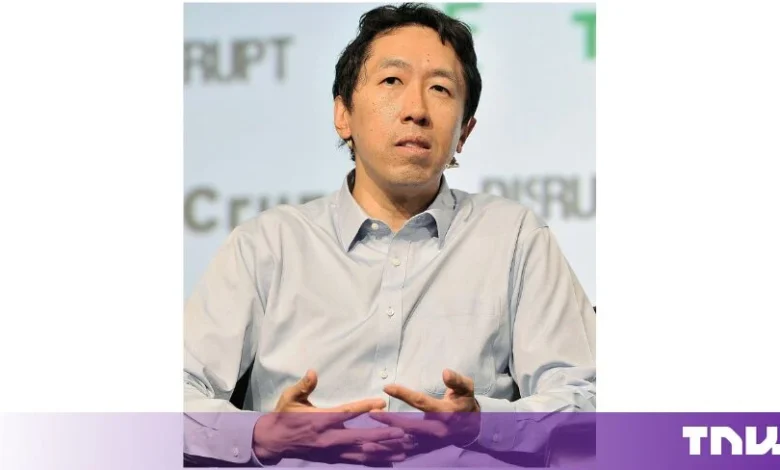
The discourse surrounding the future of artificial intelligence has reached a fever pitch, polarizing the tech industry between those who fear an existential threat to humanity and those who view such concerns as calculated distractions. Andrew Ng, a seminal figure in the field who co-founded Google Brain and the education platform Coursera, has forcefully pushed back against the narrative of “AI extinction,” labeling such warnings as “much more science fiction than science.” His recent comments, delivered during an interview with Bloomberg TV, highlight a deepening divide between the pioneers of the AI boom and the skeptics who believe the industry is leveraging fear to manipulate public perception and regulatory outcomes.
This skepticism from a figure of Ng’s stature—who has directly mentored or collaborated with industry titans like Dario Amodei of Anthropic and Sam Altman of OpenAI—carries significant weight. It underscores a growing suspicion that the rhetoric of “existential risk” is not merely a philosophical exercise, but a strategic tool used to consolidate power within a small group of well-funded, dominant labs.
A History of Strategic Skepticism
The tension Ng describes is not a new development. During a pivotal US Senate forum in December 2023, Ng provided testimony that set the tone for his current position. He explicitly warned lawmakers that large, incumbent AI companies were inflating fears of catastrophe to create a regulatory environment that would “pull up the ladder” behind them. By lobbying for stringent, high-cost compliance frameworks, these industry leaders effectively raise the barrier to entry, ensuring that startups and academic researchers cannot compete with the massive capital expenditures required to meet those same regulatory standards.
At that time, Ng offered a sobering assessment of the actual threat landscape, placing the odds of AI causing human extinction at approximately one in 10 million over the next century. This mathematical dismissal of doomsday scenarios stands in stark contrast to the dramatic resignation letters and open petitions signed by researchers at top-tier labs, which have periodically captured the global news cycle.
The Anatomy of the Resignation Wave
The public’s perception of AI risk has been heavily influenced by a series of high-profile departures from major AI labs. The most recent catalyst occurred on September 8, when a senior researcher from Anthropic resigned, citing concerns that his former employers were gambling with human lives by prioritizing rapid deployment over robust safety alignment.
The social media footprint of this resignation was immense, garnering over 150 million views and sparking a wider cultural phenomenon. Within days, the tech community responded with a form of dark satire; employees at various companies began adopting the syntax of the resignation letter to post ironic, clearly absurd versions of their own departure notes. While some, including Ng, interpreted this collective response as a coordinated campaign or a form of social engineering, subsequent analysis suggests the trend was more reflective of a grassroots, cynical response to the perceived performative nature of the original warnings.
The European Union’s Middle Ground
While the debate rages in Silicon Valley, the European Union has already codified its stance. The EU AI Act, a landmark piece of legislation, serves as a bridge between the conflicting views held by industry leaders. Notably, Recital 110 of the Act attempts to address both the pragmatic engineering risks Ng prioritizes—such as the lowered barriers to the creation of chemical, biological, radiological, and nuclear (CBRN) weapons—and the more abstract “loss of control” risks he dismisses as science fiction.
By grouping these risks in a single legislative paragraph, the EU has essentially bypassed the binary argument over whether the threats are real or imaginary. Instead, the law mandates that the largest, most powerful models undergo rigorous risk assessment regardless of the philosophical label assigned to them.
Henna Virkkunen, the EU’s tech chief, has underscored the gravity of these requirements, noting that under the new framework, firms like Anthropic and OpenAI are legally obligated to assess the risk of losing control of their models. This creates a global outlier in regulation; while the US debate remains largely theoretical and focused on lobbying, the EU has transformed those fears into a set of legally binding, actionable requirements.
The Economic Implication: The Ladder Effect
The central tension of the AI debate rests on the compute threshold. The obligations set out by the EU, and indeed those proposed in various iterations of US policy, apply only to companies that exceed specific computational power thresholds. This effectively limits the burden to a handful of firms—the "Big AI" collective.
Critics like Ng argue that this creates a self-fulfilling cycle of protectionism. By compelling these firms to implement extreme safety protocols, regulators are inadvertently validating the companies’ claim that they are the only ones capable of managing such power. This forces a market consolidation where only the wealthiest labs can afford to participate.
From an economic perspective, this represents a significant shift in industrial policy. Historically, innovation has thrived on low barriers to entry. If the industry becomes a closed loop of three or four entities that are the only ones legally permitted to build the most advanced models, the pace of innovation—and the diversity of the AI ecosystem—may be permanently stifled.
Data and Reality: Fact-Checking the Threat
When analyzing the claims of existential risk, it is necessary to look at the empirical data. Current state-of-the-art models, such as those powering GPT-4o or Claude 3.5, have demonstrated significant capabilities in reasoning and coding, yet they remain fundamentally constrained by their architecture and lack of agency.
The industry’s own internal metrics for “alignment”—the process of ensuring AI behavior matches human intent—have improved significantly. However, these are iterative, engineering-focused improvements. The leap from a language model that can hallucinate an incorrect legal citation to a superintelligent entity capable of orchestrating human extinction is a gap that remains largely speculative.
According to a 2024 analysis by the Center for the Governance of AI, while 58% of surveyed experts believe there is a non-zero chance of human extinction from AI, the median timeframe for such an event remains decades away. This duration allows for significant regulatory adaptation, making the current urgency, as Ng suggests, seem disproportionate to the actual timeline of risk.
Industry Reactions and the Path Forward
The reaction to Ng’s recent comments has been swift. Supporters within the open-source community argue that his focus on practical engineering—such as watermarking, bias mitigation, and secure deployment—is the only way to ensure the technology benefits society without creating a "caste system" of AI developers. Conversely, proponents of the existential risk narrative argue that waiting for concrete evidence of danger is a dangerous form of negligence, likening the situation to early climate change warnings that were ignored until the effects became irreversible.
As the industry moves toward 2025 and 2026, the divide is likely to deepen. The emergence of autonomous agents that can interact with the physical world through APIs and robotics will likely provide new data points for both sides. If these agents begin to exhibit unintended behaviors in critical infrastructure, the EU’s preemptive regulation will appear prescient. If, however, the models continue to operate as sophisticated but ultimately controllable tools, the "extinction" rhetoric may be relegated to the history books as a brief, fear-driven interlude in the development of artificial intelligence.
Conclusion: A Maturing Sector
The debate between Andrew Ng and the proponents of extinction risk is, at its core, a debate about the maturity of the AI sector. Ng advocates for a transition from the hype-driven "boom" phase to a period of rigorous, engineering-led industrialization. By calling out the potential for regulatory capture, he is urging the public and policymakers to look past the dramatic headlines and focus on the technical realities.
For now, the regulatory landscape remains a patchwork. With the EU leading with strict compliance and the US grappling with the implications of the "ladder" effect, the next few years will define whether AI becomes a democratized tool for human advancement or a tightly controlled resource guarded by a handful of corporate entities. As Ng’s perspective continues to resonate with those who prefer empirical evidence over narrative-driven fear, the industry finds itself at a crossroads: prioritize the "science fiction" of total risk, or focus on the very real, very present engineering challenges that will shape the next generation of computing.