Google Website Translator Widget sunset: A critical transition for multilingual web accessibility

For over a decade, the Google Website Translator widget served as a ubiquitous utility for web developers seeking a low-barrier solution to provide multilingual support. By simply embedding a small JavaScript snippet into a site’s footer or header, administrators could offer visitors an instant, automated translation dropdown. However, the era of this legacy tool is coming to an abrupt close. Google has officially confirmed that support for the Website Translator Widget will be terminated on October 1, 2026. This announcement, while anticipated by industry observers tracking the shifting landscape of Google’s developer products, marks a significant turning point for thousands of websites that have relied on this free service to bridge the linguistic gap for their international audiences.
The Chronology of a Sunset
The decommissioning of the widget did not occur in a vacuum. The roots of this decision trace back to May 2020, when Google first signaled its intention to move away from legacy browser-based translation tools in favor of more robust, enterprise-grade solutions. At the time, the tech giant encouraged developers to migrate toward the Google Cloud Translation API. This shift was part of a broader strategy to deprecate tools that lacked the performance, security, and scalability required for the modern web.
While the 2020 announcement served as an early warning, many site owners continued to use the existing widget, assuming its simplicity outweighed the need for a more complex API integration. For years, the widget remained functional, leading to a state of technical complacency. Now, with the October 1, 2026, deadline approaching, the window for a seamless transition is closing, forcing developers and site owners to audit their current infrastructure and implement viable alternatives before the widget potentially ceases to function or becomes a security liability.

Understanding the Technological Shift
The transition from a client-side widget to a cloud-based API represents more than just a change in service—it is a fundamental shift in how web translation is handled. The legacy widget operated entirely in the user’s browser, relying on Google’s infrastructure to dynamically translate text on the fly. While effective for simple needs, this method provided no control over the translated output and offered no benefits for search engine optimization (SEO).
In contrast, the Google Cloud Translation API requires a backend implementation. It allows for more sophisticated translation models, higher accuracy through custom machine learning, and the ability to integrate translation into the content management system (CMS) workflow. However, this transition imposes a significant cost burden, as the Cloud Translation API is a paid service that operates on a per-character usage model. For non-profit organizations, educational institutions, and hobbyist bloggers, this change is not just a technical hurdle—it is a financial one.
Market Response and Alternative Solutions
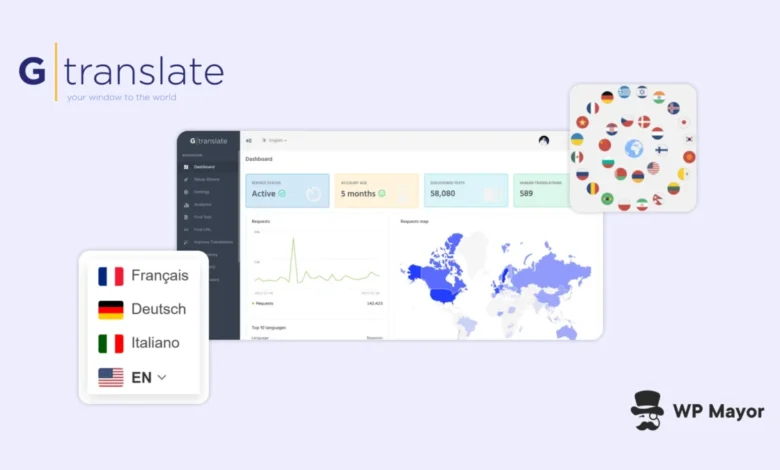
The imminent retirement of the widget has created a vacuum in the web development ecosystem, particularly for smaller entities that lack the budget for high-end API subscriptions. Several third-party developers have stepped forward to fill this void, with GTranslate emerging as a primary successor for those seeking a "drop-in" replacement.
GTranslate offers a tiered service model that mimics the accessibility of the original Google widget while providing a path for growth. For non-commercial, personal, and educational websites, GTranslate provides a free tier that replicates the basic functionality of the retired Google widget. This includes an unlimited number of languages and no cap on pageviews or word counts. For commercial enterprises, the platform offers a subscription-based model that unlocks features such as indexed translations, URL structure localization, and human-in-the-loop editing capabilities.

The primary distinction between these free browser-based widgets and professional-grade translation solutions lies in the concept of "indexed content." Browser-based translation—the type provided by the legacy Google widget—only modifies the view for the individual user. It does not create new pages for search engines to index. Consequently, a site translated via such a widget will not appear in foreign-language search results. This is a critical distinction for businesses looking to expand into international markets, as they require "server-side" translation to achieve true multilingual SEO.
Strategic Implications for Web Administrators
The retirement of the Google widget necessitates a comprehensive audit of existing web assets. Developers must search their codebase for identifiers such as google_translate_element or specific script references to translate_a/element.js. For those managing large portfolios of websites, this is a labor-intensive process, as these snippets are often buried within legacy theme files or hard-coded into page templates.
The technical migration is relatively straightforward: developers can remove the legacy Google script and replace it with a new integration script from a service like GTranslate or another translation provider. In many cases, existing container elements (like a div tag with a specific ID) can be reused, minimizing the need for extensive design or CSS adjustments.
The Broader Impact on Multilingual SEO
Beyond the functional aspect of translation, the end of the Google widget forces a conversation about the difference between "translation" and "localization." Professional digital marketers emphasize that simply translating a page is insufficient for a global strategy. True localization involves adapting content to the cultural nuances, search intent, and regional terminology of the target audience.

By moving away from a simple, browser-based translation tool, site owners are being incentivized to adopt professional standards. This includes:
- Hreflang Implementation: Properly signaling to search engines which version of a page corresponds to which language and region.
- URL Localization: Creating translated slugs (e.g.,
example.com/es/productos) to improve crawlability. - Neural Machine Translation (NMT): Utilizing advanced AI models that offer higher accuracy and better context retention than older, dictionary-based translation engines.
Data from recent industry surveys suggests that websites with localized, multi-language content experience, on average, a 20-30% increase in traffic from international markets. While the loss of the free Google widget may feel like a setback, it is ultimately a catalyst for businesses to adopt more sophisticated, growth-oriented multilingual strategies.
Final Preparations for the Deadline
As the clock ticks down toward October 1, 2026, the priority for web administrators should be twofold: identifying legacy instances and evaluating the long-term needs of the site. For those who merely wish to maintain a simple language-switching interface, the free alternatives currently available are more than sufficient. However, for those whose business models rely on international reach, this transition should be viewed as an opportunity to upgrade from a basic widget to a comprehensive, SEO-friendly translation framework.
The "no longer supported" status of the Google widget will likely mean that after the deadline, the script could cease to render, resulting in broken UI elements or, at worst, visual artifacts that degrade the user experience. By taking proactive measures now, developers can ensure that their websites remain accessible to global users while simultaneously positioning their content to rank more effectively in international search engine results. The era of the "set it and forget it" translation widget is over, but the era of effective, data-driven multilingual web presence is just beginning. As of late 2026, the industry is ready to move beyond the limitations of the past, leveraging new technologies to create a more interconnected and accessible digital landscape.