Meta Connect 2026: Mark Zuckerberg Unveils Muse AI, Privacy-First Smart Glasses, and Ultra-Lightweight VR Headsets

The technology landscape shifted significantly this week as Meta Platforms hosted its flagship Meta Connect 2026 conference in Menlo Park, California. Chief Executive Officer Mark Zuckerberg took center stage to deliver a keynote address that formally underscored a massive corporate pivot. While previous iterations of the annual developer conference heavily emphasized the immersive virtual landscapes of the metaverse, Meta Connect 2026 was defined by a singular, overarching focus: artificial intelligence.
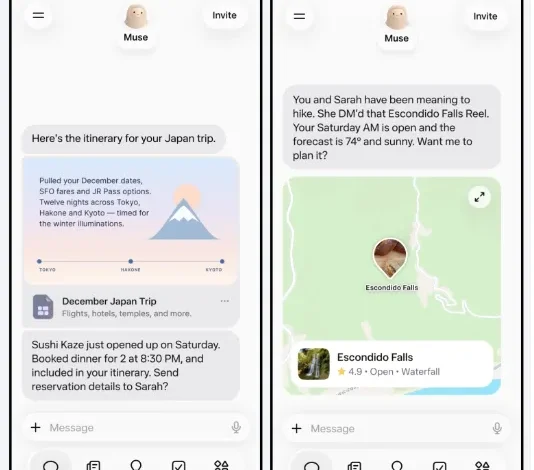
At the heart of this strategic realignment is Muse, a personal AI agent designed to act as the central operating intelligence across Meta’s entire hardware and software ecosystem. Alongside Muse, the company unveiled a robust suite of hardware innovations, including highly anticipated upgrades to its smart glasses lineup, privacy-centric data infrastructure, and a radically redesigned virtual reality headset that trades bulk for ergonomic efficiency.
As technology giants compete fiercely for dominance in the consumer AI and spatial computing markets, Meta’s latest announcements signal a calculated effort to integrate generative intelligence directly into everyday physical hardware. Industry analysts are already evaluating the broader implications of these releases, noting that Meta’s hardware strategy is increasingly anchored in seamless, ambient computing rather than enclosed, isolated virtual environments.
The Pivot to AI: Redefining Meta’s Strategic Roadmap
The genesis of Meta’s current hardware and software philosophy traces back several years. During his opening remarks, Zuckerberg offered rare retrospective insight into the company’s internal evolution, explaining the initial rationale behind the heavy investments in the metaverse.
When Meta first began developing smart eyewear and spatial computing hardware, leadership operated under the assumption that the fully realized metaverse would materialize first, paving the way for artificial superintelligence down the road. Consequently, the company’s early research and development budgets were skewed heavily toward virtual reality and immersive 3D worlds.
However, the unprecedented acceleration of generative artificial intelligence over the past few years forced a fundamental reevaluation. Breakthroughs in large language models, agentic capabilities, and localized processing power demonstrated that AI would shape the immediate future of human-computer interaction far more rapidly than anticipated. As a result, Meta recalibrated its product roadmap, placing AI functionality at the absolute forefront of its design philosophy.
Zuckerberg emphasized that the metaverse has not been abandoned, but rather subordinated to and integrated with advanced artificial intelligence. The virtual and augmented reality tools that Meta continues to build are now envisioned as spatial interfaces for intelligent agents like Muse, creating a cohesive ecosystem where AI bridges the gap between hardware devices and daily human workflows.
Introducing Muse: The Core Personal AI Agent
The centerpiece of Meta’s 2026 announcements is Muse, a sophisticated personal AI agent engineered to manage complex, multi-step tasks on behalf of the user. Led by Meta’s Chief AI Officer, Alexandr Wang, the engineering teams have positioned Muse not merely as a conversational chatbot, but as an active, agentic assistant capable of executing actions across third-party platforms.
During the conference demonstrations, Meta highlighted several upcoming integrations designed to expand Muse’s practical utility. Most notably, Meta is introducing dedicated email addresses for Muse agents, allowing the AI to autonomously handle correspondence, schedule appointments, and coordinate logistics.
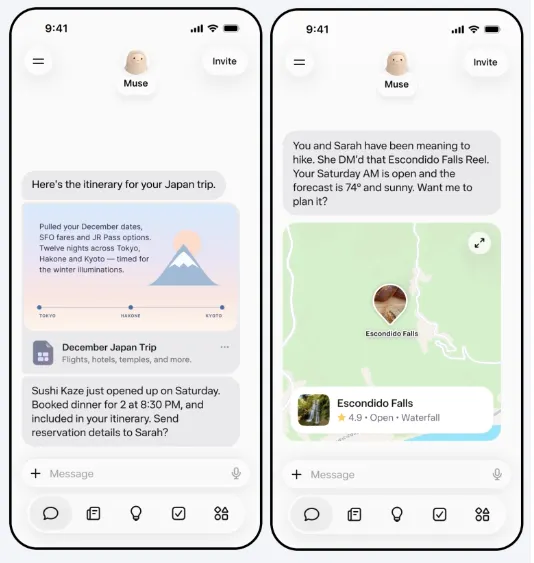
To facilitate true agentic functionality, Meta has forged strategic partnerships with major retail, travel, and service brands. Companies including Walmart, BestBuy, Gap, Sephora, Expedia, Instacart, and Wayfair are integrating their platforms with Meta’s infrastructure. This collaboration enables Muse users to execute complex purchasing and planning tasks directly through voice or text prompts, seamlessly bridging the gap between Meta’s ecosystem and commercial service providers.
Geographic availability for Muse is also expanding. Following its initial rollout in the United States, Muse is now officially available to users in Canada, with additional international markets expected to follow in the coming quarters. Furthermore, Zuckerberg announced that users will soon gain the ability to fully customize their Muse agent’s voice, allowing for a more personalized interactive experience.
Privacy and Security: Building Trust Through Meta Secure VM
As artificial intelligence agents become increasingly integrated into personal communications, financial transactions, and daily routines, data privacy has emerged as a paramount concern for consumers and regulators alike. Acknowledging these anxieties, Meta placed heavy emphasis on data security during the Meta Connect presentations, introducing robust architectural safeguards designed to insulate user data from corporate surveillance.
The foundational security layer for the AI agent is Meta Secure VM, a proprietary private data processing environment that powers Muse. According to Meta’s engineering disclosures, the architecture of Meta Secure VM is structured in such a way that not even Meta employees can access the underlying user data, interactions, or contextual memory stored within the system.
This strict stance on data isolation is a direct response to growing public scrutiny surrounding AI training practices and cloud-based data storage. By guaranteeing zero-access encryption and localized processing parameters, Meta aims to alleviate consumer hesitation regarding the deployment of deeply personal AI agents. Similar privacy guarantees were extended to the company’s hardware ecosystem, ensuring that optical and audio captures processed through Meta devices remain strictly confidential and shielded from internal review.
Expanding the Form Factor: Muse Charm and Audio-Only Glasses
While smart glasses remain the primary visual medium for Meta’s AI initiatives, the company is actively exploring alternative form factors to ensure constant, frictionless access to Muse.
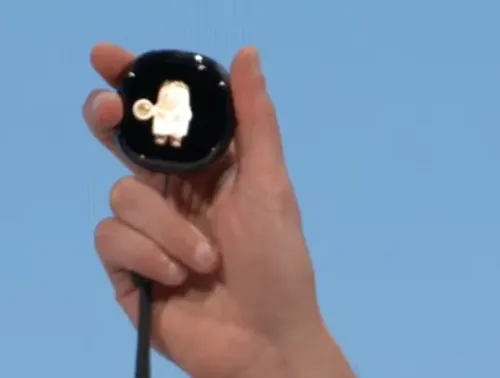
One of the most talked-about previews of the conference was the Muse Charm—a compact, highly portable device currently in development. Reminiscent of a modern, sophisticated iteration of the classic 1990s Tamagotchi, the Muse Charm is designed to clip onto clothing or hang from a keychain, providing users with constant, physical access to their Muse agent without requiring them to wear eyewear. Industry observers have noted that the Charm represents a clever hedge by Meta, capturing consumers who desire ambient AI assistance but prefer traditional accessories over smart glasses.
Simultaneously, Meta addressed ongoing consumer debates regarding camera-equipped eyewear. Recent public concerns have focused heavily on LED indicator tampering and the potential for unauthorized video recording in public spaces. In response, Meta announced a new line of audio-only AI glasses. These devices provide continuous connectivity to Meta AI and Muse via high-fidelity microphones and open-ear speakers, completely eliminating the optical camera modules that frequently spark privacy controversies.
The Evolution of Smart Glasses: Ray-Ban Meta Gen 3 and Specialized Styles
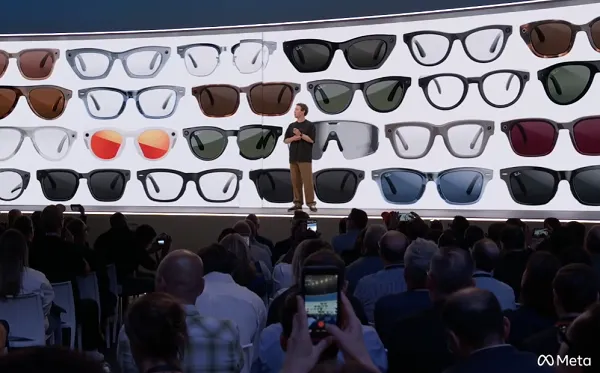
For users who do embrace optical smart glasses, Meta’s ongoing partnership with EssilorLuxottica continues to yield market-leading hardware. Zuckerberg showcased the upcoming Ray-Ban Meta Gen 3, which features a noticeably slimmed-down frame profile and extended battery life compared to its predecessors.
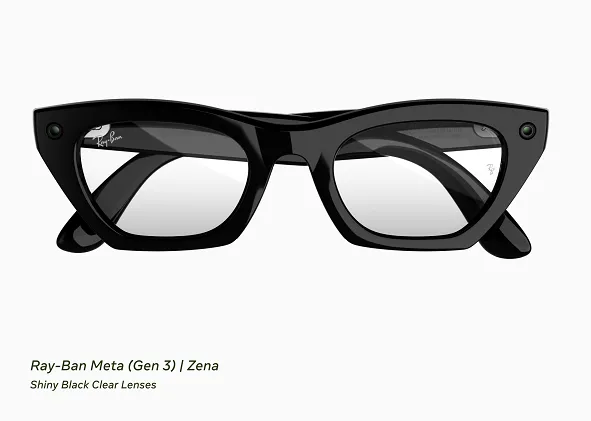
The Gen 3 device introduces advanced capture modes, most notably Dolby Atmos spatial audio capture. This technology allows the glasses to record three-dimensional audio fields that accurately replicate the acoustic environment of captured scenes, offering a significantly more immersive playback experience for home videos and shared moments.
Meta also expanded its stylistic diversity by previewing several new AI glasses models, including the Aviator and Zena styles, alongside an updated iteration of the Adventurer device, which will retail at an accessible $249 price point.
Capitalizing on pop-culture cross-branding, Meta announced a high-profile collaboration with global K-Pop superstar Lisa. Following the successful limited-edition frames launched previously with celebrity Kylie Jenner, the Lisa collection features custom frames accompanied by detachable charms inspired by the artist’s personal pets.
Meanwhile, demand for Meta’s advanced Display glasses—which feature integrated visual heads-up displays—has dramatically outstripped supply, leaving units sold out for months. Zuckerberg confirmed that manufacturing output is finally catching up to consumer demand, with regional availability expanding significantly in the near future.
The Next Generation of VR: Radical Ergonomic Redesign
Perhaps the most hardware-intensive shock of Meta Connect 2026 came during the joint presentation by Mark Zuckerberg and Reality Labs Chief Andrew Bosworth. The executives unveiled Meta’s next-generation virtual reality glasses, a device engineered to radically alter the physical ergonomics of spatial headsets.

The upcoming Meta VR glasses weigh an astonishing five times less than the current Meta Quest 3 headset, bringing the weight down to approximately 100 grams. This dramatic reduction in facial load was achieved by fundamentally decoupling the heavy computational and power-supplying components from the head-mounted display.
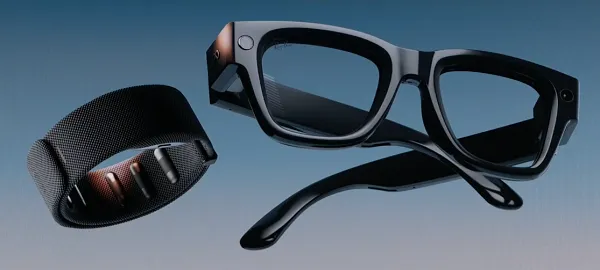
Borrowing architectural concepts from tethered mobile computing, the new VR glasses retain only the optical displays and primary sensors on the face. All computing, storage, and battery management are housed in a separate pocket-sized computational puck. Connected via a specialized optical tether, the puck can be conveniently clipped to a user’s pocket or bag during operation.
Integrated deeply with the Muse AI agent, the lightweight VR glasses allow users to navigate complex virtual environments, manage digital workspaces, and control media playback using natural conversational prompts. Zuckerberg positioned the device not merely as a gaming peripheral, but as a convergence of a world-class private cinema, a virtual workstation, and an advanced gaming rig.
Priced at $1,299, the Meta VR glasses are scheduled to begin shipping in the spring, signaling Meta’s continued commitment to premium spatial computing hardware even as its broader strategic narrative pivots toward artificial intelligence.
Implications and Market Outlook
The announcements made at Meta Connect 2026 highlight a mature corporate strategy focused on hardware diversification and intelligent software integration. By pivoting from a speculative metaverse-first vision to a pragmatic, AI-driven ecosystem centered on Muse, Meta is attempting to position itself as an indispensable daily utility in consumer technology.
The introduction of zero-access privacy frameworks via Meta Secure VM addresses the most critical barrier to AI adoption: data trust. By assuring users that their personal interactions and captured environments remain private—even from the platform provider itself—Meta removes a significant psychological hurdle for widespread consumer deployment.
Furthermore, the expansion of hardware form factors—ranging from audio-only smart glasses and pocket-sized Muse Charms to ultra-lightweight, tethered VR glasses—demonstrates an acute understanding of ergonomic and social friction points. By offering consumers a spectrum of ways to interact with artificial intelligence, Meta is maximizing its addressable market across diverse demographics.
As these products roll out over the coming months, the technology sector will closely monitor consumer adoption rates, particularly regarding the commercial viability of agentic AI platforms like Muse and the market reception of premium-priced spatial hardware. If Meta successfully executes this ambitious roadmap, the company may well establish the foundational operating paradigm for the next decade of personal computing.
Related posts: