Beyond the Search Results: Mastering Brand Visibility in the Era of AI-Driven Discovery

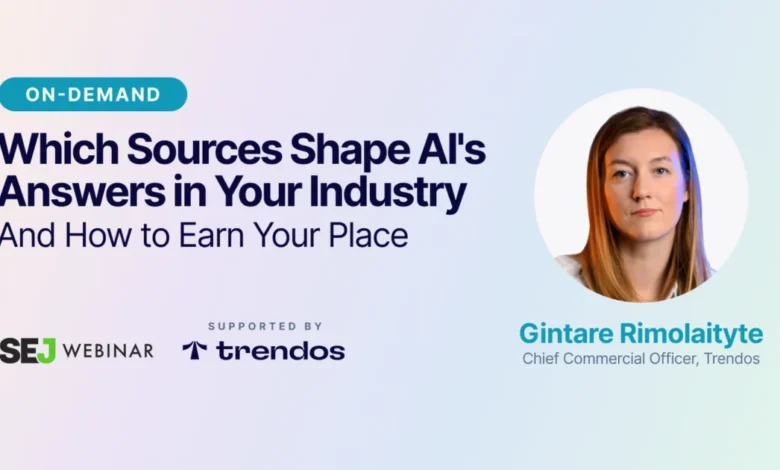
The rapid integration of generative AI into search engines has fundamentally altered the digital landscape, rendering traditional search engine optimization (SEO) tactics increasingly incomplete. While many organizations continue to focus exclusively on ranking metrics and click-through rates from standard search engine results pages (SERPs), a growing divide has emerged between being visible in a search engine’s list and being cited within an AI-generated response. Recent industry analysis from Trendos, presented by Chief Commercial Officer Gintare Rimolaityte, suggests that brands are missing critical opportunities by failing to map the specific sources that inform AI-driven answers. As consumers increasingly turn to platforms like Google AI Overviews, Perplexity, ChatGPT, and Gemini for direct answers, the strategy for digital visibility must evolve from a focus on keywords to a sophisticated audit of citation architecture.
The Shift from Keyword Ranking to Citation Mapping
For nearly two decades, the goal of digital marketing was to secure a top-ten spot on a Google SERP. Today, that objective is only half the battle. In a session focused on bridging the gap between brand presence and AI citation, industry experts highlighted a recurring issue: many businesses appear in the organic links beneath an AI summary but are entirely absent from the "sources" cited by the AI itself.
The mechanism behind AI answers is distinct from traditional indexing. When a user inputs a query, models synthesize information from a variety of sources, including editorial sites, user-generated content, and community forums. Because these models prioritize accuracy and relevance based on their internal training and retrieval-augmented generation (RAG) processes, they do not necessarily prioritize the same pages that a traditional search algorithm would rank highly. Consequently, brands that ignore these citations are missing the chance to influence the narrative at the point of decision-making.
Chronology of AI Integration and the Evolving Search Landscape
The trajectory of this shift began in earnest during the mid-2020s, as search engines began prioritizing generative summaries over static lists of links. By the summer of 2026, the reliance on AI for complex decision-making—particularly in consumer retail, IT services, and communication sectors—reached a saturation point.
The following timeline highlights the progression of this transition:
- Early 2023: The launch of mainstream conversational AI tools initiates a decline in traditional "ten blue links" traffic.
- Late 2024: Marketers begin identifying a disconnect between organic ranking and citation frequency in AI responses.
- Mid-2025: Industry leaders begin formalizing "AI Citation Audits" as a standard component of digital PR and content strategy.
- Summer 2026: Advanced analysis reveals that community-driven platforms (such as Reddit) and specialized editorial sites are becoming primary drivers for AI synthesis, often overshadowing official brand websites in the eyes of the AI.
Supporting Data and Industry Patterns
A core finding in recent audits is that the "source mix" varies significantly by industry. In the retail sector, AI models tend to pull from product pages that offer highly structured data, such as pricing tables, dimensions, and availability. Conversely, in the IT and professional services sectors, models frequently favor long-form, question-and-answer content and expert-led documentation.
Data from these audits indicates that a universal strategy is ineffective. For instance, while a retail brand might benefit from optimizing product schema and metadata, a communication services firm might find more success by contributing to community discussions or establishing a presence on niche industry forums.
Furthermore, the "engine-level" variability is significant. A source that is highly influential in Google’s AI Overviews may be entirely ignored by Perplexity or Gemini. For example, observations from 2026 showed that while Reddit’s influence waxed and waned across different platforms, its prominence in certain AI models remained a constant. The implication is that businesses must maintain a granular reporting structure that monitors performance on an engine-by-engine basis rather than relying on an aggregated "total visibility" score.
Implications for Content Strategy and Outreach
The move toward AI-centric search requires a fundamental re-evaluation of content creation. Rimolaityte’s analysis emphasizes that companies should not abandon traditional SEO, but rather treat it as a foundation. The next layer involves "Citation-First Content."
This strategy involves three primary steps:
- Question Identification: Identify 10 to 20 high-intent questions that potential customers ask during the buying journey. These questions should reflect specific pain points rather than broad, high-volume keywords.
- Engine-Specific Audits: Execute these queries across major AI-powered search engines. Record every source cited by the AI, including competitors.
- Gap Analysis: Identify where competitors are appearing and your brand is not. If a competitor is cited in a specific source, investigate the content of that page. Determine if your brand can provide a more accurate, helpful, or better-structured answer that could eventually displace the competitor in that specific source.
This process is not about "gaming the system" or buying placements. It is about identifying the gaps in the existing information ecosystem and filling them with high-quality, relevant content that the AI can easily parse and verify.
The Role of Community and Video in AI Citations
One of the most notable trends identified in the analysis is the high citation rate of community-generated content. In many instances, AI models view independent, peer-to-peer discussions as more trustworthy than direct brand marketing. This has led to a shift in how brands approach digital PR. Rather than focusing solely on paid media or internal blogs, successful companies are engaging in honest, transparent participation in relevant online communities.
Video content, particularly when paired with accurate, detailed transcripts, is also gaining traction as a reliable source for AI models. When a company provides a concise video answer to a specific user question—supported by a clear, timestamped transcript—the likelihood of the model citing that video as an authoritative source increases. This confirms that the AI is not just looking for text, but for the most effective way to solve the user’s specific problem.
Broader Impact on Digital Marketing Budgets
The shift toward AI-driven discovery forces a recalibration of marketing budgets. Traditionally, budget allocation was driven by cost-per-click (CPC) or organic traffic volume. In the new environment, budget should be allocated based on "citation potential."
If an audit reveals that a specific industry-leading publication or community forum is consistently cited in AI responses regarding your product category, it becomes a high-priority target for partnership, editorial contribution, or advertising. This approach moves away from the "spray and pray" method of content distribution and toward a surgical, data-driven approach that targets the specific domains influencing the AI.
Challenges and Future Outlook
While the promise of AI-driven visibility is significant, the strategy is not without challenges. For agencies and in-house teams, the primary hurdle is implementation. Translating a complex audit into an actionable task list requires cross-departmental collaboration between SEO, PR, and content teams.
Furthermore, as AI models evolve, the rules of citation will inevitably shift. What works today may be obsolete in six months. The industry is currently moving toward a model of "continuous auditing," where visibility is monitored on a rolling basis.
Looking ahead, the next phase of this evolution will likely involve the intersection of organic AI visibility and paid AI advertising. As search engines like OpenAI and Google integrate more robust ad units into their conversational interfaces, the distinction between "earned" and "paid" visibility will become increasingly blurred. For now, however, the most effective path forward remains the rigorous, persistent, and data-backed effort to be the source that AI models trust. By focusing on answering real customer questions with clarity and structured information, brands can ensure they remain at the center of the AI-driven search experience, regardless of how the underlying technology changes.