Streamlining Digital Asset Workflows: A Comprehensive Guide to Filestack Integration

Managing digital media in modern web and mobile applications has evolved into one of the most complex technical hurdles for software developers. As user-generated content becomes the lifeblood of digital platforms, the requirement to ingest, process, and deliver files of varying formats, sizes, and origins has created a significant strain on engineering resources. Historically, developers have been forced to build bespoke infrastructure to handle file uploads, cloud storage, image processing, and CDN delivery. Today, however, the industry is pivoting toward specialized "File-as-a-Service" platforms, with Filestack emerging as a critical utility for optimizing the lifecycle of digital assets.
The Evolution of File Infrastructure
The history of web-based file management mirrors the growth of the internet itself. In the early 2000s, basic FTP uploads were the standard, followed by simple PHP-based file handlers. As high-resolution photography and video streaming became standard, the demand for sophisticated image manipulation—such as on-the-fly resizing, compression, and watermarking—increased exponentially. Building these pipelines from scratch requires deep expertise in server-side infrastructure, memory management, and global content delivery networks.
Filestack was developed to address this "build vs. buy" dilemma. By providing a unified API for the entire file lifecycle, the platform allows developers to bypass the creation of custom backend code, instead utilizing a modular, cloud-native architecture. The platform operates on a simple premise: provide a standardized interface that bridges the gap between the user’s local device or cloud storage and the final destination server.
The Mechanics of Modern Uploads
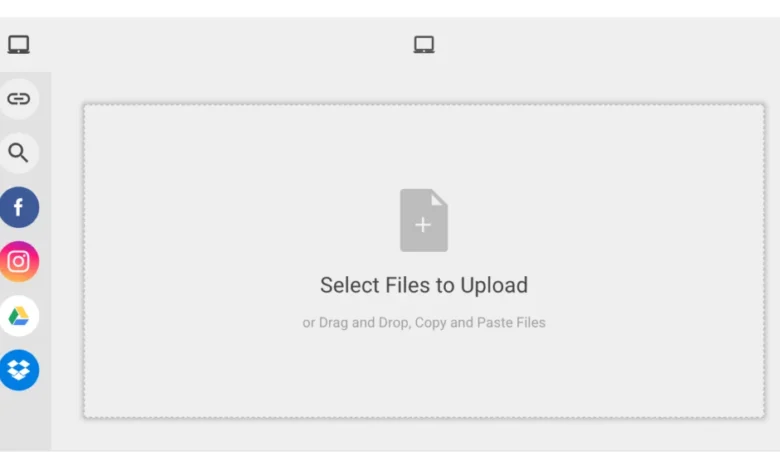
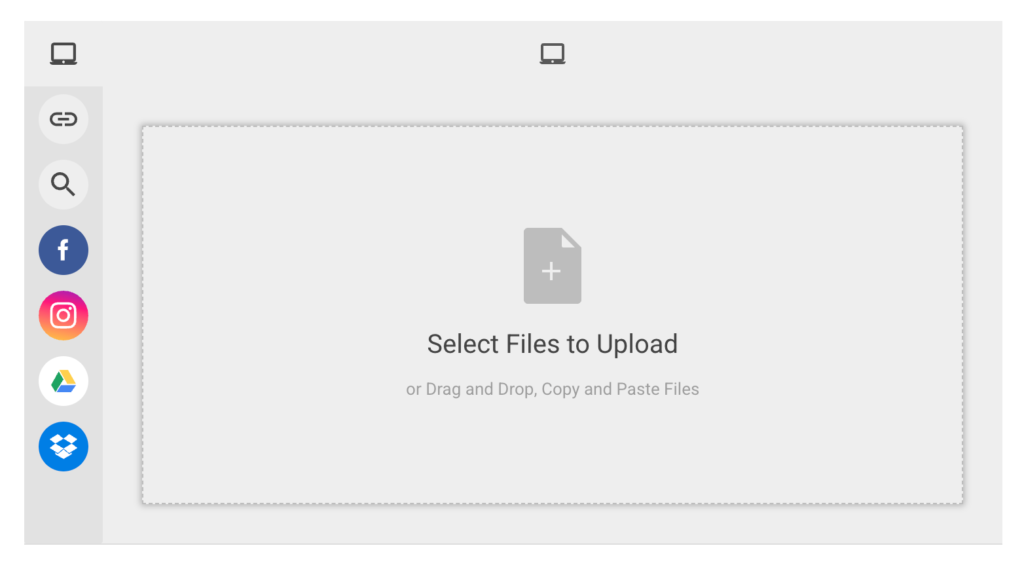
The process of capturing media has been simplified through the Filestack Picker, a pre-built, highly customizable UI component. In a typical implementation, a developer initializes the service via a JavaScript snippet:
const client = filestack.init("YOUR_API_KEY");
const picker = client.picker();
picker.open();
This simple initialization abstracts away the complexity of handling cross-browser compatibility, progress bars, and error handling. Furthermore, the picker includes pre-built integrations with over 20 third-party sources, including Google Drive, Dropbox, GitHub, and major social media platforms. By enabling drag-and-drop functionality out of the box, developers can significantly reduce the "time-to-upload" for end-users, a metric directly correlated with conversion rates in e-commerce and social networking applications.
For backend-heavy architectures, the service provides SDKs across multiple languages, including Python, Ruby, and Java. This allows for server-side processing where security and regulatory compliance are paramount, such as in healthcare or financial services applications where files must be scrubbed of sensitive metadata before being stored in an Amazon S3 bucket or other cloud storage providers.
Transformation: The Real-Time Processing Engine
Perhaps the most significant value proposition of the Filestack ecosystem is its ability to perform real-time media transformations. In the past, images were often uploaded in high resolution, stored, and then processed in batches via asynchronous cron jobs. This method is inefficient, often leading to slow load times and bloated storage costs.
Filestack’s transformation engine operates on a URL-parameter basis. By appending specific instructions to the file’s CDN URL, developers can perform complex manipulations without storing multiple versions of the same file. For example, a single source file can be rendered as a 300px wide thumbnail, converted to grayscale, and wrapped in a decorative border simply by adjusting the request string:
https://cdn.filestackcontent.com/resize=width:300/sepia=tone:80/polaroid/FILE_HANDLE
This approach facilitates "responsive media," where the server delivers an image optimized specifically for the user’s device resolution and browser capabilities. This reduces bandwidth consumption by up to 80% in many cases, leading to faster page loads and improved Core Web Vitals, a key factor in search engine optimization rankings.
Global Delivery and Caching Architecture
Once a file is uploaded and transformed, the delivery phase is governed by the platform’s global Content Delivery Network (CDN). The efficiency of this stage is vital for user retention; research indicates that a one-second delay in page loading can result in a 7% reduction in conversions.
Filestack’s CDN architecture caches files upon their first request. If a specific transformation is requested, the platform generates the output and caches that result for 30 days. This "lazy-loading" approach to transformation ensures that storage costs remain low, as only the versions of the media that are actually consumed by users are stored and cached. Subsequent requests for the same transformed asset are served instantly from the edge location nearest to the user, minimizing latency.
Industry Implications and Developer Impact
The shift toward third-party file management services like Filestack signals a broader trend in software development: the "API-first" approach. By offloading non-core functionalities to specialized vendors, engineering teams can focus on their specific product logic rather than maintaining infrastructure.
From a business perspective, the implications are three-fold:
- Cost Efficiency: By reducing the need for specialized DevOps engineers to maintain custom file-handling servers, companies can reallocate capital to feature development.
- Scalability: During periods of high traffic, such as marketing campaigns or seasonal shopping spikes, a cloud-native file utility automatically scales to handle the influx of media without manual intervention.
- Security: Professional platforms are typically SOC2 compliant and undergo rigorous security audits, offering a higher level of protection against malicious file uploads (e.g., malware or viruses) than a generic, internally built uploader.
Chronology of Implementation
For organizations looking to integrate such a service, the standard implementation timeline typically follows a four-phase structure:
- Phase 1: Integration (Days 1–3): Signing up for the service and initializing the API keys within the development environment. Developers typically begin by replacing existing file-input fields with the Filestack picker.
- Phase 2: Workflow Mapping (Days 4–7): Configuring the backend to handle the file handles returned by the service. This involves setting up webhooks to trigger downstream processes, such as database updates or notification emails.
- Phase 3: Transformation Strategy (Days 8–10): Defining the required image and video presets. This includes determining the necessary aspect ratios, compression qualities, and security policies (such as signed URLs to prevent unauthorized access).
- Phase 4: Deployment and Monitoring (Ongoing): Launching the updated UI and monitoring the CDN hit ratios and bandwidth usage to ensure optimal performance.
Official Perspectives and User Feedback
While the company maintains that its utility is a "developer’s dream," user feedback in developer forums frequently highlights the documentation as a primary driver of adoption. Unlike many open-source projects where documentation is often secondary to code, the Filestack knowledge base provides comprehensive code snippets, API references, and "how-to" guides for common edge cases.
Industry analysts observe that as mobile-first consumption continues to dominate the digital landscape, the requirement for automated, reliable, and performant media pipelines will only increase. With users expecting high-quality visuals across all devices, the ability to automate the transformation and delivery of those assets is no longer a luxury, but a fundamental requirement for any competitive digital product.
Future-Proofing Media Workflows
Looking forward, the integration of artificial intelligence into file management pipelines is the next frontier. Filestack has begun to explore ways to leverage machine learning for tasks such as automated tagging, intelligent cropping, and content moderation. These advancements will likely allow developers to build even more responsive applications that can automatically identify the subject of an image and crop it for social media sharing or detect inappropriate content before it reaches the platform.
As the digital ecosystem grows, the gap between simple file hosting and intelligent media management will continue to widen. For companies aiming to maintain high performance and high user satisfaction, utilizing specialized, battle-tested services remains the most efficient path forward. By abstracting the complexity of the file lifecycle, these utilities provide the backbone upon which modern, interactive, and media-rich user experiences are built. Through a combination of robust API design, high-performance CDN delivery, and a comprehensive suite of transformation tools, Filestack exemplifies the current state of infrastructure-as-a-service, offering a scalable solution that bridges the distance between the source file and the end consumer.