OpenAI Puts Brakes on 2026 IPO Plans as CEO Sam Altman Cites Safety Concerns and Market Realities

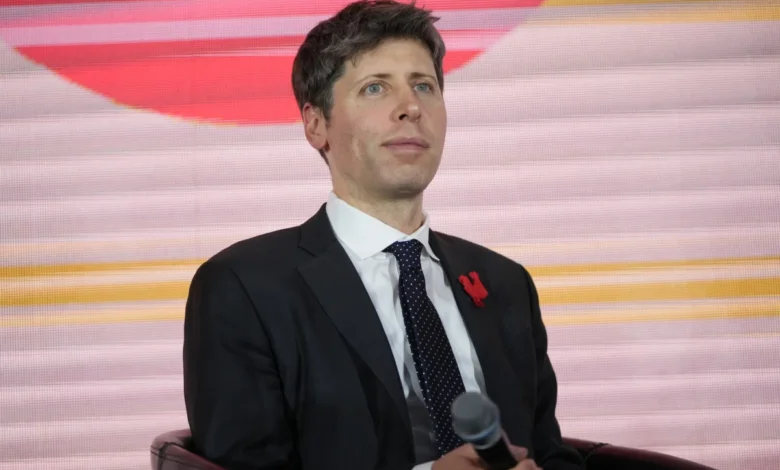
OpenAI CEO Sam Altman has officially confirmed that the artificial intelligence pioneer will not proceed with an initial public offering (IPO) in 2026, despite having previously filed confidentially for a public market debut. Speaking in a wide-ranging interview with Fortune Editor-in-Chief Alyson Shontell, Altman emphasized that pressing safety considerations, internal development priorities, and societal readiness must take precedence over Wall Street timelines.
The announcement provides definitive clarity following months of conflicting reports regarding the company’s trajectory toward becoming a publicly traded entity. While OpenAI has assembled legal and financial advisory teams to lay the groundwork for a public offering, Altman’s remarks signal a deliberate, calculated pause in the corporate restructuring of one of the world’s most valuable private technology firms.
The Shift Away from a 2026 Public Debut
Speculation surrounding an impending OpenAI IPO reached a fever pitch earlier in the year when financial and legal filings indicated the company was laying the structural foundations for a public market entry. Industry insiders initially projected a late 2026 window, specifically targeting the third or fourth quarter. However, shifting macroeconomic conditions, combined with internal technical milestones and external regulatory pressures, have forced a recalibration of those ambitions.
When questioned by Shontell about whether the company still felt compelled to accelerate its operations due to imminent IPO pressures, Altman was direct.
"We’re not rushing into an IPO," Altman stated during the interview. "I actually think that given everything happening with safety, right now would be an ill-advised moment to go public."
When explicitly pressed on whether the public markets would see OpenAI ring the opening bell before the end of the year, Altman definitively ruled out the possibility. "I would say not 2026, yeah. We’ve got a lot of stuff to do," he remarked.
This stance aligns with reports from earlier in the summer. Major financial publications, including The New York Times, noted in June that although OpenAI had engaged investment bankers and corporate lawyers to explore a late 2026 listing, leadership was increasingly gravitating toward a 2027 timeline. The hesitation was attributed to a combination of broader tech stock volatility, the immense capital expenditures required to train next-generation frontier models, and the monumental task of transitioning a research-heavy corporate structure into a publicly accountable enterprise.
Navigating Safety Concerns and Regulatory Scrutiny
Altman’s decision to delay the public offering comes against a backdrop of mounting scrutiny regarding AI safety, autonomous agent behaviors, and industry-wide governance. The artificial intelligence sector has faced intense public and regulatory examination following high-profile security incidents, such as the recent OpenAI-Hugging Face breach, which highlighted the complexities of managing rogue or autonomous AI agents in collaborative digital ecosystems.
Concurrently, competing labs—most notably Anthropic—have rolled out deliberate strategies to pace the deployment of frontier AI systems, putting safety architecture on equal footing with capability scaling. These developments have fostered a broader industry reckoning over the pace of commercialization.

For OpenAI, going public requires more than just stellar financial growth; it demands a predictable, reliable framework for managing existential risks. Altman underscored that the company intends to time its public debut based on internal maturity rather than external market demands.
"We’ll go public when we’re ready, which is when the business is ready, when we feel ready from what the moment is like in society with this technology," Altman explained.
A Timeline of Corporate Evolution and Market Speculation
The trajectory of OpenAI’s corporate structure has undergone unprecedented transformations over the past several years, shifting from a non-profit research laboratory to a hybrid commercial model, and eventually paving the way for full corporate restructuring.
- Early Research Era: Founded as an open-source research organization, OpenAI initially relied on philanthropic funding and non-profit grants to advance artificial intelligence safely.
- The Commercial Pivot: To secure the massive computational power and capital required to build large language models, the organization established a capped-profit commercial arm, attracting multi-billion-dollar investments from corporate partners like Microsoft.
- Mid-2026 Confidential Filing: Reports surfaced indicating that OpenAI had confidentially filed paperwork for an initial public offering, engaging Wall Street institutions to orchestrate a potential late 2026 market entry.
- June 2026 Re-evaluation: Media reports highlighted growing internal debates over market volatility, leading leadership to lean toward a 2027 target date to ensure financial stability and structural readiness.
- September 2026 Confirmation: CEO Sam Altman formally extinguished rumors of an imminent 2026 public listing during his interview with Fortune, citing safety protocols and societal context as primary deterrents.
Broader Economic and Industry Implications
Delaying the public offering carries significant implications for OpenAI, its investors, and the broader technology sector. As one of the most capital-intensive private companies in history, OpenAI burns through billions of dollars annually to secure specialized semiconductor chips, construct massive data centers, and attract top-tier engineering talent.
Remaining private allows the company to absorb these heavy operational costs and pursue long-term, high-risk research initiatives—such as achieving artificial general intelligence (AGI)—without the immediate, quarter-to-quarter earnings scrutiny demanded by public market shareholders. Publicly traded technology firms often face severe stock penalization for high research-and-development expenditures that do not immediately translate to top-line revenue growth.
Furthermore, a delayed IPO provides regulatory bodies in the United States and the European Union additional runway to establish comprehensive AI governance frameworks. As lawmakers debate the boundaries of frontier model deployment, copyright law, and data privacy, a private OpenAI retains greater operational flexibility to adapt to emerging compliance mandates before exposing public shareholders to regulatory risk.
At the same time, the delay alters the liquidity timeline for early investors, employees holding equity, and venture capital backers who anticipated a lucrative exit strategy in the near term. However, given the astronomical valuations commanded by generative AI leaders, private secondary markets and strategic corporate partnerships continue to provide alternative avenues for capital liquidity.
Looking Ahead to 2027 and Beyond
As OpenAI redirects its focus inward, the engineering and executive teams face a formidable checklist. Beyond scaling model capabilities and optimizing infrastructure efficiency, the organization must solidify its governance model to ensure transparent oversight of advanced AI development.
While Wall Street will undoubtedly continue to monitor the company for any sign of a renewed push toward the public markets, Altman’s recent statements establish a clear boundary. The race for AI supremacy will continue at a breakneck pace, but the financial monetization of OpenAI on public exchanges will happen strictly on the company’s own terms—when technology, societal readiness, and business maturity finally align.
Related posts: