Versioning and Tracking Scikit-LLM Experiments with MLflow and Scikit-learn Pipelines

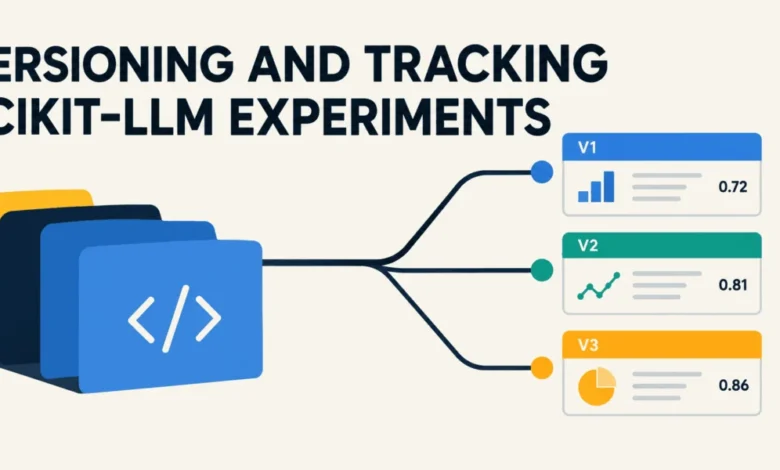
The rapid integration of Large Language Models (LLMs) into standard machine learning workflows has introduced significant challenges regarding reproducibility, model governance, and lifecycle management. As developers increasingly rely on libraries like Scikit-LLM to bridge the gap between traditional scikit-learn pipelines and generative AI, the necessity for robust tracking mechanisms has become a primary concern for engineering teams. By leveraging MLflow—an open-source platform designed to manage the end-to-end machine learning lifecycle—data scientists can effectively version, audit, and promote LLM-integrated pipelines, ensuring that model transitions remain transparent and reliable.
The Evolution of LLM Integration in Machine Learning
Historically, scikit-learn pipelines were utilized primarily for structured data tasks such as regression, classification, and clustering. However, the emergence of transformer-based architectures and the subsequent popularity of LLMs have fundamentally shifted the landscape. Developers now seek to wrap sophisticated LLM logic within the familiar scikit-learn interface, allowing for seamless integration into existing production systems. This creates a new set of requirements: because LLM backends, prompts, and inference parameters are subject to frequent updates—often driven by performance tuning or cost optimization—the ability to track the lineage of a model has shifted from a best practice to a critical infrastructure requirement.
In early 2024, the industry saw a surge in "model drift" reports where LLM-based pipelines performed inconsistently across different versions of the underlying model files. This prompted the development of standardized workflows that use MLflow to record parameters, code versions, and artifacts. By treating the LLM configuration as a logged parameter, organizations can now maintain a forensic record of how a specific model was generated, tested, and eventually pushed to production.
Setting the Foundation for Robust Experimentation
To begin implementing a structured tracking system, practitioners must first establish a controlled environment. The technical prerequisite involves installing the scikit-llm library—specifically with the gpt4all extension to enable local execution—alongside mlflow. Using local execution is a strategic choice for developers looking to avoid the latency and cost of cloud-based APIs while maintaining high levels of data privacy during the initial research phase.
The configuration of an MLflow tracking URI, typically pointing to a SQL database such as SQLite, serves as the backbone of this system. This database acts as a centralized registry for all metadata, including run durations, parameter sets, and model artifacts. By initializing an experiment titled "Scikit-LLM-Versioning," researchers create a digital sandbox where every iteration of an LLM pipeline is recorded, tagged, and ready for comparative analysis.
The Lifecycle of a Pipeline: From Baseline to Production
The standard operating procedure for a mature machine learning team involves a clear distinction between the development phase and the registration phase.
- The Baseline Phase: Developers start by initializing a pipeline with a lightweight model, such as the Orca Mini. This serves as the baseline for performance metrics. During this phase, every execution is wrapped in an MLflow context manager. This ensures that the specific model file string (e.g.,
orca-mini-3k-71m-q4_0.gguf) is stored as a parameter, providing a clear reference point for future troubleshooting. - The Upgrade Phase: Once the baseline is established, teams frequently iterate by swapping the underlying engine for a more robust model, such as the Falcon-based architecture. By logging this as a distinct run within the same experiment, developers create a side-by-side comparison. The use of
cloudpickleas a serialization format is essential here; it bypasses standard serialization limitations, allowing for the reliable storage of complex Python objects inherent in Scikit-LLM pipelines. - The Audit Phase: After multiple runs are completed, the MLflow search API allows engineers to extract performance data into a pandas DataFrame. This audit step is crucial. It reveals not only which runs succeeded but also which attempts failed, providing insights into potential compatibility issues between different LLM weights and the local execution environment.
Data-Driven Decision Making and Model Registration
The final step in this lifecycle is the formal registration of a model. This process involves selecting the most performant run—typically identified by a specific metric like accuracy or latency—and promoting it to the MLflow Model Registry.
The Model Registry acts as the "source of truth" for the organization. Once a pipeline is registered, it receives a version number, transitioning it from an experimental artifact to an officially supported asset. This transition is essential for deployment, as it allows DevOps teams to point their production infrastructure to a specific version (e.g., Version 1 of the "Production_ZeroShot_Classifier") rather than relying on an arbitrary file path.
Broader Implications for AI Governance
The adoption of these versioning practices has significant implications for AI governance and compliance. As regulatory frameworks such as the EU AI Act begin to take shape, the ability to document the "provenance" of an AI model is becoming mandatory. By using MLflow to capture the exact parameters and versions of an LLM, companies can demonstrate that their models were built, tested, and validated under controlled conditions.
Furthermore, this systematic approach reduces "technical debt." In environments where multiple developers contribute to the same project, the lack of a centralized registry often leads to the "it worked on my machine" syndrome. By enforcing a registration workflow, teams ensure that the logic embedded within their pipelines remains consistent, regardless of which developer initiated the run.
Analysis of Current Industry Trends
Industry analysts observe that while LLMs are powerful, their lack of inherent explainability remains a hurdle. However, by wrapping them in versioned scikit-learn pipelines, developers gain a degree of "process explainability." By looking at the logs, an auditor can reconstruct exactly what the model was, what data it was trained on, and the sequence of its development.
The transition from manual model selection to programmatic selection based on metrics represents a shift toward more automated machine learning operations (MLOps). As tools continue to evolve, we expect to see deeper integration between these tracking platforms and automated CI/CD (Continuous Integration/Continuous Deployment) pipelines, where a model is automatically tested, benchmarked, and promoted to a registry if it meets predefined performance thresholds.
Future Outlook
Looking forward, the integration of Scikit-LLM and MLflow is likely to expand as more organizations adopt local, domain-specific LLMs. The ability to swap backends—moving from small, local models to larger, more performant ones—without rewriting the entire pipeline is a key competitive advantage. As these tools mature, the focus will likely shift toward optimizing the tracking of GPU utilization, memory footprint, and inference costs, providing a holistic view of the model’s operational efficiency.
In conclusion, the combination of Scikit-LLM and MLflow provides a robust framework for managing the complexity of modern LLM integration. By moving away from informal, localized tracking and toward a centralized, versioned registry, teams can ensure that their machine learning initiatives are not only innovative but also sustainable, reproducible, and ready for the rigors of production-grade deployment. This disciplined approach ensures that as the AI landscape continues to change, the underlying pipelines remain a reliable foundation for organizational growth.