Mastering Google Ads Video Ad Sequence Campaigns for Strategic Brand Storytelling


Google Ads video ad sequence campaigns represent a sophisticated departure from standard YouTube advertising by enabling brands to deliver a series of video clips to individual viewers in a specific, predetermined order. While traditional YouTube ad formats are frequently utilized for broad awareness, sequence campaigns provide a structured framework for storytelling, allowing marketers to guide potential customers through a logical progression of messaging. By leveraging this tool, advertisers can move beyond single-impression interactions to create a cohesive narrative arc, fostering deeper engagement and higher conversion intent among target audiences.
The Evolution of YouTube Advertising Narratives
Historically, YouTube advertising relied on the "Reach" or "View" objectives, which prioritized broad distribution of individual assets. However, the rise of multi-touch attribution and the increasing complexity of consumer decision-making processes led Google to introduce the Ad Sequence subtype. This feature recognizes that a single 15-second spot is often insufficient to explain a complex product or build the necessary trust for a high-ticket purchase.
By forcing a sequence, brands can curate a user’s experience. For example, the first video in a sequence might serve as an educational hook, while subsequent videos address specific pain points, highlight testimonials, or present a time-sensitive promotional offer. This chronological delivery is unique within the Google Ads ecosystem; while other campaign types may cycle through multiple assets, only the sequence format guarantees the order in which the viewer encounters them.
Campaign Architecture and Strategic Setup
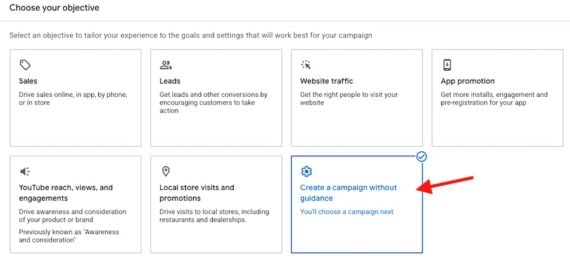
The technical implementation of a sequence campaign requires a precise configuration process within the Google Ads interface. To initiate a campaign, advertisers must bypass the automated guidance systems and select "Create a campaign without guidance." From there, the "Video" campaign type must be chosen. It is critical for media buyers to note that selecting common objectives like "YouTube reach, views, and engagements" will hide the Ad Sequence option entirely. Users must instead select the "Ad sequence" subtype during the setup phase.

Once the campaign framework is established, advertisers are restricted to "target CPM" (cost-per-thousand impressions) bidding. This constraint is intentional, as it aligns with the goal of brand-building and sustained exposure rather than immediate, short-term performance metrics. Furthermore, frequency capping is a mandatory component of these campaigns. Advertisers must define a cap to ensure a viewer does not receive the same sequence too frequently, which could lead to ad fatigue. Current configuration options allow for frequency capping once every 7 or 30 days, providing a balance between persistent brand presence and user experience.
Granular Sequence Control and Transition Logic
The core strength of the ad sequence lies in the ability to define how a user progresses from one ad group to the next. In this architecture, each step in the sequence functions as an individual ad group. The transition logic allows marketers to determine exactly what interaction is required to trigger the next video in the series.
Advertisers can set transitions based on three specific user actions: an "impression," a "view," or a "skip." This level of granular control is essential for managing the narrative. For example, if a brand intends to show a detailed product demo only to those who have already expressed interest by watching a shorter, high-level teaser, they can configure the second ad group to trigger only after a "view" of the first video. Conversely, if the objective is pure reach, the transition can be set to trigger after an "impression," ensuring that even users who skip the first video are still exposed to the subsequent parts of the sequence.
Leveraging Google Asset Studio for Content Optimization
A significant challenge in managing video sequences is the production of high-quality, varied assets. Google has integrated the "Asset Studio" tool into the campaign management workflow, which includes a "Trim videos" feature. This allows advertisers to take a longer-form piece of content—such as a 60-second product demo—and partition it into shorter, distinct clips suitable for a multi-step sequence.
While AI-generated video tools are increasingly available within the Asset Studio, professional media buyers often urge caution. Relying exclusively on AI-generated content for sequential storytelling can sometimes result in a lack of brand voice consistency. Successful campaigns typically use a blend of high-production-value creative and targeted edits to ensure the narrative remains authentic and persuasive throughout the user’s journey.
Case Study: The Yarbo Strategic Implementation
To illustrate the practical application of this tool, consider the marketing strategy of a company like Yarbo, a manufacturer of autonomous robotic lawn mowers. A company in this sector faces the challenge of educating consumers on a high-tech, high-cost product.
Using the "Introduce and Reinforce" sequence template, the team might start with a 30-second product demo broken into two 15-second segments. The first clip focuses on the primary value proposition: "Save Time." The Call to Action (CTA) directs the user to the company’s home page to learn more. The second clip, served only after the user has been exposed to the first, shifts the messaging to a "Labor Day Sale," featuring a "Buy Now" CTA. By separating the awareness phase from the conversion phase, the brand reduces friction, ensuring that the promotional offer is only presented to individuals who have already been primed by the initial educational video.
Measuring Success and Performance Interpretation
Interpreting the performance of a sequence campaign requires a shift away from standard click-through rate (CTR) metrics, which are often less relevant for top-of-funnel storytelling. Instead, marketers should focus on sequence-specific data points. Google provides insights into completion rates for each step, which allows for the identification of "bottlenecks."
If a high percentage of viewers watch the first video but only a fraction reach the third or fourth video, it suggests that the transition or the content itself is failing to maintain engagement. Key metrics for analysis include:
- Step-by-step completion rates: Identifying where the drop-off occurs.
- Cost per completed sequence: Evaluating the efficiency of the entire narrative arc.
- Cumulative engagement: Measuring how many users engaged with multiple steps of the sequence.
Broader Implications for Brand Strategy
The proliferation of video ad sequences signifies a maturation of the digital advertising landscape. As consumers become more adept at filtering out irrelevant or repetitive ads, brands are forced to invest in higher-quality, more relevant storytelling. Ad sequences provide the structure for this shift, moving the focus from the "interruptive" model of advertising to a "relational" model.

The ability to control the order of information delivery also has profound implications for brand sentiment. By controlling the sequence, a brand can ensure that a customer is introduced to its values before being asked for a sale, or that a complex technical feature is explained in digestible segments. This strategic approach to the customer journey, facilitated by the precision of Google’s platform, is likely to become a standard requirement for brands looking to maintain visibility in an increasingly crowded and skeptical online marketplace.
In conclusion, while ad sequence campaigns require a more rigorous setup and a more disciplined approach to content creation than standard YouTube ads, the potential for building brand authority and driving high-intent conversions makes them a vital tool in the modern digital marketer’s arsenal. By aligning technical configurations with a clear, customer-centric narrative, brands can transform their video advertising from a series of disjointed impressions into a cohesive, persuasive journey.