Advancing Nuclear Energy’s Economic Viability Through Autonomous Operations

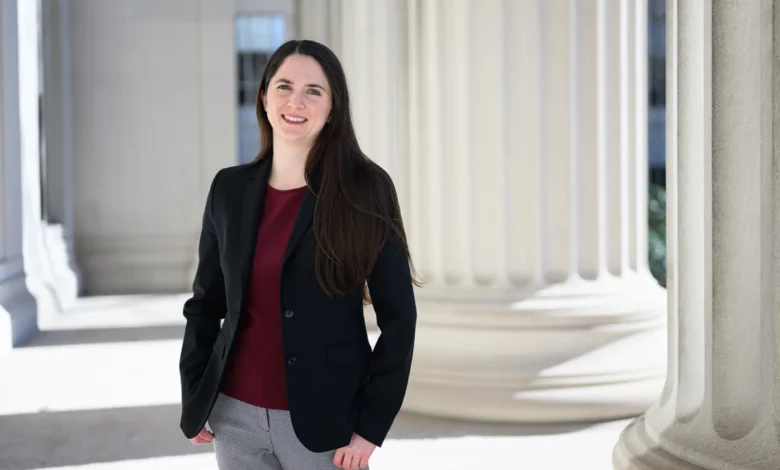
The quest for a truly sustainable and economically competitive clean energy future hinges on unlocking the full potential of nuclear power. A critical barrier to its widespread adoption has historically been the perception of high operational costs, often linked to the intensive manual labor required in existing facilities. However, groundbreaking research at MIT is poised to redefine this paradigm, focusing on the development of remote operation protocols for autonomous control of nuclear plants. Lauren Fortier, a second-year doctoral student in the Department of Nuclear Science and Engineering (NSE), is at the forefront of this initiative, aiming to make nuclear energy not only cleaner but also more affordable and accessible.
Fortier’s journey into the intricate world of nuclear operations is rooted in a unique blend of practical experience and academic pursuit. After earning an undergraduate degree in materials science and engineering from Northwestern University, where she was an ROTC scholar, Fortier found herself supervising nuclear plant operations on a U.S. aircraft carrier in the South China Sea. This immersive experience provided an unparalleled perspective on the absolute reliance on nuclear power for propulsion and sustained operations in demanding environments. "It was a unique experience that you don’t easily see anywhere else, especially the complete reliance on nuclear power. The only way you’re moving through the ocean is if you have that nuclear reactor working," Fortier recalled, highlighting the critical nature of these systems.
This hands-on role as a naval nuclear operator ignited a passion for the operational facets of nuclear power. Fortier gained deep insights into the science underpinning plant operations, but also became acutely aware of inherent inefficiencies. She observed that many plant operations were exceptionally labor-intensive, prompting a fundamental question: could these processes be streamlined through automation? This realization sowed the seeds for her future research endeavors.
From Naval Operations to Academic Innovation
The U.S. Navy, recognizing Fortier’s potential and commitment, offered her an opportunity to pursue a master’s degree in an approved discipline. Naturally, she chose nuclear engineering at MIT, viewing it as a logical extension of her operational expertise. "My experiences in nuclear up until then had been overwhelmingly positive, so I thought I would build on them and move from the operations realm to the academic realm," Fortier stated. The rigorous training she received in the Navy proved to be an invaluable preparation for the demanding academic environment at MIT.
During her master’s program, Fortier focused on developing a supervisory control system for nuclear plant operations. Her work involved extensive use of a simulator that accurately replicated thermal hydraulic responses, with the underlying assumption that lessons learned in this simulated environment would translate effectively to real-world applications. This initial research provided a foundational understanding of control systems and laid the groundwork for her more ambitious doctoral research.
The Imperative for Autonomous Nuclear Plants
The future viability of nuclear power, particularly in the context of climate change mitigation and energy security, hinges on its ability to compete economically. A significant avenue for cost reduction lies in optimizing operational efficiency. The advent of advanced reactor designs, including smaller modular reactors (SMRs) and microreactors, presents a unique opportunity to reimagine nuclear power generation. These smaller, potentially distributed units are envisioned for deployment in remote areas or in configurations that differ significantly from traditional large-scale plants.
Legacy nuclear plants, operating at high capacity factors, have historically justified the substantial costs associated with maintaining large, highly trained human staffs. However, microreactors, designed for scalability and potential deployment in remote locations, cannot bear the same operational cost burden. This is where supervised and rigorously validated autonomous operations become not just advantageous, but essential. The challenge, as Fortier identified, is transitioning from decades of human-centric operational protocols to systems that can seamlessly integrate both human and machine intelligence.
Fortier’s central research question evolved: "How do we transition to autonomous operations in nuclear power plants?" She envisioned a unified approach, a single, integrated supervisory control system, rather than a patchwork of disparate automated components. While this integrated system offered significant potential benefits, the primary hurdle was adapting operational procedures designed for human operators to accommodate machine execution. She astutely observed that a purely human-centric framework, however robust, would inherently limit the efficiency and adaptability of automated systems. "Because everything is human-centric, it doesn’t allow you to choose the best way to do a procedure," Fortier explained. This led to a paradigm shift in her thinking: exploring how humans and computers could collaborate, each leveraging their unique strengths, with human intervention reserved for critical, strategic moments.
Fostering Innovation Through Collaborative Partnerships
The ambitious scope of Fortier’s research naturally extended beyond the confines of a master’s thesis, making a doctoral pursuit a logical progression. She continued her work towards a Ph.D. after completing her master’s in 2025, a testament to the depth and complexity of the challenges she aims to address.
Crucially, Fortier’s research has benefited immensely from the collaborative ecosystem at MIT. Her advisor, Sacit Cetiner, holds a joint appointment with MIT NSE and the Idaho National Laboratory (INL), a leading U.S. national laboratory for nuclear energy research. This affiliation facilitated a vital collaboration with Katya Le Blanc, a senior human factors scientist at INL. Together, they are addressing the intricate challenge of designing an autonomous supervisory control system that incorporates an effective and user-friendly human-machine interface. Further support came from the Human System Simulation Laboratory at INL, which provided Fortier with enhanced capabilities to design and analyze cyber-physical systems.
"I’m very much an engineer and don’t have a lot of experience in human behavior, so the collaboration with INL was a huge benefit for me. I got better insights into many aspects, including what you want to see when a human has to take over for a machine when it’s no longer working," Fortier acknowledged, underscoring the interdisciplinary nature of her work.
In addition to her academic and national laboratory collaborations, Fortier has engaged with industry leaders. Her summer internship in 2025 at Westinghouse, a prominent designer and vendor of nuclear power plants, provided a practical platform to test her theoretical concepts for autonomous operations solutions in a real-world industrial context. This direct exposure to industry challenges and operational realities has undoubtedly informed the practical applicability of her research.
At MIT, Fortier has also benefited from the expertise of her co-advisor, Anuradha Annaswamy, a renowned expert in control systems and the founder and director of the Active-Adaptive Control Laboratory in the Department of Mechanical Engineering. Annaswamy’s deep knowledge of control theory is instrumental in guiding Fortier’s work on supervisory control system frameworks and their execution. "She’s a control systems expert, which really benefits me because while I can explain what to do with a nuclear power plant, she can help me understand better how to go about operations from a control systems perspective," Fortier explained. Fortier has actively pursued coursework in control systems to build a robust theoretical foundation. Her other co-advisor, Curtis Smith, former director of INL’s Nuclear Safety and Regulatory Research Division and now KEPCO Professor of the Practice of Nuclear Science and Engineering at MIT NSE, provides further invaluable guidance.
A Phased Approach to Autonomy and Trust
A fundamental principle guiding Fortier’s research is the gradual and systematic introduction of automation. The goal is to build user trust by demonstrating the reliability and safety of these systems. "When we introduce an automated procedure that walks you step by step through what you would be doing anyway, it is reassuring and builds trust," Fortier stated. Her doctoral work emphasizes an objective-oriented operational approach, where the control system can dynamically generate the sequence of actions required to achieve a specific goal, rather than rigidly adhering to pre-programmed procedures. This adaptive capability is crucial for handling unforeseen events and optimizing plant performance.
Furthermore, Fortier’s commitment to transparency and predictability in automation is evident in her choice of methodology. She is developing automation based on finite state automata, a well-established and highly transparent method, as opposed to more complex, data-driven artificial intelligence approaches like machine learning. "We’re not using a data-driven statistical approach like machine learning because we do not yet have the tools to validate the operation of such systems," Fortier explained. The advantages of finite state automata, which she further explored during a summer internship at INL in 2024, lie in its discrete event system nature. This means that every operational step is clearly defined and event-driven – "if this happens, do that" – allowing for clear adjustments based on current plant conditions and explicit transitions between states. This approach addresses the complex challenge of nuclear plant control through conventional, verifiable automation, ensuring a high level of safety and predictability.
Broader Implications for the Future of Nuclear Energy
The significance of Fortier’s work has already been recognized by the Department of Energy’s Nuclear Energy University Program, which awarded her one of the prestigious prizes in the 2025 Innovations in Nuclear Energy Research and Development Student Competition. This accolade underscores the potential impact of her research on the future of nuclear energy.
The successful development and implementation of this nuclear plant automation program, particularly when integrated with next-generation reactor designs, will be instrumental in accelerating the development and deployment of commercial microreactors. This could unlock new possibilities for nuclear energy, including its use in remote communities, for industrial heat applications, or as a component of a resilient, decarbonized energy grid.
The immediate next step for Fortier involves scaling up her supervisory control system, drawing on the insights gained from her focused work on smaller control modules. She expresses enthusiasm for the challenges ahead and the potential for her research to reshape the nuclear energy landscape. "The collaborations with other people, and the relationships we have established with stakeholders, have really helped make an impact and supported the relevancy of the work," she commented. "Sometimes when you’re stuck in your own bubble, that outside perspective is really useful."
Fortier’s pioneering work represents a critical step towards making nuclear energy a more economically viable and operationally efficient component of the global clean energy transition. By developing robust, transparent, and user-trusting autonomous control systems, she is not only advancing the field of nuclear engineering but also paving the way for a more sustainable energy future. The economic implications are substantial; reduced operational costs through automation can make nuclear power more competitive with other energy sources, thus encouraging greater investment and deployment of this vital low-carbon technology. The successful implementation of such systems could lead to a significant increase in the global installed nuclear capacity, contributing meaningfully to climate change mitigation efforts and energy security.