Bing’s AI Performance Report Enhances Transparency for Publishers Navigating Generative Search

The evolving landscape of search engine optimization is undergoing a seismic shift with the integration of generative artificial intelligence, presenting new challenges for publishers seeking to maintain and enhance their online visibility. A significant hurdle has been the lack of granular performance data specifically for AI-generated answers, often conflated with traditional organic search results. This opacity makes it difficult for SEO professionals and content creators to understand which channels are driving traffic and how their content is being leveraged within AI-driven search experiences.
Google’s Search Console, a vital tool for webmasters, currently combines insights from AI Overviews and conventional organic listings. This unification leaves optimizers in a position of having to infer the source of their visibility and traffic, creating a significant blind spot in their analytics. Similarly, platforms like ChatGPT have been selective in their data sharing, offering metrics primarily to publishers who have explicitly licensed their content to OpenAI. This limited access to performance indicators exacerbates the challenge of adapting to the new AI-powered search paradigm.
In response to this growing need for clarity, Bing has emerged as a pioneer in providing dedicated analytics for generative AI search. Building upon its earlier "Guide to AEO and GEO," which outlined strategies for AI-driven and Generative Experience Optimization, Bing introduced an "AI Performance Report" within its Webmaster Tools earlier this year. This report, now enhanced to offer greater utility and actionability, represents a significant step forward in empowering publishers to understand their presence within AI-generated search results.
Understanding Bing’s AI Performance Report
The Bing AI Performance Report is designed to track a website’s appearances and contributions within Microsoft’s AI ecosystem. This includes citations within Microsoft Copilot, AI-generated summaries appearing in Bing search results, and mentions within select AI partner integrations. While the report offers a valuable window into AI-driven visibility, it currently lacks the ability to filter data by individual channels, nor does it specify the exact AI partners involved.
The report is structured into two primary sections: "Grounding Queries" and "Pages."

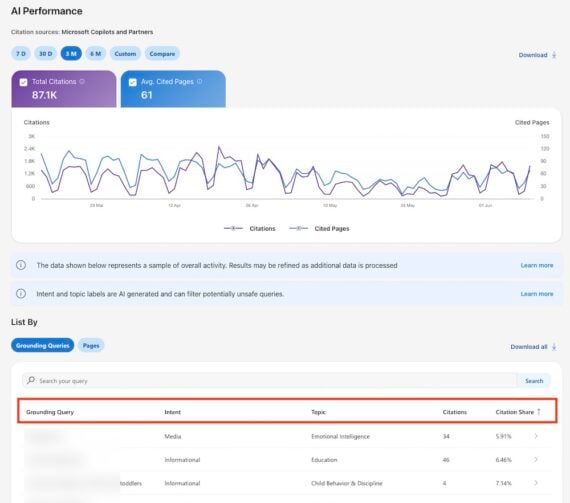
The "Grounding Queries" section provides insights into the search queries that led to Bing’s AI features referencing content from a publisher’s website. For each identified Grounding Query, the report now offers a more comprehensive breakdown, including:
- Intent: An understanding of the user’s underlying goal or purpose behind the query.
- Topic: Categorization of the query into relevant subject matter.
- Citations: The total number of times a specific query resulted in a citation from the publisher’s content.
- Citation Share: The proportion of citations for a given query that originated from the publisher’s website compared to other sources.
This enhanced data allows publishers to move beyond mere observation and delve into the nuances of how their content is being used to answer user questions within AI. By understanding the intent and topic of queries that lead to citations, publishers can refine their content strategy to better align with user needs and AI understanding. The "Citation Share" metric is particularly crucial, as it indicates the competitive landscape for specific AI-generated answers and highlights opportunities for increased prominence.
Furthermore, the report provides users with the flexibility to sort the "Grounding Queries" by any of these metrics, enabling them to identify patterns, prioritize efforts, and uncover emerging trends. The ability to export the entire report to a spreadsheet offers an additional layer of customization, allowing for more in-depth analysis, custom filtering, and integration with other performance data.
Deeper Dive into Page-Level Citations
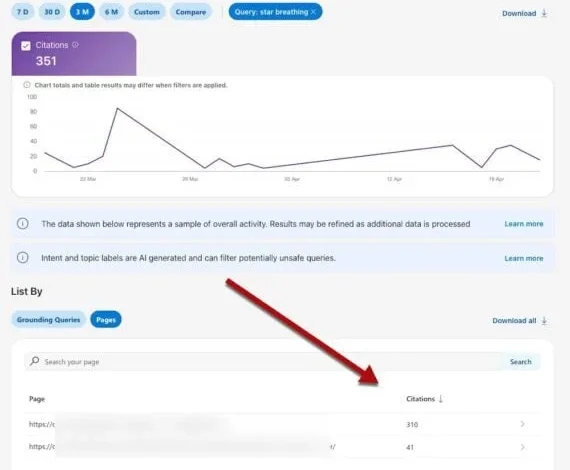
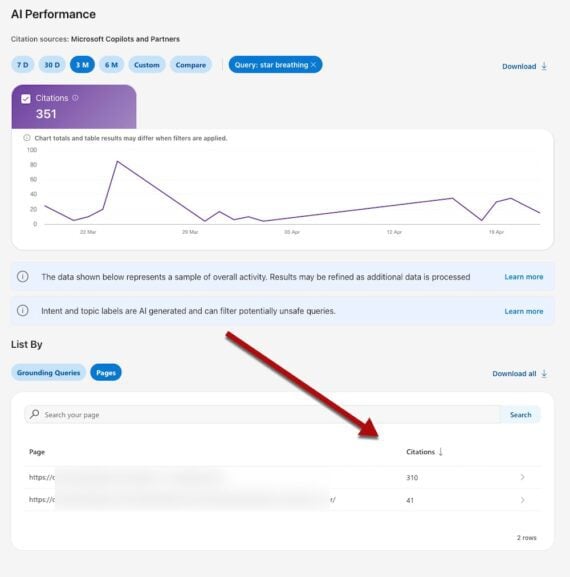
Beyond the query-level insights, the Bing AI Performance Report also offers a granular view of how specific pages on a website are being cited within AI-generated responses. Clicking on any "Grounding Query" reveals a detailed list of the publisher’s pages that were referenced for that particular word or phrase.
This drill-down capability is instrumental in understanding which pieces of content are most valuable to AI systems. The report quantifies the frequency with which each cited page (identified by its URL) appears in AI responses. While it does not yet provide direct metrics on views or clicks generated from these AI citations, the frequency data offers a strong proxy for visibility and potential influence.
A further click on any specific URL within this view unveils all the "Grounding Queries" associated with that page over the specified reporting period. This bidirectional relationship between queries and pages allows for a holistic understanding of content performance in the AI search context. Publishers can identify which queries are driving traffic to their key pages through AI, and conversely, which pages are most frequently leveraged by AI to answer a broad range of user questions.
Evolving Metrics for AI Visibility
The continuous refinement of Bing’s AI Performance Report reflects a commitment to providing publishers with the tools they need to adapt to the generative AI era. The latest updates have expanded the metrics available to track visibility, offering a more robust framework for understanding performance:
- Grounding Queries: As detailed above, this tracks the specific search terms that trigger AI responses referencing a publisher’s content.
- Pages: This metric highlights the specific URLs from a publisher’s website that are being cited within AI answers.
- Citation Frequency: The number of times a particular page is cited across all AI responses within the reporting period.
- Citation Share: The percentage of citations for a specific query that come from a publisher’s website, indicating their relative authority on that topic within the AI’s knowledge base.
- Total Citations: The overall number of times a publisher’s content is referenced by Bing’s AI features.
- Query Intent: Categorization of user intent behind queries that lead to citations, aiding in content alignment.
- Query Topic: The subject matter of queries, helping to understand the thematic relevance of a publisher’s cited content.
These expanded metrics enable publishers to conduct a more sophisticated analysis of their AI performance. By examining citation frequency and share, they can identify which content is resonating most with AI models and users seeking AI-powered answers. Understanding query intent and topic further refines this analysis, allowing for strategic content creation and optimization aimed at capturing these AI-driven opportunities.
Streamlined Integration and Data Acquisition
Getting started with Bing’s AI Performance Report is designed to be a straightforward process, especially for those already utilizing Google Search Console. Bing has made significant efforts to simplify the onboarding experience, recognizing the need for publishers to quickly gain access to this critical data.
To set up Bing Webmaster Tools, users can log in with their Microsoft account. The platform offers a convenient "Import your sites from GSC" option, which automates the process of adding website properties that are already verified in Google Search Console. This feature significantly reduces the time and effort required for initial setup.
Once a site is added, Bing typically takes approximately 24 hours to begin collecting and reporting the relevant AI performance data. This waiting period allows the system to gather sufficient information to provide meaningful insights. Publishers are encouraged to regularly monitor the report to track changes in their AI visibility and to adapt their strategies accordingly.
Broader Implications for the SEO Industry
The introduction and enhancement of Bing’s AI Performance Report have far-reaching implications for the search engine optimization industry. For years, SEO professionals have relied on a well-established set of metrics and tools to gauge their performance and inform their strategies. The advent of generative AI search necessitates a recalibration of these approaches.
The lack of transparency from major players like Google in this area has created a degree of uncertainty and frustration. Publishers are essentially operating in a vacuum, struggling to understand the impact of AI on their organic traffic and brand visibility. Bing’s proactive stance in offering a dedicated AI performance report sets a precedent and highlights the critical need for other search engines to follow suit.
The data provided by Bing’s report can be instrumental in:
- Content Strategy Refinement: Publishers can identify which types of content, topics, and formats are most likely to be cited by AI, allowing them to create more relevant and impactful content.
- Technical SEO for AI: Understanding how AI extracts information can inform technical SEO practices, ensuring that content is structured and formatted in a way that AI models can easily parse and understand.
- Competitive Analysis: By observing citation share, publishers can gain insights into how their website stacks up against competitors in AI-generated answers.
- Measuring ROI of AI Efforts: While direct click data is still evolving, citation frequency and share provide a measurable indication of AI-driven visibility, which can be a valuable component of overall SEO performance.
The current limitations of the report, such as the inability to filter by specific AI channels or identify individual partners, are likely to be addressed in future updates. As AI continues to evolve and integrate more deeply into search, the demand for granular, actionable data will only intensify. Bing’s early investment in this area positions them as a leader in supporting publishers through this transformative period.
The journey of optimizing for generative AI search is just beginning. As more platforms introduce similar reporting tools and as AI technologies mature, the ability to measure and manage AI-driven visibility will become an indispensable skill for any digital marketer or content creator. The Bing AI Performance Report is a crucial early indicator of this future, offering a tangible path towards understanding and thriving in the new era of search.