Palmer Luckey Defends Elon Musk and Criticizes US Defense Strategy at the DealBook Summit

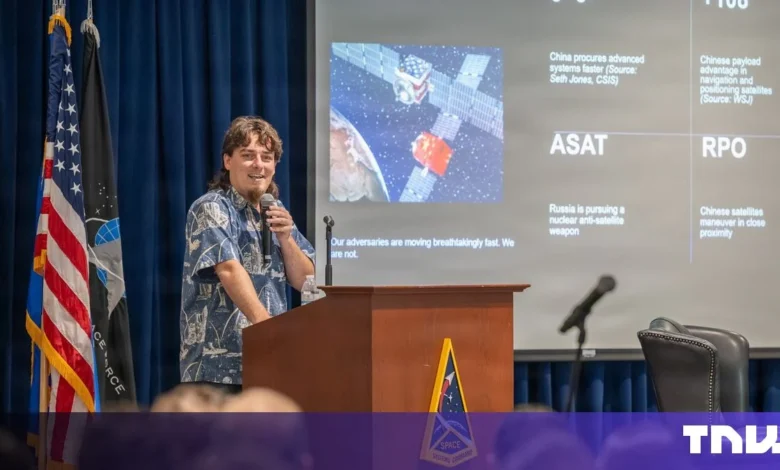
The intersection of private technology innovation and national security policy took center stage at the New York Times DealBook Summit this week, as Anduril Industries founder Palmer Luckey offered a candid assessment of the current state of US military involvement in Ukraine and the future of global warfare. During a wide-ranging conversation with host Andrew Ross Sorkin, Luckey addressed the controversial role of SpaceX’s Starlink and Starshield systems, the ethical dilemmas of emerging AI weaponry, and the structural shifts he believes the Department of Defense must undertake to maintain a technological edge in an era of renewed great-power competition.
The Starshield Controversy and the Limits of Private Tech
At the heart of the discussion was the complex relationship between SpaceX and the Pentagon. Luckey, a vocal proponent of defense modernization, defended Elon Musk against recent criticisms regarding the limitations placed on the Starlink network in Ukraine. President Volodymyr Zelenskyy has previously expressed concerns regarding restricted access and speed limits for the satellite network, which has been vital for Ukrainian communications and drone operations since the Russian invasion began in February 2022.
Luckey argued that the constraints on the Starshield program—the Pentagon-contracted, militarized version of the Starlink network—are a byproduct of extreme caution within the US government. "The US government isn’t even willing to stand up for Ukraine because they’re afraid of losing their constellation," Luckey stated. His assessment suggests that the Pentagon fears that if the network is used too aggressively in offensive operations, Russia might view the commercial-satellite infrastructure as a legitimate military target. Because the same satellite constellation serves both domestic US interests and international operations, the loss of those assets would represent a catastrophic failure for American communications infrastructure.
This tension highlights the precarious position of private companies acting as de facto military contractors. Luckey noted that while he personally supports Ukraine—pointing out that his own firm, Anduril, has been active in the region since the second day of the conflict—the strategic decisions governing the use of these tools remain firmly in the hands of federal authorities.
Project Meridian and the Future of Warfighting
Beyond the immediate theater of war in Ukraine, Luckey discussed his participation in Project Meridian, a Pentagon-commissioned initiative tasked with envisioning the nature of warfare in 2050. The project, which is overseen by the MITRE Corporation and features a panel including Musk and former House Speaker Newt Gingrich, seeks to identify "orphan technologies"—innovative concepts that lack a clear champion or funding stream within the rigid bureaucracy of the Department of Defense.
One of the more provocative examples cited by Luckey is the concept of weather modification for tactical advantage. By manipulating precipitation patterns at sea, military forces could theoretically clear cloud cover, providing high-resolution visibility for precision-guided munitions. While such concepts border on the science-fictional, Luckey emphasized that the goal of Project Meridian is to force a discussion on disruptive technologies that the current defense establishment is ill-equipped to address.
The initiative has faced criticism, most notably from Wes Bryant, a former senior official at the Pentagon’s assessment of civilian harm. Bryant has characterized the project as a symptom of a growing oligarchy in government, where wealthy technology entrepreneurs wield disproportionate influence over military strategy. Luckey dismissed these concerns, noting that the board is comprised of over 20 individuals, including retired senior military officers, and that the project’s final report is intended for public consumption.
Nuclear Testing and the Hardening of Electronics
Luckey pivoted to a more technical critique of US military preparedness, advocating for a resumption of nuclear testing. His primary concern is the vulnerability of modern electronics to electromagnetic pulses (EMP). According to Luckey, current military models for electronic hardening are based on obsolete data from the Cold War era.
"They were designed for the type of cell phone that Abraham Lincoln would have used," Luckey remarked, highlighting the discrepancy between outdated military standards and the sophisticated, miniaturized transistors found in contemporary devices. He expressed skepticism about whether even modern systems, which are built to current military specifications, would survive a high-altitude EMP event. By resuming controlled testing, Luckey argues that the US could better calibrate its defense systems, ensuring that critical communications and navigation infrastructure remain operational in a high-threat nuclear environment.
AI Weaponry and the Ethics of Collateral Damage
The discussion also touched upon the controversial integration of artificial intelligence in autonomous weapons systems. Luckey sought to distinguish between the generative AI models that power consumer chatbots and the specialized AI used in defense hardware. He argued that fears regarding "runaway" AI are misplaced when applied to tactical systems.
"I am way more afraid of the civilian collateral side for dumb weapons than I am for smart weapons," Luckey said. He contended that traditional, unguided munitions are inherently more dangerous to non-combatants than AI-enabled systems, which possess the capability to identify and track targets with significantly higher precision, thereby reducing the likelihood of errors. Furthermore, he noted that the security of these systems is manageable, as data centers—unlike the decentralized nature of consumer software—can be physically and digitally isolated.
The Broader Strategic Context: US-China Relations
Luckey also weighed in on the geopolitical competition between the United States and China, particularly regarding the semiconductor industry. He strongly opposes the sale of advanced AI chips to Chinese entities, viewing the technology as a critical component of military modernization that should be denied to adversaries. His commentary on Nvidia CEO Jensen Huang underscored the significance of the semiconductor supply chain; Luckey suggested that the US should ensure that key figures in the industry remain aligned with Western interests, emphasizing the role of corporate leadership in maintaining the global technological balance of power.
Reflections on Professional History and Public Policy
The summit concluded with a reflection on Luckey’s departure from Facebook (now Meta) in 2017. Following the disclosure of his financial support for a pro-Trump political organization, Luckey found himself at the center of a corporate firestorm. While he maintained that his exit was a matter of professional friction with colleagues rather than a direct conflict with Mark Zuckerberg, he admitted that the experience shaped his current outlook on industry-government relations.
In a surprising turn, Luckey also voiced strong opinions on the administration of justice, advocating for the public nature of the death penalty. He argued that if a state is to employ the ultimate sanction, it should be done with transparency, devoid of the medicalized "cover" that modern executions typically provide. He suggested that the visibility of the act is necessary for the public to properly evaluate the legitimacy of the judicial process.
Analytical Implications
The statements made by Luckey at the DealBook Summit reflect a broader, growing trend of private sector executives asserting influence over national security policy. As the lines between consumer technology, space exploration, and traditional defense contracting continue to blur, the Pentagon finds itself increasingly reliant on a small group of highly influential tech leaders.
This dependency creates a novel set of challenges. On one hand, the involvement of figures like Luckey and Musk brings an agility and innovation-focused mindset that has been historically absent from government procurement processes. On the other, it raises questions about accountability and the democratic oversight of military strategy. As Project Meridian moves forward and the role of the private sector in conflicts like the war in Ukraine remains central, policymakers will face the difficult task of balancing the necessity of technological innovation with the traditional, centralized control of the state’s military apparatus.
Ultimately, Luckey’s appearance served as a reminder that the future of global conflict will not be decided by governments alone, but by a volatile partnership between the state and the architects of the next generation of technological capability. Whether that partnership strengthens or strains the foundations of the Western security architecture remains to be seen.