Navigating the Digital Frontier: Why Modern Enterprises Need a Comprehensive Social Media Policy in the Age of AI and Employee Advocacy

Over the past decade, social media has undergone a profound structural metamorphosis, evolving from a casual networking pastime into the central nervous system of modern corporate public relations, customer service operations, and community engagement. Today, organizations no longer treat social platforms as mere broadcast channels; rather, they operate as dynamic ecosystems where consumers demand an active, highly authentic digital presence that resonates with their personal values. However, balancing these myriad responsibilities has grown exponentially more complex as brand footprints expand far beyond official corporate handles into the decentralized realm of employee-generated content and artificial intelligence.
Recent industry data underscores the urgency of this digital expansion. According to a Sprout Social Pulse Survey, 40% of consumers find employee-generated content (EGC) significantly more authentic than posts published directly on official brand pages. While this decentralized advocacy offers unprecedented opportunities for organic reach, trust-building, and thought leadership, it simultaneously exposes organizations to unprecedented vulnerabilities. Without robust safeguards, the line between personal expression and corporate representation blurs, inviting reputational damage, security breaches, and potential legal liabilities. Consequently, implementing a comprehensive, forward-looking social media policy has transitioned from an optional administrative exercise to an absolute operational necessity for contemporary enterprises.

Disclaimer: The following analysis is intended strictly for general informational purposes and does not constitute formal legal advice. Organizations seeking to implement or modify their social media governance frameworks should consult with qualified legal counsel to ensure compliance with applicable local and international laws.
Defining the Corporate Social Media Policy and Its Boundaries
To understand the mechanics of modern digital governance, one must first distinguish between a social media policy and social media guidelines. While guidelines typically refer to best practices for optimizing content on specific platforms—such as ideal video lengths, posting frequencies, or aesthetic filters—a social media policy functions as an enforceable component of a company’s broader business code of conduct. It establishes explicit boundaries and protocols dictating how employees, contractors, and executives must represent themselves and the brand across the digital landscape, with a primary focus on safeguarding security, privacy, and legal interests.
The necessity for these policies has accelerated rapidly alongside technological advancements. Modern frameworks increasingly incorporate explicit rules governing the integration of artificial intelligence in content creation, mandating clear labeling protocols for AI-generated assets, and aligning individual usage with overarching corporate AI guardrails. By formally defining these boundaries, organizations can harness the innovative potential of new technologies while mitigating the risks of misinformation, copyright infringement, and consumer alienation.
The Strategic Imperatives Driving Social Media Governance
Modern corporations face a complex matrix of operational incentives and risks that demand structured social media governance. Chief among these is the rise of the employee-influencer phenomenon. Data from the Sprout Social Influencer Marketing Report indicates that more than half of all consumers encounter content created by brand employees at least once a week, with 15% observing such content on a daily basis. Furthermore, consumer appetite for authentic frontline perspectives is palpable, with 46% of respondents expressing a specific desire to hear directly from rank-and-file workers.
When employees voluntarily share behind-the-scenes insights, workplace experiences, and brand milestones, the resulting advocacy can dramatically elevate brand awareness, generate qualified leads, and bolster social recruiting initiatives by attracting top-tier talent. Nevertheless, this decentralized advocacy carries inherent operational hazards. An unguided or disaffected employee with an established digital following can rapidly trigger a major brand crisis, while well-meaning staff lacking training in brand voice may inadvertently misrepresent corporate values. A well-crafted policy bridges this gap, establishing a framework for safe employee advocacy that preserves individual voice without compromising brand integrity.
Beyond risk mitigation, structured social media governance is vital for advancing Diversity, Equity, and Inclusion (DEI) initiatives. Contemporary consumers increasingly gravitate toward brands whose publicly demonstrated values align with their own. By empowering diverse internal voices to share their unique perspectives, organizations can authentically signal their commitment to representation, thereby enhancing brand equity and appealing to marginalized talent pools. Furthermore, maintaining a consistent brand identity across both official channels and employee networks fosters institutional trust, transforming casual consumers into loyal brand ambassadors.
Mitigating Legal, Security, and Public Relations Vulnerabilities
The digital ecosystem is fraught with complex legal considerations, spanning privacy regulations, intellectual property statutes, and industry-specific compliance mandates. A robust social media policy developed in tandem with legal counsel establishes clear rules of thumb—often framed as strict operational do’s and don’ts—that ensure contractors and staff remain compliant across varying jurisdictions, thereby minimizing the risk of costly litigation.
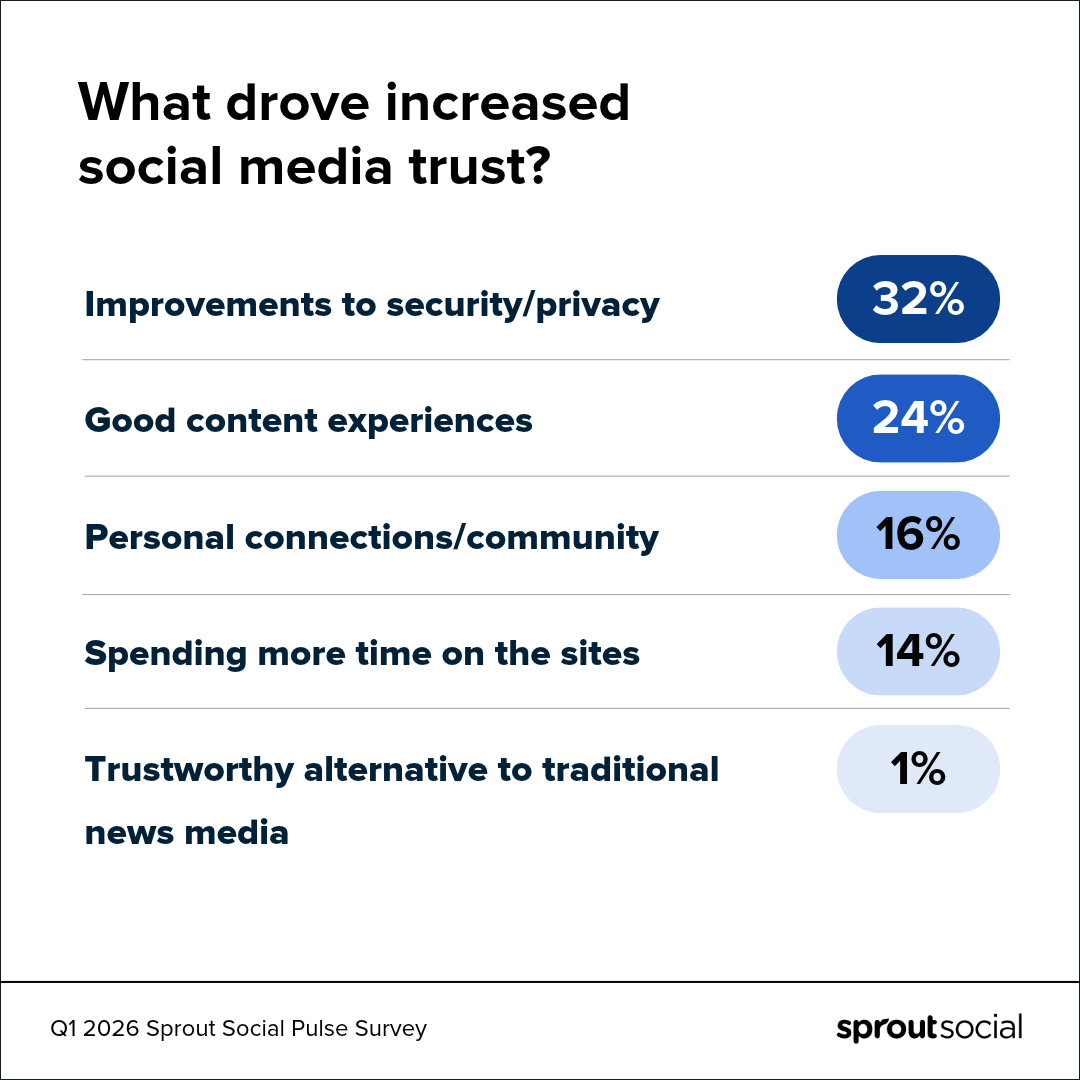
Simultaneously, cybersecurity and data privacy represent paramount concerns for modern boards of directors. Recent pulse surveys indicate that consumer trust in social media platforms is most frequently driven by demonstrable improvements in security and privacy protocols. Cybercriminals frequently target corporate and personal social media accounts for phishing, social engineering, ransomware attacks, and fraudulent impersonation. Comprehensive policies mandate rigorous credential management, dual-factor authentication, and heightened vigilance against online threats, effectively closing security gaps that could compromise sensitive customer and corporate data.
From a public relations perspective, proactive crisis management remains significantly more cost-effective than reactive damage control. Studies show that social media frequently serves as the primary medium through which consumers first learn of unfolding corporate crises. Crucially, approximately 64% of consumers expect brands to address crises publicly and transparently via social platforms rather than relying on traditional press releases or static website announcements. A comprehensive social media policy explicitly designates response frameworks, outlining precisely which internal teams hold the authority to manage crises, approve messaging, and execute rapid conflict resolution before minor grievances escalate into public relations disasters.
Core Components of an Effective Social Media Policy
Constructing an effective social media policy requires a delicate balance between rigid compliance mandates and the empowerment of individual staff members. Organizations must ensure their frameworks are comprehensive, transparent, and easily digestible. Essential components of a modern policy typically include:
-
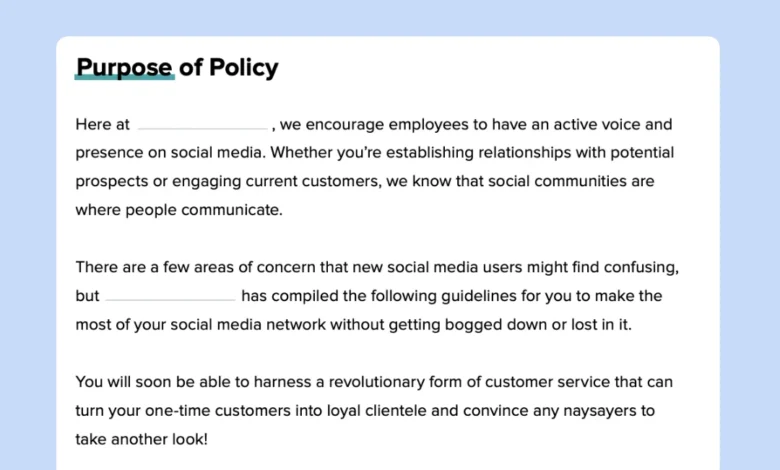
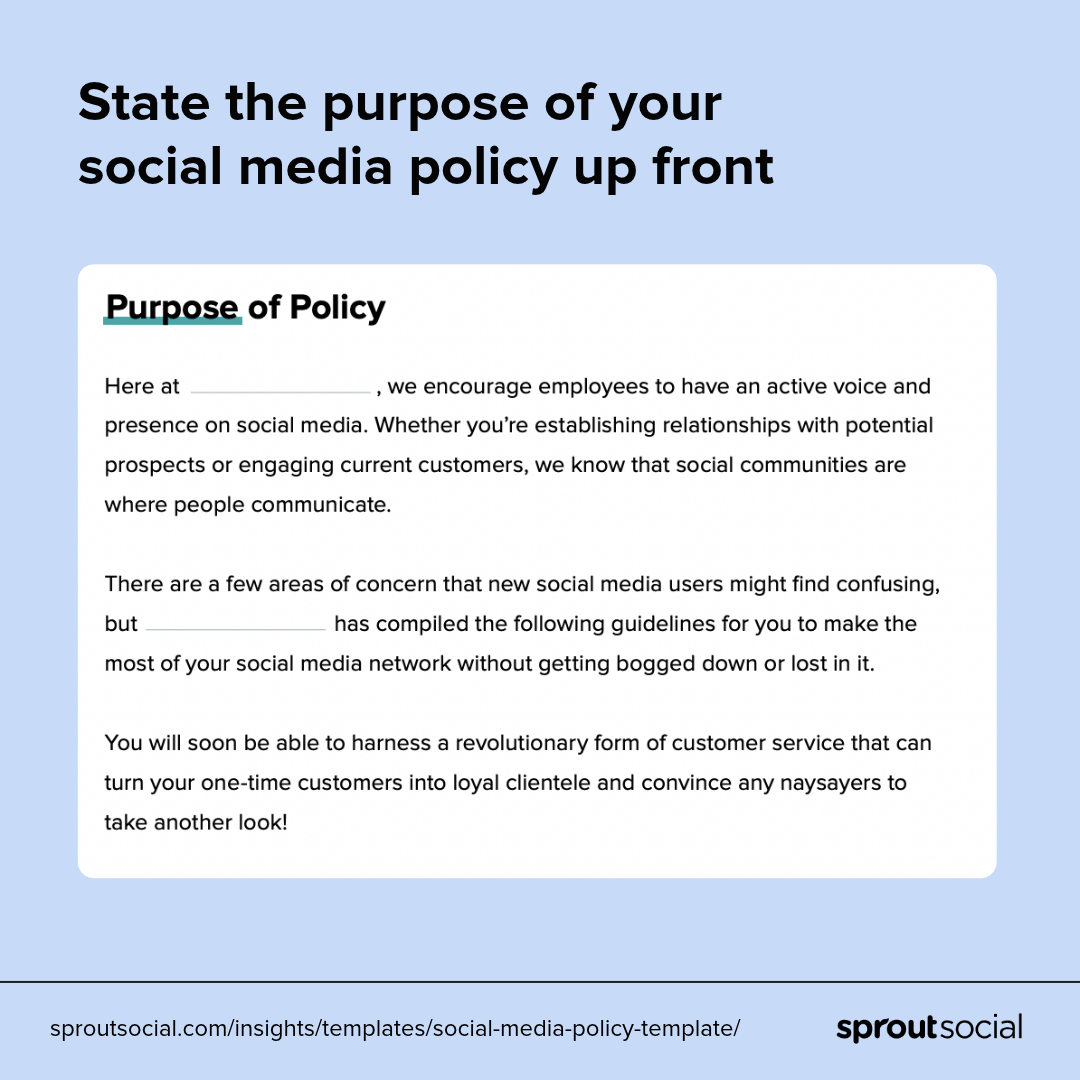
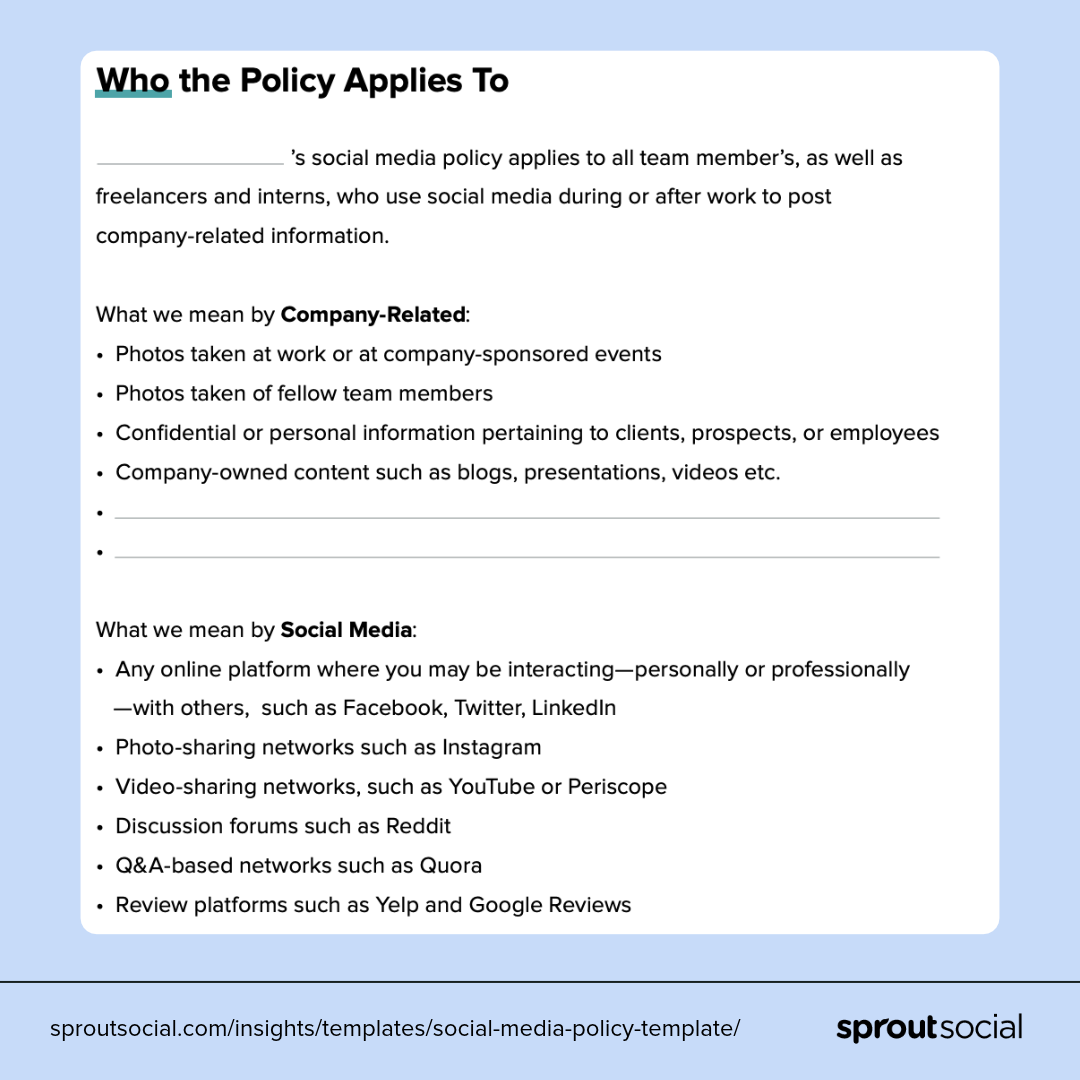
Purpose and Scope: Transparently articulating the rationale behind the policy while explicitly defining its applicability across every tier of the organization, from executive leadership and middle management to interns and external freelancers. Clear definitions of company-related information and digital assets ensure universal alignment.

-
Personal Account Guidelines: Acknowledging that while employers cannot dictate all personal online behavior, the public frequently perceives employees as direct reflections of the brand. Guidelines establish basic standards for respectful discourse and require staff to exercise sound judgment regarding content that could cast suspicion on the business.
-
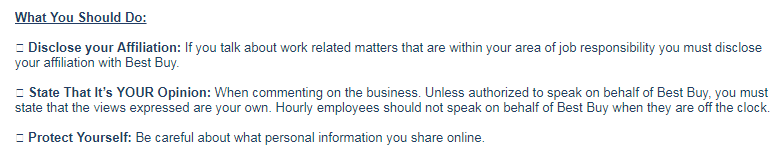
Company Association and Disclaimers: Requiring employees to utilize clear disclaimers on personal accounts—clarifying that their views represent personal opinions rather than official corporate stances—thereby mitigating potential brand fallout.
-
Security and Privacy Protocols: Establishing strict rules against sharing proprietary data, internal communications, or sensitive customer information, alongside protocols for identifying and reporting phishing attempts and account compromises.
-
Legal and Regulatory Compliance: Outlining mandatory adherence to copyright laws, industry-specific regulations, and Federal Trade Commission (FTC) guidelines regarding endorsements and sponsorships.
-
Responsible Engagement Frameworks: Dictating authorized spokespersons and training frontline staff on how to gracefully handle or escalate negative customer feedback, supported by pre-approved response templates and social listening tools.
-
Artificial Intelligence Governance: Setting clear parameters for the deployment of generative AI tools in content creation and customer service. Given that consumer sentiment regarding AI is deeply divided—with roughly 70% supporting AI-driven customer service efficiency but nearly half expressing discomfort with AI-generated influencers—policies must mandate human sign-offs and transparent labeling practices.
-
Influencer Partnerships and Disclosures: Enforcing strict adherence to regulatory standards by requiring unambiguous disclosures for any gifted products, sponsored partnerships, or compensated events involving external creators or brand-adjacent employees.
Industry Benchmarks and Evolving Standards
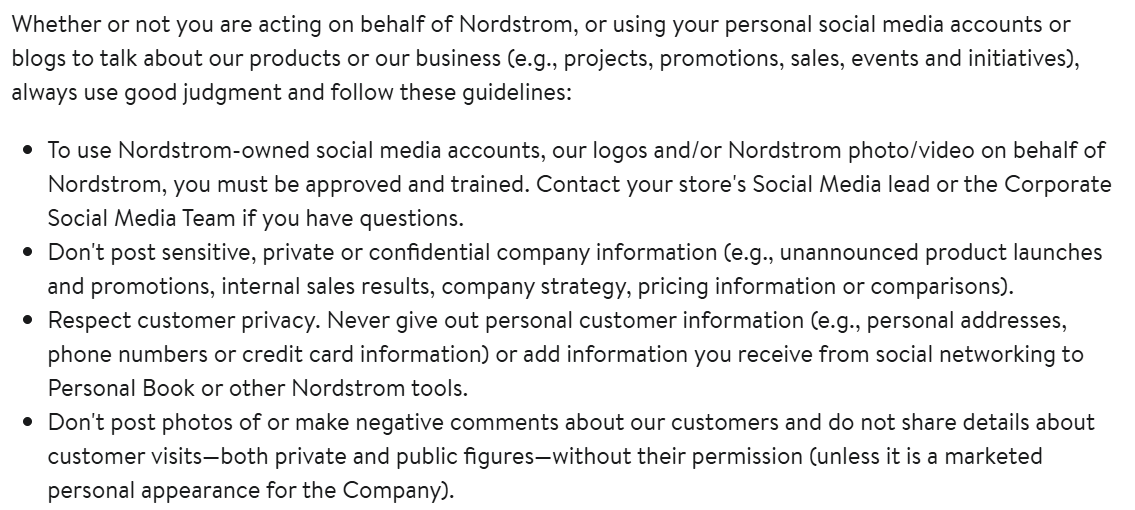
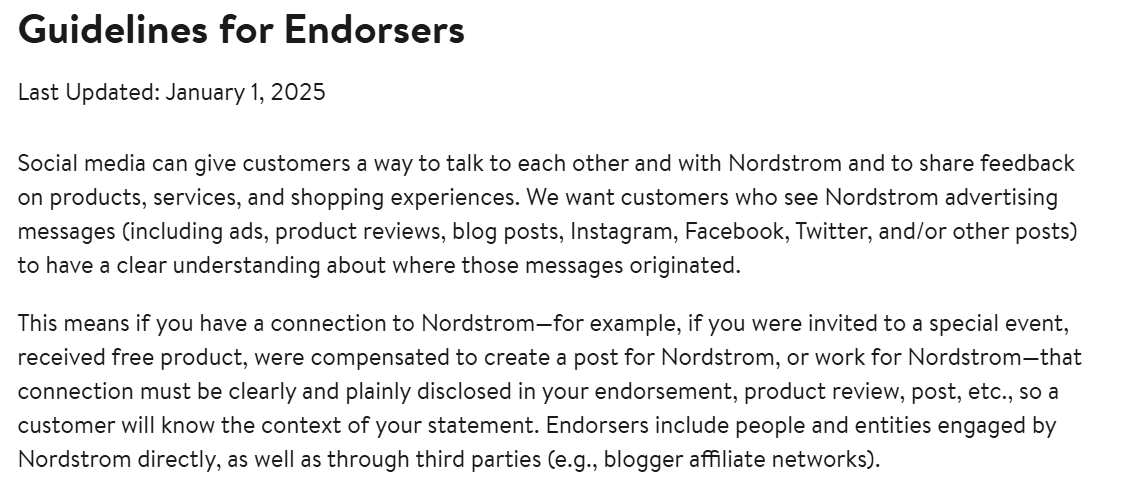
Examining established corporate policies reveals valuable insights into effective digital governance. Nordstrom’s social media policy exemplifies a straightforward, customer-centric approach that prioritizes privacy and transparency. It clearly delineates between official and personal communications, strictly forbids the publication of customer images or sensitive data without consent, and mandates formal training for anyone authorized to operate official corporate handles. Furthermore, Nordstrom maintains explicit guidelines for endorsers, defining anyone with a material connection to the company—including product recipients and event attendees—as an endorser bound by truth-in-advertising standards.
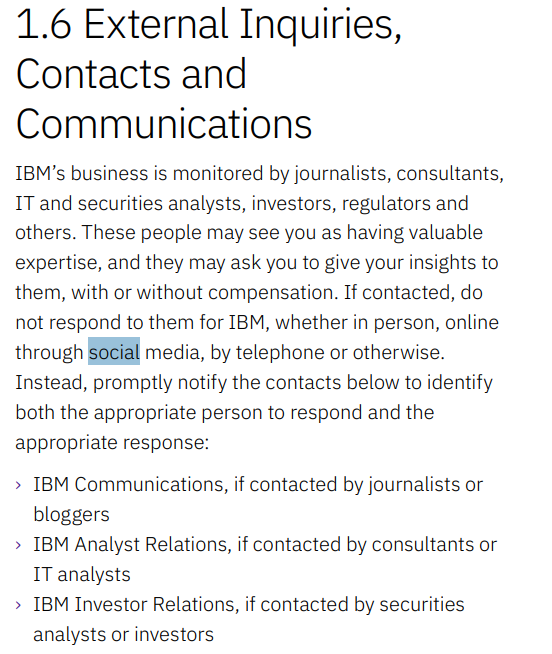
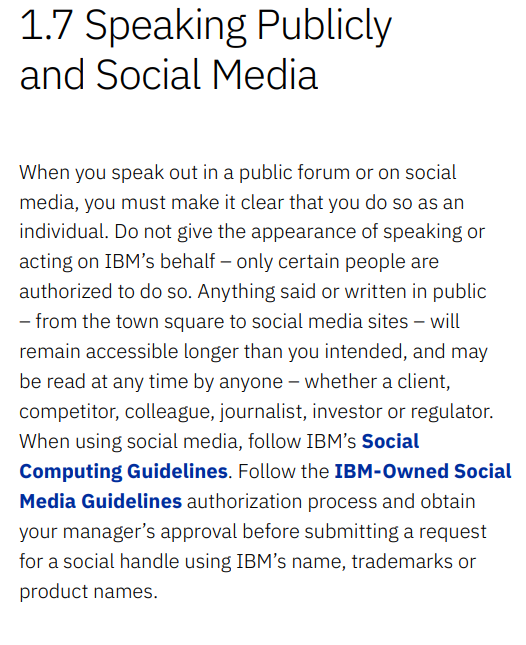
Similarly, IBM’s Social Computing Guidelines, which trace their lineage back to the earliest days of corporate blogging in 2005, demonstrate the importance of continuous policy evolution. Integrated directly with the company’s broader Business Conduct Guidelines, IBM’s framework provides precise protocols for handling media inquiries initiated via social channels and outlines formal pathways for employees seeking authorization to act as public corporate representatives.
Mailchimp approaches governance through the lens of brand voice and tone. By establishing clear channel ownership within the marketing department, Mailchimp ensures a disciplined approval hierarchy for all published content while maintaining a conversational, accessible writing style that guides employees through the delicate art of authentic digital engagement.
Conclusion: Securing the Future of Brand Identity
Social media remains an extraordinarily powerful engine for enterprise growth, brand equity, and community building, but its optimal utilization requires deliberate structure and proactive governance. By implementing a comprehensive social media policy that accounts for the realities of the modern creator economy, the decentralization of employee advocacy, and the rapid integration of artificial intelligence, organizations can successfully future-proof their operations. Ultimately, a well-designed policy transcends mere risk management; it serves as an empowering framework that unlocks the full potential of human capital while safeguarding the foundational trust between an enterprise and its global audience.