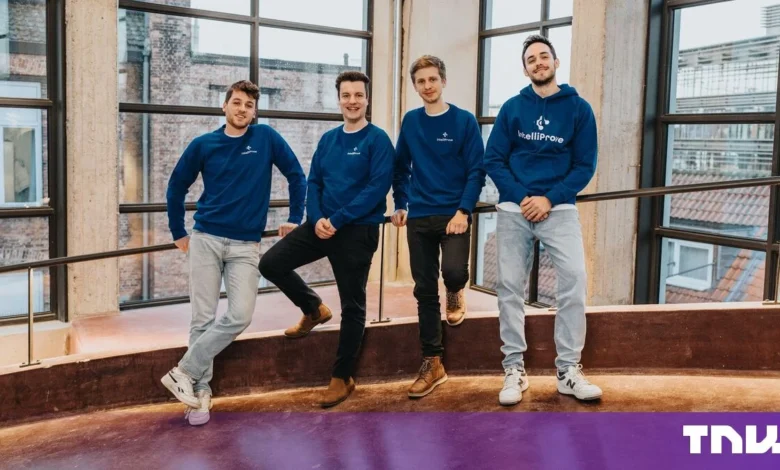
This significant capital injection, led by the investment firm Miles Ahead, marks a pivotal transition for the Ghent-based enterprise. Joining the round were the prominent home nursing organization Wit-Gele Kruis, the imec.istart Fund, and a cohort of strategic business angels. This financial backing serves as a cornerstone for the company’s ambitious roadmap, which aims to integrate its non-invasive health monitoring technology into the burgeoning field of robotics while simultaneously deepening its regulatory and scientific foundations.
The Technology Behind the Scan: Remote Photoplethysmography
At the heart of IntelliProve’s offering is a sophisticated application of remote photoplethysmography (rPPG). The technology leverages the fact that every heartbeat causes minute, imperceptible changes in the color of human skin due to the rhythmic fluctuation of blood volume. By utilizing standard RGB cameras—the kind found on smartphones, tablets, and increasingly, the visual sensor arrays of modern humanoid robots—IntelliProve’s proprietary algorithms isolate these subtle light variations.
The software tracks facial features in real-time, even as the subject moves, to extract a clean pulse signal. From this signal, the system calculates heart rate, heart rate variability (HRV), and respiratory rate. Through an advanced in-house deep learning model, the system even estimates blood pressure by analyzing the morphology of the pulse wave. This eliminates the traditional requirement for uncomfortable, manual-cuff-based monitoring, offering a frictionless diagnostic experience.
A Strategic Allocation of Capital
The €2.7 million seed round is structured with a distinct tripartite focus, according to co-CEO Joeri Tulkens. The company plans to divide the funds equally across three critical pillars: regulatory compliance, scientific research, and commercial expansion.
Regulatory hurdles are perhaps the most significant barrier to entry in the medical device sector. IntelliProve has already secured a CE mark as a Class I medical device under the European Union’s Medical Device Regulation (MDR). This certification validates their core signal acquisition engine. However, the company is not resting on its laurels; it is actively pursuing Class IIa certification. Achieving this higher tier of clinical validation is essential for the company’s goal of providing data that healthcare professionals can reliably use to make diagnostic and treatment decisions.
The research component will prioritize the robustness of the deep learning models. The company intends to broaden its dataset to ensure accuracy across diverse demographics, accounting for variations in skin tone, age, ambient lighting conditions, and hardware quality. By investing in this diversity of data, IntelliProve aims to mitigate algorithmic bias and ensure its "health sensing layer" functions with equal precision in a hospital room, a private residence, or a remote care setting.
From Digital Apps to Physical Companions
While IntelliProve has already successfully integrated its software into virtual care platforms across more than 50 countries, the expansion into humanoid robotics represents a fundamental shift in the company’s operational scope. The robotics market has seen an explosion in interest, with massive investments flowing into developers like Agile Robots and Minerva Humanoids. These machines are increasingly being designed for the healthcare sector to assist with labor-intensive tasks and provide consistent, 24/7 monitoring in elderly care or long-term nursing facilities.
By embedding IntelliProve’s software into these robots, the machines gain a "vital signs" diagnostic capability without requiring additional hardware. A humanoid robot patrolling a ward could perform a 30-second scan of a patient during a routine check-in, providing immediate feedback to medical staff. This does not replace the human clinician; rather, it acts as an intelligent, automated bridge that provides the necessary physiological data to inform professional judgment.
Validation and Clinical Partnerships
The credibility of IntelliProve’s technology is bolstered by its collaborative approach to validation. The startup has established research ties with the Technical University of Delft and Ghent University Hospital. Furthermore, the participation of Wit-Gele Kruis as both an investor and a partner provides the company with a "living laboratory." As a major home nursing provider, Wit-Gele Kruis offers the necessary clinical environment to test how remote monitoring tools perform in real-world patient care, moving the technology from the laboratory to the bedside.
According to internal documentation, the company’s models have been trained on more than 6 million data points. In internal performance benchmarks, the software demonstrates high accuracy, with 97.6% of heart rate readings falling within five beats per minute of a gold-standard reference device. This level of reliability is the bedrock upon which the company hopes to secure wider adoption among insurers and national healthcare systems.
The Broader Implications for Healthcare Infrastructure
The convergence of AI-driven computer vision and robotics is poised to redefine the "point of care." Traditionally, medical diagnostics have been confined to clinics and hospitals. The rise of "hospital-at-home" initiatives and the integration of health sensors into ambient technology—such as home robots—signals a shift toward proactive, continuous care.
For healthcare providers, the benefit is twofold: resource optimization and early intervention. If a robotic assistant can identify a sudden shift in a patient’s heart rate variability or blood pressure before a catastrophic event occurs, it creates a window for intervention that simply does not exist with current, episodic monitoring.
However, the transition to such a model is not without challenges. Privacy and data security are paramount. As the technology moves from personal smartphones into communal or shared spaces occupied by robots, the ethical and legal frameworks governing who accesses this health data and how it is stored will require rigorous scrutiny. IntelliProve has signaled that it is prioritizing these concerns by investing heavily in the certification and data integrity processes that are necessary to gain public and professional trust.
Industry Outlook and Future Trajectory
As co-founder and CTO Tanguy Sanglet noted, the bar for the technology remains static regardless of the delivery vehicle. Whether the software is running on a high-end smartphone in a clinical setting or a navigation-capable robot in a home, the standard for medical-grade data acquisition remains non-negotiable.
The current funding round also paves the way for international expansion. While the CE mark provides a foothold in the European market, the company is looking toward global regulatory landscapes. Securing certifications in jurisdictions such as the United States (FDA) or other major markets will be the next logical step to scale the technology globally.
The synergy between robotics and healthtech is expected to grow as the population ages and the strain on nursing staff increases. By providing a scalable, software-defined sensing layer, IntelliProve is positioning itself as a critical piece of the infrastructure of the future. The company’s ability to successfully navigate the complexities of medical regulation while maintaining high performance across varied hardware environments will likely determine its success in the coming decade.
For investors, the bet on IntelliProve is a bet on the "sensorization" of the environment. As computers and robots become more aware of the physical state of the humans they serve, the demand for reliable, non-contact health sensing will only intensify. With this latest round of funding, IntelliProve is not merely providing a software feature; it is building the foundational sensing intelligence that may one day define how we interact with the machines that care for us.