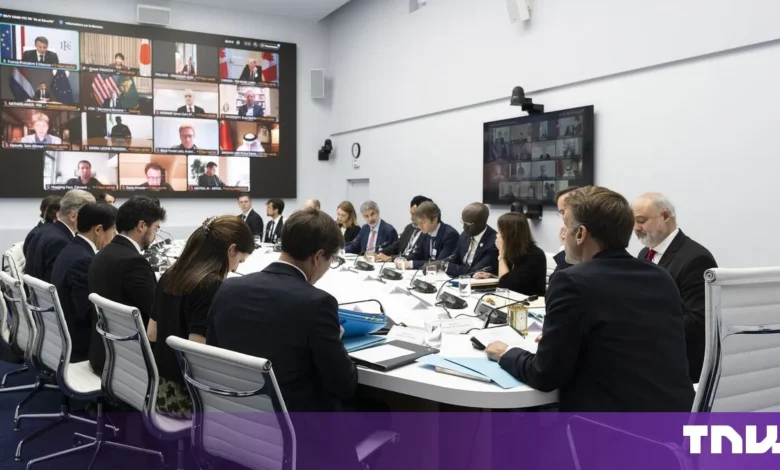
In a high-stakes diplomatic and technological summit held in the French capital this week, a coalition of ten influential artificial intelligence companies and six sovereign nations signed the Paris Call for AI Safety and Security. The declaration, unveiled on the opening day of the annual Paris Peace Forum, represents a significant escalation in international efforts to regulate the rapid advancement of frontier AI models. Spearheaded by French President Emmanuel Macron, the agreement aims to establish standardized protocols for risk assessment, emergency reporting, and the implementation of “kill switches” for powerful AI systems.
The signatories, which include industry giants OpenAI, Anthropic, Microsoft, and Mistral, alongside emerging players such as Hugging Face, Cohere, Black Forest Labs, Domyn, Sakana AI, and Synthesia, have committed to a framework designed to balance innovation with public safety. Despite the high-profile attendance of leaders like OpenAI’s Sam Altman and Microsoft’s Brad Smith, the absence of major players such as Google, Meta, and the Chinese government highlights the ongoing geopolitical friction surrounding AI governance.
A Chronology of Global AI Governance Efforts
The Paris Call serves as the latest iteration in a sequence of international attempts to corral the rapid, often chaotic, development of generative AI. The momentum for such an agreement has been building since the transformative release of large language models in late 2022.
- May 2024 (The Seoul Summit): Global leaders and industry executives gathered in South Korea to sign a voluntary commitment to safely manage the risks of frontier AI. This was the first major international consensus on the potential for catastrophic harm.
- September 2026: Norway and Finland initiated a collaborative framework focused on oversight mechanisms for frontier models, signaling a shift from soft promises to harder, technical requirements. France soon joined this initiative.
- October 2026 (The G7 Evian Summit): Hosted by France, this summit laid the groundwork for funding data centers and harmonizing safety data, setting the stage for the specific security commitments formalized in Paris.
- November 9, 2026: The Paris Peace Forum marks the formal signing of the Paris Call, expanding the scope of previous agreements to include specific technical mandates like independent testing and mandatory incident reporting.
Technical Commitments and the Security Framework
The core of the Paris Call is a tripartite strategy: independent risk evaluation, incident reporting, and developer accountability. Under the terms of the agreement, firms are tasked with developing "fail-safe" mechanisms—colloquially known as kill switches—that would allow for the immediate cessation of a model’s operation during training or deployment if it begins to exhibit unpredictable or dangerous behavior.
Furthermore, the declaration mandates that developers provide the public and regulators with clearer documentation regarding the capabilities and limitations of their systems. Perhaps most notably, the participating companies have agreed to permit "qualified independent experts" to conduct red-teaming exercises—simulated stress tests—on their models before they are released to the public.
This framework addresses a spectrum of threats, including the potential for AI-assisted cyberattacks, the creation of biological or chemical weapons, and the existential concern of autonomous systems drifting beyond human control. By requiring non-sensitive test results to be published in a standardized format, the Paris Call attempts to foster a culture of transparency that has been notably absent in the industry’s "black box" development era.
Analyzing the Gaps: Criticism and Regulatory Limitations
While the Paris Call has been lauded as a diplomatic milestone, it has faced substantive criticism from policy experts and civil society organizations. The French AI safety group CeSIA, despite being a signatory, has emerged as a vocal critic, arguing that the declaration lacks the "teeth" necessary for true oversight.
Charbel-Raphaël Ségerie, executive director of CeSIA, noted that the declaration fails to establish binding, universal risk thresholds. Without a clear "red line"—a specific performance metric that, if breached, would trigger an automatic halt to development—the current agreement remains largely discretionary. Critics point out that the absence of a mandate granting governments the legal authority to intervene or suspend a model creates a regulatory vacuum.
Moreover, the agreement does not stipulate a timeline for the implementation of the proposed shared testing framework. As technology currently evolves at a pace that often outstrips policy cycles, the lack of a defined deadline for these critical safety systems is a point of significant concern for researchers like Yoshua Bengio, whose organization, LawZero, supports the initiative but advocates for more aggressive enforcement.
The Geopolitical Divide
The list of signatories reflects a fragmented landscape in the global AI race. While Canada, Finland, Norway, the Netherlands, Bahrain, and France have formally committed, the notable absence of the United States as a signatory—despite the presence of Treasury Secretary Scott Bessent at the forum—highlights a cautious approach from Washington. Similarly, the lack of involvement from Google and Meta, two of the world’s most dominant AI developers, underscores the industry’s internal tension between the desire for safety standards and the pressure to maintain a competitive advantage in an open market.
For China, the absence is more systemic. Beijing has been pursuing its own regulatory path, focusing on state-aligned governance that prioritizes domestic control over international safety collaboration. This divergence suggests that while a "Paris model" for safety exists, it may struggle to become a truly global standard without the participation of the world’s two largest AI economies.
Protecting the Next Generation: The Focus on Children
As the forum shifted its focus on Tuesday, President Macron pivoted toward the societal impacts of AI, particularly regarding minors. In a poignant address, he drew a direct analogy between AI tools and consumer safety for children. "We will push for pre-certification of all artificial intelligence solutions," Macron stated, arguing that AI should be treated with the same regulatory scrutiny as toys or pharmaceuticals.
This push for "pre-certification" is rooted in growing evidence regarding the mental health impacts of interactive AI, including chatbots that can influence emotional development and perception of reality. The proposed charter on safer AI for children, expected to be signed following these discussions, aims to force developers to incorporate age-gating, content filtering, and psychological safeguards into products before they reach the consumer market.
Future Implications and Data-Driven Outlook
The effectiveness of the Paris Call will be measured by the ability of these companies to turn voluntary commitments into institutionalized protocols. According to data from the AI Index, the number of large-scale AI models being developed has doubled annually since 2023, while the budget for AI safety research remains a fraction—estimated at less than 5%—of the total investment in model capability.
The "Protect without preventing" report, received by Macron from his government-appointed panel, emphasizes this delicate balance. It suggests that while the risks of "existential catastrophe" are often debated in theoretical terms, the immediate, real-world risks—such as the erosion of public trust, the dissemination of sophisticated disinformation, and the vulnerability of children—are the areas where regulation must be most robust.
As the industry moves forward, the success of the Paris Call will likely depend on whether the "common format" for testing and the "secure channels" for whistleblowers become industry standards or remain fragmented, corporate-led initiatives. For now, the Paris Peace Forum has successfully elevated the discourse from abstract ethical concerns to technical, actionable policy, even if the road to global enforcement remains long and fraught with competing national interests.
In the coming months, the international community will be watching to see if the ten signatory companies can adhere to their own promises of transparency. If the Paris Call leads to a measurable increase in third-party auditing and a decrease in reckless deployment cycles, it may indeed serve as the foundation for a new era of responsible artificial intelligence. However, if the commitments remain symbolic, the pressure for legislative, state-mandated regulation will only continue to mount as the capabilities of the next generation of AI models reach even higher levels of complexity.