Google Opens Connected Apps Platform to Developers for Search and Gemini Integration

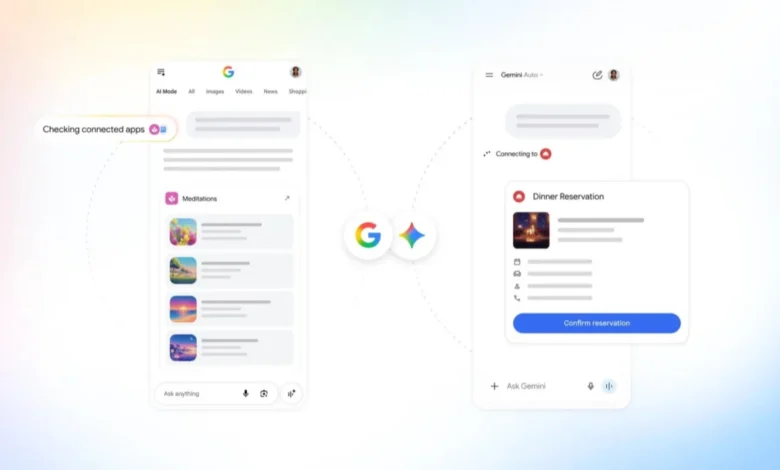
Google has officially launched a public preview of its Connected Apps Platform, a strategic move designed to transform how users interact with AI-driven search results and the Gemini ecosystem. By allowing third-party developers to register their applications for integration, Google is effectively evolving its AI Mode from a static information retrieval tool into an active, task-oriented agent capable of executing commands across a diverse software landscape. This initiative marks a significant shift in the competitive landscape of generative AI, where the primary battleground has moved from simple query-response generation to the seamless orchestration of external digital services.
The announcement, formalized on October 28, was further emphasized by Robby Stein, Google’s Vice President of Product for Search, who confirmed via social media that the developer portal is now open for public access. This development closes a loop that began in July, when Google first introduced the concept of "connected apps" in AI Mode, leaving developers and industry analysts speculating about the selection criteria and the underlying technical architecture that would govern how these apps interact with Google’s large language models.
A Chronology of Integration and Evolution
The trajectory of Google’s AI-integrated search has been rapid. In early 2024, the tech giant began aggressively testing AI-generated summaries, colloquially known as "AI Overviews," which drew both praise for convenience and criticism regarding the disruption of traditional web traffic. Recognizing that users wanted more than just summaries—they wanted to perform actions—Google pivoted toward an agentic model.
By July, the company began rolling out the first wave of connected apps, which included platforms like Instacart and various music services. However, at that time, the process for a developer to get their application recognized by the AI was opaque. The lack of standardized documentation created a barrier to entry for smaller developers. With the release of the Connected Apps Platform, Google has effectively standardized the "handshake" between its models and external software, providing a formal path for integration through the Model Context Protocol (MCP).
The Technical Foundation: MCP and AppFunctions
At the heart of this integration lies the Model Context Protocol (MCP), an open-standard communication framework that allows AI models to interface with external tools in a structured, predictable manner. Google’s implementation of this protocol, alongside its proprietary "Android MCP" (referred to internally as AppFunctions), provides a dual-pathway for developers to expose their application’s capabilities to Gemini and Google Search.
When a developer registers an application via the Google Connected Console, they are essentially creating a metadata layer that describes what their app can do. This process is rigorous. Developers must define specific capabilities—at least three per app—which are then presented to the user during the interaction. These descriptions are critical; they serve as the "instruction manual" for the LLM. If the model determines that a user’s request, such as "Find a recipe for lasagna and add ingredients to my cart," aligns with the defined capabilities of an integrated app, it can trigger that app to execute the necessary task.
The Governance of AI Agents: Policy and Ethics
As with any platform that grants AI the power to interact with third-party software, security and intent are paramount. Google’s policy framework for the Connected Apps Platform is designed to prevent "model manipulation." The core of the policy explicitly forbids developers from using deceptive, overly broad, or misleading descriptions in an attempt to trick the model into favoring their application over a competitor.
The policy explicitly states that apps cannot attempt to dictate how the model uses other tools. This is a vital guardrail to ensure that the AI remains an unbiased arbiter of service selection. If a developer is found to be "gaming" the system, the consequences are severe: Google reserves the right to suspend or terminate developer accounts and permanently remove the application from the platform. Furthermore, the exclusion of ads and promotional materials within these integrations ensures that the user experience remains focused on utility rather than commercial interference.
Current Landscape and User Experience
As of late 2024, the platform is primarily available to users in the United States, with a focus on English-language interactions. The current roster of integrated applications highlights the breadth of the platform’s potential, spanning categories from e-commerce and music streaming to sports entertainment. Services such as Instacart, Canva, YouTube Music, and fantasy sports platforms like Yahoo and Sleeper demonstrate the current focus on high-utility, task-based applications.
From the user’s perspective, the integration is designed to be intuitive but controllable. When a user engages in a search or a Gemini prompt, the system may default to the last used application for a specific category—a feature aimed at reducing friction. However, the system is not rigid. Users maintain the autonomy to manually select a different app or choose from a list of providers, ensuring that they are not locked into a single ecosystem.
Broader Implications for the AI Ecosystem
The implications of this rollout extend far beyond simple convenience. By building a standardized bridge between AI models and third-party software, Google is essentially creating an "AI-first" marketplace. This has several profound effects on the industry:
- Market Consolidation and Discovery: Developers now have a direct channel to put their applications in front of millions of users who are already using AI to plan their daily activities. This could significantly reduce customer acquisition costs for apps that integrate early and effectively.
- The Shift to Agentic AI: The industry is moving away from the "chatbot" paradigm toward "agentic AI." An agent doesn’t just provide information; it acts. By inviting developers to build for this platform, Google is accelerating the transition where the browser or the search bar becomes the primary operating system for the internet.
- Data-Driven Optimization: Google’s commitment to providing developers with analytics regarding traffic, latency, and error rates suggests that this is a long-term strategic investment. Developers will be able to treat the Google ecosystem as a key performance indicator (KPI) for their own software’s health and relevance.
Official Responses and Future Outlook
While Google has maintained a measured tone, the enthusiasm from the developer community is palpable. John Mueller, a long-time Google Search Advocate, noted on LinkedIn that while the platform is in its nascent stages, it represents a fundamental shift in how search functions as a platform. The "early days" sentiment is shared by the product teams, who are already planning a phased expansion.
Looking ahead, the next few months will be characterized by aggressive geographic and product-line expansion. Google has already signaled that partners such as Adobe, Experian, Localiza, and Peloton are in the pipeline, with new integrations for services like Calm expected shortly. This expansion will likely test the scalability of the MCP architecture and the effectiveness of Google’s review process.
As Google continues to refine the platform, the role of the developer will shift from merely creating content to creating "functional endpoints" that an AI can understand and execute. This evolution suggests that the future of the internet will not be found in the traditional link-based search results, but in a dynamic, AI-mediated environment where the software we use is as accessible as the information we seek.
The success of the Connected Apps Platform will ultimately depend on the balance between ease of use for the developer and the reliability of the experience for the user. With over 50 apps already integrated and a rigorous review process in place, Google appears to be prioritizing stability and quality as it builds the infrastructure for the next generation of digital assistance. Whether this will ultimately diminish the importance of traditional web traffic remains the most significant question for publishers and digital marketers, yet for the end user, the promise of a more capable, action-oriented search experience is becoming a reality.