How to Start a Profitable Dropshipping Business with a Zero-Dollar Budget

The digital retail landscape has undergone a seismic shift over the last decade, transitioning from traditional inventory-heavy models to agile, supply-chain-optimized frameworks like dropshipping. As of 2024, the global dropshipping market is valued at approximately $350 billion, with projections indicating it will exceed $1.2 trillion by 2030. For aspiring entrepreneurs, the primary allure of this model remains the removal of significant barriers to entry: capital for manufacturing, warehousing, and logistics. However, while the overhead costs are minimized, the operational reality of launching a business without initial capital requires strategic precision, rigorous market validation, and a commitment to organic growth.
The Chronology of a Zero-Capital Launch
Launching a dropshipping enterprise with no upfront investment is a process defined by incremental progression. The traditional path involves six distinct phases: niche identification, product validation, platform selection, supplier integration, organic acquisition, and data-driven scaling.
In the initial phase, entrepreneurs must bypass the temptation of broad-market appeal. Data from market analysis firms suggests that general stores often face a 90% failure rate within the first six months due to excessive competition and diluted marketing efforts. Conversely, micro-niche stores—those focusing on specific demographics like "compact furniture for urban apartment dwellers"—tend to see higher conversion rates. Once a niche is identified, the validation phase begins. This involves leveraging free data tools such as Google Trends and market reports from institutions like Grand View Research to verify sector growth. For instance, the outdoor furniture market has demonstrated a steady compound annual growth rate (CAGR) of 6.4%, providing a stable foundation for new entrants.
The third phase, platform selection, is where most entrepreneurs encounter their first financial hurdle. While platforms like Shopify offer high-tier functionality, they often carry recurring subscription fees. For those strictly adhering to a zero-budget mandate, marketplaces like Etsy or eBay serve as initial storefronts, as they do not charge upfront fees for hosting, though they do take a commission per sale. Alternatively, WooCommerce, an open-source plugin for WordPress, provides a cost-effective solution for those with basic technical proficiency, allowing for the integration of product databases from suppliers like dropXL without the overhead of premium site builders.
Strategic Product Selection and Supplier Dynamics
Selecting the right product catalog is a quantitative exercise rather than an intuitive one. Successful dropshippers do not rely on trending lists; they evaluate items based on net margin potential after accounting for payment processing fees and marketplace commissions. A robust product analysis includes assessing the "Total Cost of Ownership" for the business, which includes shipping risks, return rates, and the frequency of SKU updates.
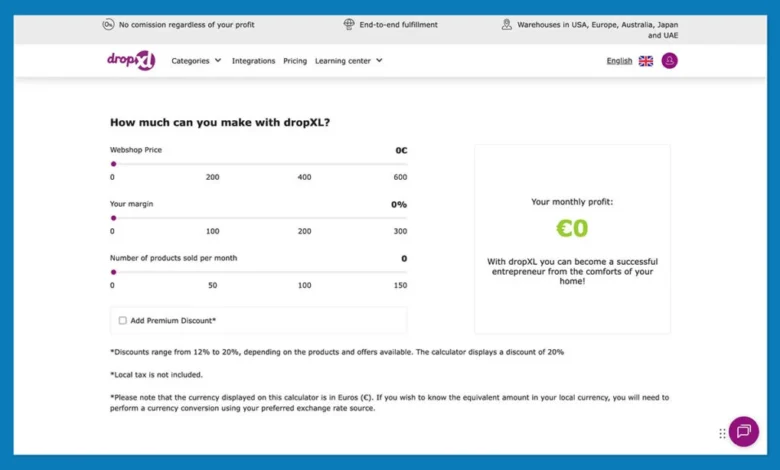
Industry standards for dropshipping suppliers have shifted toward high-integration models. For example, dropXL provides access to over 90,000 products across 32 countries. By utilizing such networks, sellers can automate order dispatch and inventory synchronization every 30 minutes, effectively removing the manual labor associated with stock management. However, the reliance on a third-party supplier creates a dependency that requires careful vetting. Professional standards dictate that suppliers must be evaluated based on their proximity to the target customer base, their reliability in meeting delivery windows, and their history of product quality.
Data-Driven Marketing in a Low-Budget Environment
In the absence of a paid advertising budget, the burden of traffic acquisition falls on organic content strategies. This involves a three-pillar approach: Search Engine Optimization (SEO), social media content creation, and community engagement.
SEO is the most cost-effective long-term strategy for e-commerce. By creating product descriptions that address specific customer pain points—such as assembly instructions for furniture or material durability—entrepreneurs can rank for long-tail keywords that attract high-intent traffic. Parallel to this, social media platforms like TikTok and Instagram serve as visual showrooms. Because physical samples may be unaffordable for a zero-budget startup, successful sellers often pivot to educational content, such as "how-to" guides or measuring tutorials, which provide value to the consumer while establishing the brand as an authority.
Furthermore, building an owned audience is critical. Implementing email capture mechanisms, such as offering a small incentive for newsletter signups, allows business owners to nurture leads without the recurring cost of retargeting ads. This creates a sustainable marketing loop where the cost of acquisition is eventually neutralized by the lifetime value of the customer.
Analytical Implications and Risk Management
A common pitfall for new dropshippers is the attempt to scale prematurely. Financial analysts warn that reinvesting profits into complex website themes or aggressive ad campaigns before achieving consistent monthly revenue often leads to liquidity crises. Instead, the focus should remain on performance metrics: which products generate the highest net profit, which regions demonstrate the lowest return rates, and which traffic sources have the highest conversion rates.
Moreover, the "zero-budget" label is, in practical terms, a temporary state. As the business grows, operational costs will inevitably arise. These include payment gateway transaction fees (typically ranging from 2% to 3%), potential subscription costs for premium plugins, and the necessary investment in professional branding. The objective of the zero-budget startup is not to avoid expenses indefinitely, but to use the revenue generated from initial sales to self-fund these future requirements.
Expert Insights on Market Sustainability
Industry experts suggest that the barrier to entry for dropshipping has never been lower, yet the barrier to success has never been higher. As artificial intelligence and automation become standard, the advantage shifts from those who can simply list products to those who can curate a unique brand experience.
According to retail consultants, the most significant risk in the current climate is the lack of "customer service as a differentiator." In a global market where products are commoditized, the quality of communication, the speed of conflict resolution, and the transparency of the supply chain serve as the primary reasons for customer loyalty. For the zero-budget entrepreneur, this is a distinct advantage; they have the capacity to provide a level of personalized service that larger, impersonal retailers often struggle to replicate.
Conclusion: Building for the Long Term
The dropshipping business model remains a viable pathway to entrepreneurship, provided that the merchant approaches it with the rigor of a traditional retail operation. By focusing on niche validation, leveraging automated supplier integrations, and prioritizing organic growth, individuals can build a scalable enterprise starting with little more than time and effort. The transition from a zero-dollar budget to a profitable, self-sustaining business is not a matter of luck but a result of systematic analysis and consistent execution. As the global e-commerce sector continues to expand, those who focus on the fundamentals—customer experience, product quality, and efficient logistics—will find themselves well-positioned to capitalize on the ongoing digital transformation of retail.
Related posts: