Xero vs FreshBooks: A Comprehensive Analysis of Modern Accounting Software for Growing Businesses and Freelancers

The landscape of cloud-based accounting software has undergone a significant transformation over the last decade, evolving from simple bookkeeping utilities into comprehensive financial management ecosystems. Xero and FreshBooks, two of the most prominent players in this sector, have historically occupied distinct niches. FreshBooks emerged from a need to simplify invoicing for the burgeoning gig economy, while Xero was built to provide small-to-medium enterprises (SMEs) with a robust, cloud-native version of traditional double-entry accounting. While their feature sets have increasingly converged, strategic differences remain that make each platform uniquely suited to specific business models.
The Evolution and Market Positioning
Founded in 2006 in New Zealand, Xero was designed to leverage the cloud to provide real-time financial visibility for businesses that had outgrown basic spreadsheets. By 2012, Xero’s expansion into the United States and other global markets solidified its position as a primary competitor to legacy desktop software. Its architecture is built on a "single ledger" philosophy, allowing accountants and business owners to view the same data simultaneously.
FreshBooks, conversely, began in 2003 as a simple tool for a web designer to create invoices. It focused heavily on user experience and the "client-facing" side of financial transactions—invoicing, time tracking, and expense management. Over the past five years, both companies have pivoted toward "intelligence-first" features. Xero has integrated advanced AI, such as its JAX assistant, to automate bank reconciliation and cash-flow forecasting, while FreshBooks has bolstered its backend accounting capabilities to move beyond simple billing, aiming to retain users as their service-based businesses scale.
Comparative Pricing Structures and Total Cost of Ownership
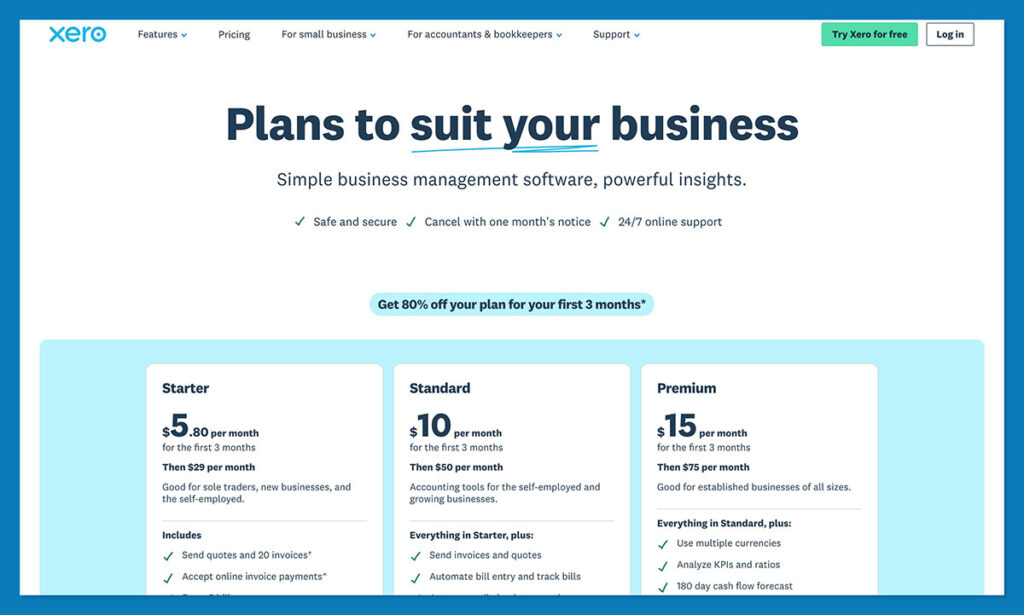
The economic models employed by these two firms represent a fundamental difference in how they view their customer base. Xero’s pricing is feature-gated, meaning users pay for access to specific, more advanced accounting tools like multi-currency support or inventory management. Crucially, Xero does not charge per user. This creates a predictable cost structure for organizations with multiple stakeholders, such as business owners, bookkeepers, and external tax accountants, all of whom can access the platform without increasing the monthly subscription fee.
FreshBooks utilizes a per-client and per-user billing model. Its entry-level plan, starting at $23 per month, is designed for low-volume freelancers. However, as a business grows its client list or adds team members, the cost increases. While FreshBooks is often more affordable for a solo operator, it can become the more expensive option for a growing firm that requires multiple seats and access for various staff members.
Invoicing, Billing, and Service-Based Workflows
For service providers—consultants, agencies, and creative freelancers—the priority is often the speed and professionalism of the billing process. FreshBooks continues to lead in this arena. Its platform allows for the creation of sophisticated invoices, automated payment reminders, and the ability to offer payment plans—a critical feature for firms managing large, high-ticket projects. Furthermore, its integration of retainer management is seamless, allowing users to automatically deduct billable hours from a prepaid balance.
Xero, while more powerful on the ledger side, provides a more utilitarian approach to invoicing. It offers robust automation, including recurring invoices and integration with various payment gateways like Stripe and Apple Pay, but the user experience is intentionally more formal. The recent introduction of AI-driven invoice design through Xero’s JAX assistant indicates that the company is actively working to bridge the gap between "technical" accounting and "aesthetic" client billing.
Inventory, Ecommerce, and Multi-Currency Complexity
The divergence between the two platforms is most visible when analyzing retail and inventory requirements. Xero is built to support the complexities of modern commerce. With its ability to track COGS (Cost of Goods Sold), manage fixed assets, and handle multi-currency accounting for international operations, it is the clear choice for businesses selling physical goods. Its ecosystem of app integrations, including a native Shopify connector that reconciles payouts, fees, and taxes automatically, positions it as the standard for scaling ecommerce brands.

FreshBooks provides basic inventory tracking—adequate for a small business that occasionally sells products—but it lacks the depth required for complex supply chain management. Its limitation to single-currency reporting is a significant hurdle for companies operating in international markets. For a business that requires granular gross profit monitoring or complex tax compliance across multiple jurisdictions, Xero’s infrastructure is far more capable.
Automation, AI, and Future-Proofing
The current "AI arms race" in fintech has seen both companies integrate machine learning to reduce manual data entry. Xero, however, currently holds an advantage in the depth of its data analysis. Its AI tools can perform predictive modeling, benchmarking performance against industry standards, and generating long-term cash flow forecasts. This shift toward "advisory accounting" allows business owners to move beyond just tracking what happened in the past to anticipating what will happen in the future.
FreshBooks remains focused on automation as a means of saving time, rather than a means of strategic analysis. Its rules-based automation for expense categorization and invoice delivery is highly effective for its core demographic, but it does not currently provide the level of financial health reporting or AI-driven business intelligence that Xero offers.
Security and Collaborative Governance
In the wake of increased cybersecurity threats, both firms have invested heavily in encryption and compliance, adhering to global standards such as SOC 2 and GDPR. However, the collaborative experience differs. Xero’s model, which encourages the inclusion of an external accountant from the very first plan, fosters a culture of transparency and proactive tax planning. FreshBooks’ restriction of accountant access on its entry-level plan can create friction during the end-of-year tax season, as users may have to upgrade their plan simply to allow their financial advisor to review the books.
Summary of Strategic Implications
The decision between Xero and FreshBooks ultimately hinges on the maturity and nature of the business in question.
- Choose FreshBooks if: You operate as a freelancer or a service-based agency where the primary financial hurdle is managing client invoices, time tracking, and simple project-based billing. Its ease of use and superior phone support make it an ideal "low-friction" tool for those who do not have a background in accounting.
- Choose Xero if: You are operating a product-based business, an ecommerce brand, or a company with a growing team. The ability to manage multiple users without penalty, handle complex inventory and multi-currency transactions, and utilize AI-driven analytics makes it a scalable foundation that can support a company through years of growth.
As both platforms continue to evolve, the distinction between "simple billing" and "complex accounting" is blurring. However, for the foreseeable future, Xero remains the enterprise-grade choice for growth, while FreshBooks remains the efficiency-focused champion of the service professional. For new business owners, the key is to assess not just current needs, but where the business expects to be in 24 to 36 months, as the cost of migrating financial data between platforms can be a significant operational burden.
Related posts: