NASA Seeks Commercial Solutions to Secure the Future of the Aging Hubble Space Telescope

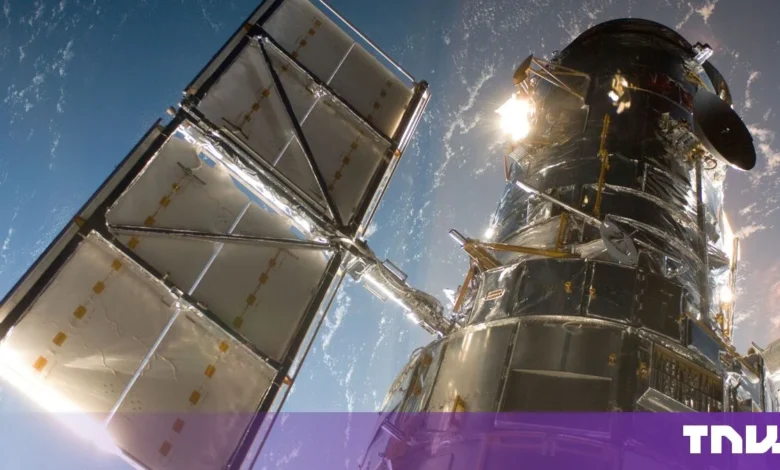
The Hubble Space Telescope, an icon of astronomical discovery that has fundamentally reshaped our understanding of the cosmos for 36 years, faces an uncertain future as its orbital altitude continues to decay. Lacking an onboard propulsion system to counter the relentless drag of the Earth’s thin upper atmosphere, the telescope is slowly spiraling toward an eventual atmospheric reentry. In a significant move to preserve this historic scientific asset, NASA issued a formal Request for Information (RFI) on October 29, inviting private industry to propose innovative strategies to reboost, service, or safely deorbit the telescope.
The urgency of this initiative is underscored by the telescope’s current orbital trajectory. Hubble currently orbits at an altitude of approximately 470 kilometers, significantly lower than its peak operating altitude. While NASA has not yet committed to a specific mission, the agency has set a firm deadline of November 30 for private entities to submit their technical and financial proposals. The window of opportunity is narrowing; according to NASA’s internal analyses, any successful mission must be executed by 2032 to prevent the telescope from entering an uncontrollable decay phase.
A Legacy of Scientific Discovery
Since its deployment in 1990 via the Space Shuttle Discovery, Hubble has provided humanity with unprecedented views of the universe. From capturing the iconic "Pillars of Creation" to measuring the expansion rate of the universe and confirming the presence of supermassive black holes, its contributions are immeasurable. However, the telescope is a aging machine. Its last maintenance visit occurred in 2009 during the STS-125 mission, where astronauts installed a "soft-capture mechanism." This feature remains Hubble’s greatest advantage today, as it provides a standardized docking interface that could theoretically allow a robotic or crewed vehicle to latch onto the observatory for a boost or repair.
The loss of Hubble would create a significant void in observational astronomy. While the James Webb Space Telescope (JWST) has revolutionized infrared astronomy, Hubble remains the primary tool for visible and ultraviolet light observations. With no immediate successor planned until the launch of the Habitable Worlds Observatory—expected in the 2040s—the gap left by Hubble’s demise would leave a decade-long deficit in the scientific community’s ability to conduct multi-wavelength analysis of the deep field.
Chronology of Orbital Decay and Previous Interventions
The history of Hubble’s orbital maintenance is intrinsically linked to the now-retired Space Shuttle program. The last time the telescope was elevated was in 2002 by the crew of the Space Shuttle Columbia, who boosted the observatory to an altitude of 583 kilometers. Over the subsequent two decades, atmospheric drag has claimed over 100 kilometers of that altitude.
The recent call for industry ideas is not NASA’s first attempt at a commercial solution. In 2022, billionaire entrepreneur and private astronaut Jared Isaacman, in collaboration with SpaceX, proposed a privately funded mission to service the telescope using a Crew Dragon capsule. NASA subsequently solicited industry feedback, receiving eight distinct proposals. However, after a thorough review of the technical risks and the lack of available federal funding, NASA opted not to proceed with a reboost mission in 2024.
The current landscape, however, has evolved. With the rise of the commercial space sector and the emergence of companies specializing in in-orbit servicing, assembly, and manufacturing (ISAM), NASA believes the private sector may now be better equipped to handle the logistical and engineering challenges of such a complex maneuver.
The Technical Requirements for a Rescue Mission
NASA’s RFI is broad, covering three distinct categories of potential mission profiles:
- Orbital Reboost: The most critical requirement, where a private spacecraft would rendezvous with Hubble and push it to a higher altitude—at least 600 kilometers—to extend its lifespan by several decades.
- Servicing and Upgrades: Missions that go beyond simple propulsion to replace degrading components, such as gyroscopes or batteries, potentially restoring the telescope to a higher operational capacity.
- Controlled Disposal: In the event that a reboost is deemed unfeasible, a mission to perform a controlled atmospheric reentry would be required. Given Hubble’s massive structure, an uncontrolled reentry poses a statistical, albeit small, risk to populations on the ground, making a guided descent a safer alternative.
The technical requirements stipulate that the selected company would be responsible for providing the launch vehicle, the servicing craft, and the entirety of mission operations. If a crewed component is required, the contractor must also manage the human-rated safety requirements.
The Looming Threat: Lessons from the Swift Observatory
The necessity for this proactive stance is highlighted by the recent fate of the Swift Gamma-Ray Burst Mission. As of October 20, the Swift observatory effectively ceased its scientific operations as its orbital decay made stable, consistent observations impossible. Located at an altitude below 275 kilometers, the observatory began to experience severe atmospheric drag.
NASA had previously contracted the startup Katalyst Space to attempt a rescue mission for Swift, aimed at lifting the satellite to a higher orbit. However, technical failures prevented the robotic craft from successfully docking, and the mission was aborted. Current projections from the U.S. Space Force suggest that Swift will reenter the Earth’s atmosphere in the coming days. While the majority of the satellite is expected to incinerate upon entry, the incident serves as a stark reminder of the limitations of current robotic rendezvous and docking technologies in low-Earth orbit.
Economic and Strategic Implications
The fiscal reality of this initiative is complex. NASA has explicitly stated that it is not currently committing to the procurement of a mission, nor has it set aside dedicated funding for a rescue operation. This places the burden of financial innovation on the private sector. The agency’s stance, as articulated by NASA Administrator Jared Isaacman, is rooted in the belief that "if there are innovative and cost-effective ways to extend the life of an asset already on orbit, we owe it to the American taxpayer and the scientific community to explore them."
This approach reflects a broader shift in NASA’s strategy, moving from being the sole operator and financier of space missions to serving as an anchor customer or facilitator for private industry. By leveraging the growth of startups currently raising capital for in-orbit refueling and autonomous docking hardware, NASA aims to stimulate the commercial space economy while protecting its scientific investments.
Risk Analysis: The 2033–2034 Horizon
The probability of a natural, uncontrolled reentry is not merely a theoretical concern; it is a calculated risk. NASA analysis indicates that there is a 10% probability of reentry by September 2032. This figure jumps to 50% by December 2033. The telescope’s substantial mass—roughly 11,000 kilograms—means that a significant amount of material, including dense tungsten components and mirror assemblies, could survive the heat of reentry.
While the probability of human injury is categorized as low by current standards, the potential for public concern and the loss of a multi-billion-dollar scientific instrument make the "do nothing" scenario increasingly unpalatable for the agency.
Conclusion
The quest to save the Hubble Space Telescope represents a pivotal moment in the history of space exploration. It is a test of whether the commercial space sector can mature quickly enough to perform high-stakes maintenance on aging government assets. As the November 30 deadline approaches, the global astronomical community waits to see if a viable, cost-effective solution will emerge. If successful, such a mission would not only grant Hubble a new lease on life but would also establish a new paradigm for how humanity manages and sustains its most critical infrastructure in the vacuum of space. The coming years will determine whether Hubble remains a sentinel for discovery or becomes a cautionary tale of orbital decay.
Related posts: