The global transportation and autonomous vehicle sectors are undergoing a profound structural evolution, marked by an unprecedented influx of artificial intelligence innovations, venture capital investments, and high-stakes corporate consolidation. While industry pundits have frequently drawn parallels between current market enthusiasm and the peak bubble years of 2016 and 2017, granular dealmaking data from early-stage venture firms suggests that the current landscape—projected into 2026—surpasses those historical benchmarks in both technological maturity and velocity of capital deployment.
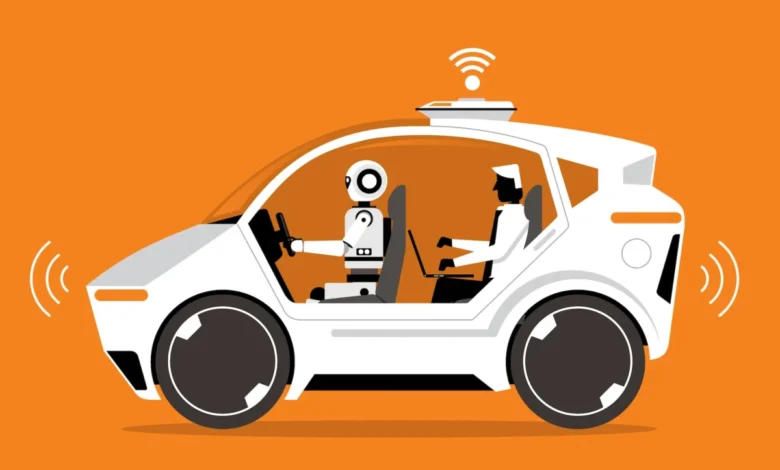
At the heart of this resurgence is a fundamental shift in software architecture. For years, the autonomous vehicle (AV) industry struggled to transition from legacy modular systems—often categorized as AV 1.0—to the elusive goal of end-to-end deep learning frameworks, or AV 2.0. Today, the maturation of advanced foundation models has provided the missing technical bridge, enabling companies to build generalized vision-language-action architectures that generalize seamlessly across disparate environments, weather patterns, and geographical regions.
The Evolution of AV Architecture and the Lower Barrier to Entry
The democratization of autonomous technology has fundamentally transformed the economics of launching a hardware and software robotics firm. According to insights shared by Puneeth Meruva, partner at early-stage venture capital firm Trucks VC, the firm has fielded pitch decks from 81 newly minted autonomous vehicle startups in 2026 alone. This figure represents a staggering two-thirds increase compared to the same period in the previous year, outpacing the frantic deal pace of the mid-2010s.
Crucially, the capital requirements needed to launch an autonomous vehicle enterprise have plummeted. Driven by the availability of powerful open-source models—such as Nvidia’s Alpamayo and Qwen’s general-purpose vision-language-action systems—startups are increasingly able to deploy initial prototypes within months of inception on budgets totaling less than $1 million. This dramatic reduction in capital expenditure has lowered barriers to entry, inviting a new generation of founders to tackle complex autonomous navigation challenges without multi-billion-dollar balance sheets from day one.

While many early investors initially assumed that the vast majority of these emerging startups would focus strictly on niche industrial applications such as warehouse automation, mining, construction, and precision agriculture, a surprising trend has emerged in 2026. A significant portion of incoming pitch traffic consists of pure-play robotaxi enterprises. Remarkably, many of these nascent firms are positioning themselves not as localized pilots, but as direct commercial competitors to established industry leaders like Alphabet’s Waymo.
Industry analysts note that while competing directly with an incumbent of Waymo’s scale on a global level remains a formidable challenge, the modularity and adaptability of modern AI models allow smaller players to carve out highly lucrative regional monopolies or service specific, complex high-density transit corridors. As foundational models continue to reduce the cost of localization and sensor fusion, the geographical footprint of autonomous ride-hailing is poised to fragment into a network of specialized regional operators.
Landmark Venture Financings and Industrial Megadeals
The broader hard-tech and transportation ecosystem has mirrored the explosive activity seen in the software sector, underscored by massive capital raises and high-profile mergers and acquisitions.
Chief among these transactions is a historic $2.1 billion funding round secured by Re:Build, a Massachusetts-based advanced manufacturing accelerator that previously spun out electric vehicle venture Slate Auto—a company famously backed by Amazon founder Jeff Bezos. Co-founded by former Amazon commercial CEO Jeff Wilke, Re:Build aims to position itself as a domestic manufacturing powerhouse capable of scaling high-tech industrial products on US soil. The massive financing round was co-led by General Catalyst and JPMorganChase’s Strategic Investment Group, highlighting institutional confidence in the reshoring and modernization of American heavy industry.
In the heavy machinery and construction automation sector, Bedrock Robotics closed a massive $600 million Series C funding round, lifting the startup’s post-money valuation to an impressive $4.1 billion. The round was co-led by CapitalG and Emergence Capital, with participation from a blue-chip syndicate including the US Innovative Technology Fund (USIT), Bessemer Venture Partners, Temasek, and returning strategic backers such as Nvidia, 8VC, Georgian, Valor Equity Partners, Xora, Eclipse, and Perry Creek Capital. Bedrock’s technology, which equips heavy industrial excavators with autonomous capabilities, signals a broader push toward automating foundational civil engineering and construction workflows.

Meanwhile, consolidation is reshaping the delivery and logistics sectors. In one of the largest corporate combinations of the year, food delivery giant DoorDash entered into a definitive agreement to acquire Instacart for $17 billion. The transaction underscores an aggressive push toward creating an all-encompassing hyper-local commerce monopoly. However, the rapidly changing technological landscape was underscored by DoorDash’s third-quarter earnings disclosures, wherein the company revealed it had processed only several hundred orders originating from autonomous AI agents, indicating that consumer-facing agentic commerce remains in its extreme infancy despite intense market hype.
Commercial Partnerships and Strategic Shifts Across Legacy Automakers
The intersection of legacy automotive manufacturing and software innovation has produced several transformative partnerships, signaling that traditional original equipment manufacturers (OEMs) are increasingly willing to outsource or co-develop core technological stacks.
In a landmark international agreement, Waymo and Toyota officially finalized a manufacturing and deployment partnership, transitioning past preliminary exploratory talks. Under the terms of the agreement, Toyota will manufacture autonomous-ready bZ4X battery electric vehicles at its production facilities in Japan, integrating Waymo’s proprietary self-driving system directly onto the assembly line. These vehicles are slated for deployment in commercial robotaxi fleets across Japan, the United Kingdom, and select international markets. Furthermore, industry insiders suggest this alliance could lay the groundwork for future licensing agreements, potentially bringing Waymo’s autonomy stack to privately owned consumer vehicles.
In the freight and long-haul logistics sector, autonomous trucking pioneer Kodiak AI secured its first binding commercial agreement to deploy self-driving big rigs on public highways. Kodiak will deliver a fleet of 75 autonomous trucks to freight operator DTL Transport, with commercial operations scheduled to commence in 2028. This deal marks a critical transition for autonomous trucking from extended testing phases to fully commercialized, revenue-generating freight corridors.
Concurrently, Rivian Automotive reported robust third-quarter financial results, driven by exceptional consumer demand for its newly introduced R2 SUV platform. The vehicle’s commercial success prompted Rivian management to raise its full-year 2026 delivery guidance, bumping its projected floor from a previous range of 55,000 to 60,000 vehicles up to a revised minimum of 67,000 units delivered globally. Additionally, Rivian expanded its multi-billion-dollar joint venture with Volkswagen Group to integrate advanced AI-driven in-vehicle assistants, cementing a deeper technological synergy between the American EV startup and the German automotive conglomerate.

Regulatory and Market Realignments in Detroit and Silicon Valley
As new technologies proliferate, legacy automakers are also actively navigating the regulatory and legal fallout of past digital strategies. General Motors reached a landmark $220 million settlement with 36 US states to resolve allegations that the company improperly collected and sold private driving behavior and precise location data to third-party data brokers without adequate consumer consent. The settlement follows separate legal resolutions with California regulators and the Federal Trade Commission, marking a definitive effort by Detroit automakers to rehabilitate consumer trust regarding connected-vehicle data privacy.
Concurrently, GM’s strategic pivot away from pure-play battery-electric mandates toward a diversified powertrain strategy—embracing hybrid architectures alongside EVs—reflects a broader pragmatism sweeping the American automotive industry as adoption rates calibrate to shifting macroeconomic realities.
Implications and Future Outlook
The convergence of low-cost foundation models, aggressive venture capital deployment, and strategic manufacturing alliances in 2026 indicates that the transportation sector has entered a decisive second wave of innovation. While the speculative excess of the mid-2010s ultimately gave way to a sobering consolidation phase, today’s market is characterized by hardened business models, tangible commercial contracts, and scalable software architectures.
As startups leverage open-source AI frameworks to lower the barriers of entry into robotaxied operations, and as legacy automotive giants lock in long-term manufacturing agreements with autonomy developers, the physical and digital infrastructure of global mobility is being rewritten in real time. Whether these smaller, highly nimble entrants can successfully challenge established monoliths like Waymo will depend heavily on regulatory approvals, safety validations, and the continued efficiency gains promised by end-to-end artificial intelligence models.