Hollywood Cinematography Meets Mobile Photography Through the Launch of Chromagraph Camera

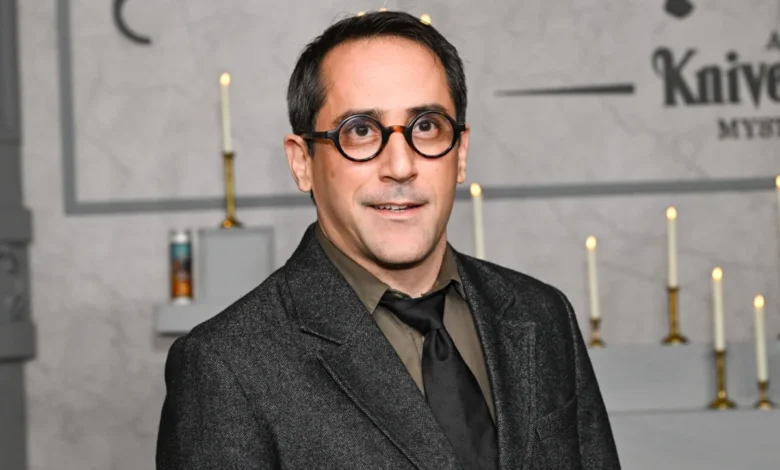
The intersection of professional-grade cinematography and consumer mobile technology has long been a subject of intense debate, yet rarely has a tool successfully bridged the gap between the two worlds as effectively as the newly released Chromagraph Camera app. Developed by renowned cinematographer Steve Yedlin—famed for his visual work on Rian Johnson’s Knives Out and Star Wars: The Last Jedi—in collaboration with director Rian Johnson and software developer Eric Cameron, the application has rapidly ascended the charts of the iOS App Store. At its core, the software offers a proprietary image-processing pipeline designed to move away from the hyper-processed, high-contrast aesthetic favored by modern smartphone manufacturers, opting instead for a "curated" look modeled after the rigorous color science utilized in major motion picture production.
The Evolution of Computational Photography and the "Opinionated" Image
To understand the significance of Chromagraph, one must first recognize the current landscape of smartphone photography. Over the past decade, the industry has shifted toward computational photography, where hardware limitations are offset by aggressive software algorithms. Devices from Apple, Google, and Samsung utilize real-time image stacking, noise reduction, and tone mapping to produce images that appear bright, sharp, and perfectly exposed. While these results are technically impressive, they often strip away the "character" of an image—the nuanced color depth and grain structure that cinematographers spend months perfecting in post-production.
Steve Yedlin, a self-described "color nerd," has spent his career mastering the mathematics behind light and color. His approach challenges the industry-standard belief that a camera should strive for a neutral, literal representation of reality. In his view, every photograph is an interpretation. By launching Chromagraph, Yedlin is effectively democratizing a "film-look" pipeline, allowing everyday users to apply the same color science philosophy used in blockbuster films to their personal snapshots. The app, which retails for a one-time fee of $13, bypasses the standard iPhone processing stack by capturing raw data and running it through a unique, developer-defined formula.
A Chronology of Development and Viral Adoption
The genesis of Chromagraph began with a desire to simplify the complex color-grading workflows Yedlin employs on set. For years, Yedlin has authored his own image-processing algorithms to ensure consistency across his films. The transition from high-end cinema equipment to the constrained ecosystem of an iPhone was a process of months of experimentation.
The project gained significant momentum in late October, when director Rian Johnson showcased the app on social media platforms. The endorsement from a high-profile filmmaker, coupled with a growing consumer appetite for "retro" or "film-like" photography, triggered an immediate surge in interest. Within days, the app became the top-ranked paid download in the iOS App Store. This rapid ascent underscores a significant shift in consumer behavior: users are increasingly willing to pay for software that offers a distinct artistic aesthetic rather than relying on the "default" look provided by hardware manufacturers.
Technical Foundations and the "Development" Workflow
Unlike traditional camera apps that provide a "what-you-see-is-what-you-get" viewfinder experience, Chromagraph functions more like a digital darkroom. When a user captures an image, the screen does not immediately display the final result. Instead, the software requires a moment to perform the rendering process, "developing" the raw data into a final image. This delay is an intentional design choice, signaling to the user that the image is being transformed by the application’s proprietary logic rather than simply being snapped and saved.
The application allows for post-capture adjustments, permitting users to tweak exposure and texture, though the primary selling point remains the color science. Yedlin emphasizes that the app is not intended to be a professional-grade post-production suite—it is a specialized tool for a specific visual outcome. By restricting the feature set to still photography and focusing heavily on color and grain, the team has avoided the "feature creep" that often plagues photography apps, maintaining a singular focus on the aesthetic output.
Industry Implications and the Hardware Ceiling
While Chromagraph represents a significant leap in mobile color science, Yedlin is the first to acknowledge the physical limitations of the medium. Even with the most sophisticated software, an iPhone sensor and lens array cannot replicate the dynamic range, depth of field, or optical fidelity of a professional cinema camera. Yedlin remains adamant that the "control" a professional cinematographer exerts over a scene on a film set is physically impossible to achieve on a smartphone.
This admission highlights a broader truth in the smartphone industry: software can only optimize what the hardware captures. As Apple and other manufacturers continue to push the boundaries of computational photography—integrating generative AI and advanced neural engines—the definition of a "photograph" becomes increasingly fluid. Does the software "take" the picture, or does it "construct" it? Yedlin’s work with Chromagraph suggests that the future of photography lies not in total neutrality, but in the deliberate, opinionated choices of the creator.
Market Response and Expert Perspectives
Industry analysts have noted that the success of Chromagraph signals a growing trend toward "boutique" software solutions. For years, photography app developers focused on filters—overlays that masked the original image. Chromagraph, however, operates at a deeper level by processing the raw data directly. This distinction is crucial; it appeals to a demographic of photographers who are tired of the "over-sharpened" look produced by modern smartphones but lack the time or expertise to use complex desktop editing software like DaVinci Resolve or Adobe Lightroom.
The success of the app has sparked discussions among photography professionals regarding the commodification of the "cinematic look." If a $13 app can produce color science similar to that of a Hollywood production, what value remains in the high-end colorist profession? Experts argue that the value has shifted toward the curation of the look. While the app provides the tool, the photographer must still possess the eye for composition and light. The app acts as a bridge, lowering the barrier to entry for high-end color theory without replacing the fundamental artistic intuition required to capture a compelling image.
Looking Toward the Future of Mobile Imaging
As of this writing, Chromagraph remains a strictly iOS-based, stills-only application. The team has made no public announcements regarding an Android release or the inclusion of video support, though the tech community continues to speculate on the potential for such features. The current focus remains on refining the existing toolset and maintaining the "opinionated" quality of the rendering.
The rise of Chromagraph serves as a case study for the influence of creators in the tech space. When professionals like Yedlin and Johnson translate their expertise into consumer products, they bypass traditional marketing channels, relying instead on the inherent quality of the output to drive adoption. By providing a tool that values the "math" of color science over the "computational tricks" of standard phone cameras, they have tapped into a vein of user dissatisfaction with the current status quo of mobile imagery.
In a market saturated with automated, AI-driven photography solutions, Chromagraph stands out for its commitment to a specific, artistic point of view. It is an acknowledgment that technology does not always have to be "smart" or "neutral"—sometimes, it is most effective when it is intentionally designed to reflect the taste of its creators. As mobile hardware continues to advance, the success of this application suggests that the most sought-after software will be that which offers users a sense of agency over the look of their world, rather than simply optimizing for a standard, pixel-perfect result. Whether this marks a permanent shift in mobile photography remains to be seen, but for now, the color clearly speaks for itself.
Related posts: