Harvard Legal Scholar Martha Minow Warns of AI Dangers to Democracy and Calls on Technologists to Build New Civic Solutions at MIT Compton Lecture

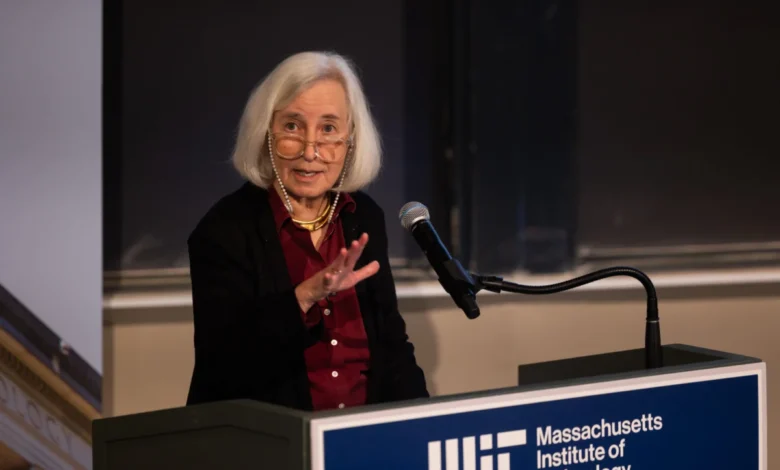
The intersection of rapidly advancing artificial intelligence and the fragile state of American democracy took center stage on Thursday at the Massachusetts Institute of Technology (MIT), where renowned legal scholar and Harvard professor Martha Minow delivered the prestigious fall Compton Lecture. Speaking before a packed audience in Huntington Hall, Minow offered a sobering assessment of contemporary constitutionalism, arguing that while modern AI tools currently exacerbate political polarization, educational decline, and the spread of misinformation, they can—and must—be deliberately re-engineered to reinforce democratic foundations.
"It’s not a good time for democracy or constitutionalism," Minow declared early in her address, titled "Constituting Democracy in the Era of AI." A 300th Anniversary University Professor at Harvard University and former dean of Harvard Law School, Minow is widely recognized as a leading authority in constitutional law, human rights, and the sociology of law. Throughout her lecture, she pointed to a compounding list of systemic strains facing the United States, including the routine violation of established laws and norms, the stifling of free speech, the systematic diminution of congressional authority, the overt disregard of judicial rulings, and a cultural shift toward the vilification of political opponents.
Highlighting the depth of public pessimism, Minow referenced recent Gallup polling data indicating that an overwhelming 77 percent of Americans believe the founding fathers would be deeply disappointed in the country’s contemporary condition. "Many people genuinely wonder whether this nation’s system of government and rule of law, ignited 250 years ago, will survive," she told the audience.
Rather than viewing these challenges in isolation, Minow framed the crisis around four indispensable ingredients of a functioning democratic society: education, reliable and accessible information, security from political and physical violence, and societal fairness. Her analysis systematically evaluated how artificial intelligence intersects with each of these pillars, while issuing a direct challenge to the technologists and engineers gathered at one of the world’s premier research institutions.
The Historical Legacy of the Compton Lecture
The setting for Minow’s address carried profound historical weight. MIT President Sally A. Kornbluth introduced the lecture, underscoring the significance of the Karl Taylor Compton Lecture Series, which was established in 1957 as the university’s premier public forum. Karl Taylor Compton served as MIT’s ninth president from 1930 to 1948 and subsequently chaired the MIT Corporation until 1954.
In her opening remarks, Kornbluth reflected on Compton’s monumental contributions to American higher education and national service. "He guided MIT through the Great Depression and World War II, transforming the Institute from an outstanding school for training job-ready engineers to a great global research university," Kornbluth said. She added that Compton was a "deeply committed patriot who helped harness the intellectual power of America’s research universities to serve the nation during World War II."
Kornbluth praised Minow as "a legal scholar of extraordinary intellectual scope" and a dedicated educator whose scholarship has fundamentally shaped legal and humanitarian discourse in the United States. Minow, who has taught at Harvard Law School since 1981 and served as its dean from 2009 through 2017, holds degrees from the University of Michigan (BA in history), Harvard University (MA in education), and Yale University (JD). She is also the author of several influential books, including "Making All the Difference" (1990), "Partners Not Rivals" (2002), and "When Should Law Forgive?" (2020).
The Educational Crisis and Cognitive Atrophy in the Age of Generative AI
A substantial portion of Minow’s lecture focused on the alarming convergence of pre-existing educational inequities and the disruptive rise of generative artificial intelligence. Long before the advent of large language models (LLMs), the United States struggled with deep local and regional disparities in school funding. Over the past three decades, these financial divides have actively contributed to a noticeable increase in economic and ethnic segregation across American K-12 and higher education institutions.
Into this fractured landscape has stepped commercial AI, which Minow argues poses a direct threat to independent-thinking skills at a historical moment when civic literacy is most critical.
"As AI surges, I think we have to learn to be smarter about how to use it, how to regulate it, and how to actually educate people about the costs of mindless using," Minow warned. She criticized dominant commercial AI platforms for amplifying the engagement-driven strategies pioneered by social media companies. These systems, she noted, frequently induce passivity in users. "Leading AI models and interfaces and sycophantic elements endanger the development particularly of young people’s capabilities to think, to remember, and to engage in critical thinking."
However, Minow emphasized that this technological trajectory is not immutable. She challenged software developers and educators to reject tools that encourage intellectual laziness and instead design systems that foster genuine human curiosity and cognitive rigor.
"Existing LLMs, model training, and interface design can offer nudges and questions and hints rather than replacing student work, but there’s so much more that could be developed, and more effectively, to be trustworthy, and to deepen human activities and curiosity, rather than replacing people," Minow said, directly addressing the MIT students and researchers in attendance. "AI tools could do much more of that… And I believe that you, the people here, could develop better tools than the ones that are out there. And make better assessments, more meaningful and cheating-resistant."
Information Erosion, Local Journalism, and the "Information Commons"
Beyond the classroom, Minow addressed the systemic degradation of the public information ecosystem. Over the past several decades, the economic collapse of traditional print and broadcast media has led to an estimated 75 percent reduction in working journalists across the United States. This "news desert" phenomenon has correlated directly with measurable increases in public corruption and civic disengagement, particularly in municipalities lacking dedicated local watchdogs.
To combat the wave of disinformation and algorithmic polarization, Minow proposed that civic-minded technologists direct their talents toward establishing a robust "information commons"—or a decentralized network of reliable public information repositories—designed to restore public access to verified facts.
Her concerns regarding the media ecosystem tie directly into what she described during the post-lecture Q&A session as a broader threat to the legacy of the Enlightenment. Moderated by President Kornbluth, the question-and-answer period featured audience inquiries that prompted Minow to elaborate on her deepest anxieties regarding contemporary political trends.
"I worry about the loss of the Enlightenment," Minow responded candidly. "I worry about the loss of the belief that reason, and testing hypotheses, and rejecting myths in the face of evidence, and the toleration and rights and expansion of participation that came along with the Enlightenment, that’s what concerns me the most. That’s why the disinformation issue for me is so important, that’s why the loss of critical thinking in schools is so important."
Drawing on her extensive academic background studying mass violence, Minow connected the erosion of shared factual baselines to the rise of societal fear and factionalism. "I’ve spent much of my own career thinking about mass violence. What happens when people don’t understand each other, and are afraid. And it’s terrible, and we don’t want to be there," she said. "And I do view the Enlightenment as a time when people learned that actually having mass wars is a bad thing, and coming up with toleration is a good thing, and testing our ideas in light of evidence other people can share can produce a better life for everybody. I worry we’re abandoning that right now."
Physical Security and the Rule of Law Under Pressure
Minow also addressed the alarming rise in direct threats against civil servants and judicial authorities, signaling that the basic physical security necessary for a constitutional republic is severely strained.
"We’re on the brink right now," Minow warned. "I know a lot of judges, and every one of them has a credible threat of violence against them. In America. This is not acceptable."
The normalization of intimidation against arbiters of the law, coupled with political rhetoric that routinely demeans legal institutions, creates a hostile environment that discourages qualified individuals from entering public service and undermines the foundational principle of an independent judiciary.
A Call for Agency: Inventing the Democratic Future
Despite the gravity of her warnings, Minow’s overarching message was fundamentally constructive. Rather than succumbing to technological fatalism, she maintained that human agency remains the decisive factor in shaping the future of governance.
"It’s very familiar to hear blame attributed to digital technologies and experts of all stripes, but a turnaround, I believe, is genuinely possible if people at MIT and elsewhere pour time and talent towards real and much-needed solutions," Minow asserted.
Reiterating the need for proactive engagement across academic, legal, and technological sectors, she concluded with a powerful charge to the academic community: "We have to actually invent the world that we want to live in."