The Convergence of Merchandising and Retail Media is Reshaping Ecommerce Search Strategy

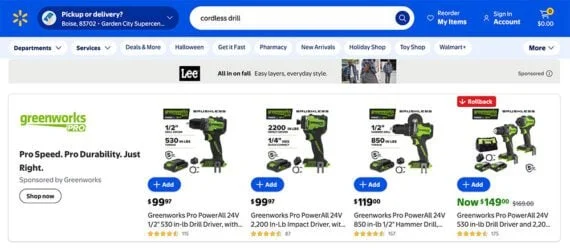
A routine search for a "cordless drill" on Walmart’s website provides a window into a growing tension within the modern retail landscape: the push-pull relationship between organic merchandising and the lucrative expansion of retail media networks. When a consumer initiates that search, they are not merely viewing a list of tools; they are witnessing a complex, automated negotiation between algorithms designed to maximize conversion and advertising platforms designed to monetize attention.
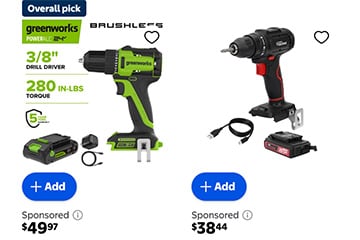
In this specific instance, the top of the search results page was dominated by a Greenworks-sponsored brand module, followed by a sequence of three additional sponsored product listings. An organic, non-sponsored result did not appear until the seventh position. While the advertisements were relevant to the search query—mitigating the immediate frustration a user might feel when confronted with irrelevant content—the dominance of paid placements raises a fundamental question for retail executives: where does the art of merchandising end and the business of advertising begin?
The Evolution of the Retail Media Landscape
To understand this struggle, one must first look at the meteoric rise of retail media. Over the past five years, retailers have transitioned from simple brick-and-mortar entities to sophisticated data and advertising powerhouses. According to industry reports from eMarketer, retail media spending in the United States is projected to surpass $60 billion annually, with major players like Amazon, Walmart, and Target leading the charge.
The growth of these networks is driven by the erosion of third-party cookies and the increasing difficulty of tracking consumer behavior across the open web. Retailers possess something far more valuable: "first-party data." Because they know exactly what a consumer buys, what they search for, and when they make a purchase, their websites have become prime real estate for brands looking to target high-intent shoppers at the point of purchase.
However, this transition has created a dual-objective dilemma. Traditionally, an ecommerce team’s primary mandate was the "Golden Path to Purchase"—optimizing the user experience to ensure that the most relevant, highest-converting, and most profitable products were the easiest to find. Today, that objective is increasingly in competition with the "Retail Media Mandate," which prioritizes the placement of products based on advertising auctions and contractual obligations to brand partners.
The Governance Gap
The conflict is not merely theoretical; it is a structural challenge within large corporate organizations. In most enterprise-level retail firms, the merchandising team and the retail media team operate under different metrics and reporting lines.
The merchandising team is typically measured by key performance indicators (KPIs) such as conversion rate, average order value, and product sell-through. Their success is tied to the efficiency of the shopping journey. Conversely, the retail media team is measured by ad revenue, share of voice, and advertiser retention. When both teams are tasked with controlling the same digital real estate—such as the first page of search results—a misalignment of incentives is almost inevitable.
Data from internal retail audits suggest that while media teams can demonstrate immediate, attributable revenue from ad placements, the "cost" of these placements—often measured in long-term conversion degradation—is far more diffuse. If an ad slot replaces an organic result that would have converted at a higher rate, the retailer might see a short-term spike in ad revenue, but a potential long-term loss in total basket size. Because these two outcomes are rarely tracked in the same dashboard, the retail media side often holds a significant advantage in executive decision-making.
The Role of Relevance as a Boundary
The industry is currently seeking a standard to reconcile these two opposing forces. Most experts agree that relevance is the only viable boundary. Sherry Smith, president of retail media at Criteo, notes that the introduction of advertising must be approached with precision. "More inventory doesn’t necessarily mean more value," Smith says. "The focus should be on placements that perform for advertisers, remain useful to shoppers, and create incremental value for the retailer once the costs of running the program are taken into account."
When a sponsored product is exactly what the user was searching for, the friction between merchandising and media disappears. In such cases, the ad acts as a service rather than an interruption. The tension, however, spikes when the advertising algorithm pushes a product that has lower organic performance or lower customer satisfaction scores above the products that the merchandising team would otherwise prioritize.
The Emerging Rules of Engagement
As retailers mature their media businesses, they are beginning to establish a set of "Rules of Engagement" to govern the mix of paid and organic search results:
- Relevance Filtering: Many retailers are now implementing "relevance thresholds" for their advertising auctions. If an ad does not meet a minimum relevancy score, it is barred from appearing in the top slots of search results, regardless of the bid amount.
- Dynamic Capping: Some platforms have begun to experiment with capping the number of sponsored placements that can appear above the "fold"—the portion of the screen visible before a user scrolls. This ensures that organic results remain within the user’s immediate line of sight.
- Unified Measurement: Leading-edge retailers are moving toward "Total Commerce" metrics. Instead of measuring ad revenue and conversion in silos, these companies evaluate the "net impact" of a search page, calculating whether the ad revenue earned from a placement is greater than the potential loss in organic conversion.
The Long-Term Strategic Implication
The shift toward retail media is unlikely to reverse. It is a fundamental transformation of the retail business model, turning ecommerce platforms into high-margin media businesses. However, the risk for retailers is the potential for "search fatigue." If consumers feel that their ability to find the best product for their needs is being compromised by a deluge of paid placements, they may migrate to competitors who provide a more curated, trustworthy experience.
The challenge for the next three to five years will be the development of sophisticated machine-learning models that can balance these two objectives in real-time. If the algorithm is successful, the shopper will never be able to tell the difference between a curated merchandising decision and a sponsored placement.
For now, the struggle remains visible. As seen in the case of the cordless drill search, the top of the page has become a battleground. For the retailer, the goal is to ensure that while the space is being sold, the integrity of the store is not. The future of ecommerce rests on the ability of these organizations to prove that advertising is not a replacement for discovery, but rather an enhancement of it. When done correctly, retail media creates value from digital assets that would otherwise sit idle; when done poorly, it turns the shopping experience into a commodity, sacrificing long-term customer loyalty for short-term revenue gains. The companies that navigate this balance most effectively will likely become the dominant retail powers of the next decade.