How Google’s Shift Toward Conversational AI Search Is Reshaping Advertising Strategies for 2027

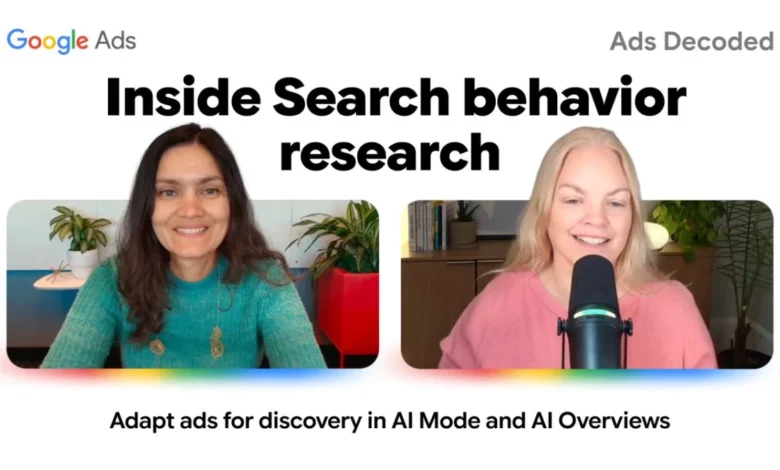
The digital landscape is undergoing a profound transformation as generative AI reshapes the fundamental mechanics of how users interact with information. Recent insights from Google’s Ads Decoded podcast, featuring Ginny Marvin, Google Ads Product Liaison, and Shivani Mohan, Search Vice President of Data Science and User Experience Research, have underscored a shift toward a more conversational and exploratory search paradigm. This evolution, characterized by significantly longer, nuanced, and multi-turn queries, is forcing advertisers to rethink their long-term digital strategies as they prepare for the 2027 fiscal year.
The core of this shift lies in the adoption of AI-powered Search, where the traditional "keyword-based" query is being replaced by natural language discourse. According to Google, users are now asking questions that are three times longer than those submitted via traditional search bars. These interactions are no longer transactional "one-and-done" events; they are sustained, iterative sessions where users employ voice and image inputs to narrow down complex decisions.
A Chronology of the Shift Toward AI-First Discovery
The transition to an AI-augmented search environment did not occur overnight. It is the culmination of years of iterative development by Alphabet Inc. to integrate Large Language Models (LLMs) into the core Search engine.
In May 2026, Google released a comprehensive U.S. AI Mode report that served as a foundational document for the current discussions. The report highlighted that users were increasingly utilizing AI tools to bridge the gap between initial curiosity and final purchase decisions. By October 28, 2026, the company doubled down on these findings through the "Ads Decoded" series and a concurrent advertising announcement. This served as a formal communication to the digital marketing industry that the "Search" experience is becoming an "exploration" experience.
For the marketing sector, this timeline represents a move away from simple intent-based keyword matching toward an era of context-aware, multimodal engagement. Advertisers who have historically relied on static landing pages and broad-match keyword bidding are now finding that their existing infrastructure may not fully capture the complexity of a user’s journey as they move through an AI-powered conversational funnel.
Supporting Data and the Multimodal Search Trend
Data provided by Google suggests that the complexity of user queries is rising in tandem with the capabilities of the search interface. A critical metric highlighted in the May 2026 report—and reiterated in the October 28, 2026, update—is the emergence of multimodal searching. Specifically, more than one in six AI-mode searches in the United States now involve multiple inputs, such as combining text with image or voice data.
This statistic is significant because it indicates a shift in cognitive load. Users are moving away from trying to find the "perfect" keyword and are instead describing their specific needs, constraints, and preferences in detail. From a data science perspective, this creates a richer, albeit more complex, set of signals. However, Google has been careful to note that while these queries are longer and more descriptive, they do not automatically correlate with higher conversion rates or stronger purchase intent. The primary challenge for the modern advertiser, therefore, is distinguishing between a user who is merely curious and one who is actively evaluating a product or service within the AI-driven ecosystem.
The Duality of AI Summaries and the Open Web
Despite the efficiency of AI-generated summaries, human behavior remains surprisingly anchored in the traditional web. Shivani Mohan’s research indicates a persistent paradox: while users value the speed and clarity provided by AI, they continue to place a high premium on "lived experience" and "earned authority."
This creates a distinct opportunity for brands. While an AI summary might synthesize the technical specifications of a product, it cannot replicate the nuance of a user review, a long-form video demonstration, or a deep-dive podcast discussion. Mohan’s analysis emphasizes that users frequently pivot from AI interfaces to the "open web" to verify claims and seek out community-driven insights.
For the advertiser, this means that content strategy must be bifurcated. One layer of content must be optimized for the AI’s ability to parse and summarize information, ensuring that brand data is accurate, structured, and accessible. The second layer must cater to the human need for authenticity—focusing on original research, unique viewpoints, and experiences that are not easily found in generic product descriptions.
Implications for 2027 Strategic Planning
As digital marketing teams look toward 2027, the primary directive is to move beyond the "initial search phrase." When a user engages in a long-form, multi-turn conversation, they are effectively conducting a diagnostic process. They are surfacing concerns—such as compatibility, long-term durability, or specific tradeoffs—that standard marketing collateral often overlooks.
Advertisers should consider the following strategic pivots:
- Diagnostic Content Creation: Review existing landing pages to identify what questions they fail to answer. If a customer is asking about "tradeoffs" in their search query, the landing page should address those trade-offs directly, rather than providing a generic sales pitch.
- Multimodal Readiness: With a significant portion of searches involving images and voice, visual assets and video content are no longer secondary. Advertisers should ensure that their visual media is properly tagged and contextually relevant to the questions being asked in AI modes.
- The "Experience" Gap: Since users are increasingly seeking out human perspectives, brands should prioritize content that highlights customer testimonials, expert reviews, and practical "in-the-wild" demonstrations. Repeating the same boilerplate product descriptions across every channel is becoming less effective as users seek more granular, experience-based data.
- Signal Interpretation: Marketing teams must develop new ways to interpret search signals. If traditional click-through rates (CTR) are becoming less reliable as a sole indicator of success, advertisers may need to focus on engagement metrics that track the progression of a user through a long-form conversational session.
The Unanswered Questions and the Path Forward
While Google has been transparent about the change in search behavior, the industry remains in a period of adaptation. Several questions remain unanswered for practitioners, particularly regarding industry-specific variations. Does the "three times longer" query rule hold true for B2B industrial procurement in the same way it does for consumer electronics? Are there specific stages of the buying cycle where the conversion lift is most pronounced?
Furthermore, while Google points to "billions of clicks" going to the open web, the distribution of these clicks is not yet fully transparent. Advertisers are left to speculate on how much of this traffic is being driven by the AI summary itself versus organic search results.
In the immediate term, the responsibility falls on the advertiser to conduct their own internal audits. By analyzing the queries that lead to their sites and identifying the information gaps that cause users to bounce or seek further clarification, brands can begin to build a more robust, search-resilient strategy for the years ahead. The era of the "keyword" is not dead, but it is being subsumed by the era of the "conversation." For those willing to adapt their content to be both AI-readable and human-authentic, the shift offers a significant opportunity to capture a more informed and engaged audience.
Ultimately, the goal for 2027 should be the creation of a seamless journey that respects both the user’s desire for quick information and their deeper need for trusted, human-centered expertise. As the line between AI-assisted discovery and traditional web navigation continues to blur, those who can bridge the two will define the next generation of search success.