Scanfully 2.0 Redefines WordPress Site Health and Performance Monitoring Through Proactive Automation and AI Integration

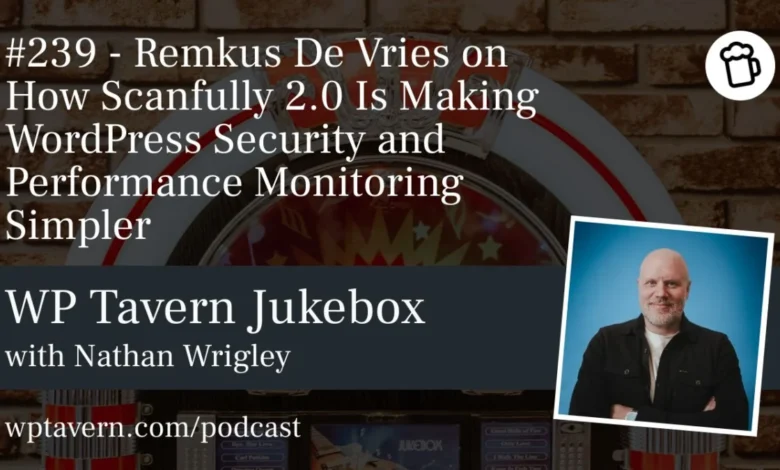
The landscape of WordPress site management is undergoing a significant transformation as industry professionals move away from reactive troubleshooting toward proactive, data-driven oversight. At the forefront of this shift is the release of Scanfully 2.0, a comprehensive Software-as-a-Service (SaaS) platform designed to streamline security, performance, and operational health monitoring for WordPress ecosystems. Developed by long-time industry veteran Remkus de Vries and co-founder Barry, the platform aims to address the growing complexity of maintaining scalable, high-performance web infrastructure by consolidating fragmented data points into a single, actionable dashboard.
The Evolution of Site Monitoring
For over two decades, the WordPress community has grappled with the inherent challenges of site management. As the platform has grown to power more than 43% of the internet, the technical debt associated with managing hundreds of plugins, complex themes, and server-side variables has become increasingly difficult to manage. Historically, site owners have operated in a "break-fix" cycle—monitoring sites only after a user reports an error, a page fails to load, or a security vulnerability is exploited.
Scanfully was conceived three years ago with a "first principles" approach, aiming to solve the technical bottlenecks that prevent WordPress sites from scaling efficiently. The transition to version 2.0 represents a major strategic pivot for the service, moving beyond simple uptime reporting to provide a holistic view of the "health" of a site. By monitoring critical infrastructure such as DNS configurations, email deliverability, SSL certificate status, and database performance, the platform reduces the noise typically associated with server logs and complex analytics suites.
Technical Architecture and the 2.0 Redesign
The 2.0 update is characterized by a complete overhaul of the user interface and the underlying data processing engine. According to de Vries, the primary objective of the redesign was to make the tool accessible to a wider range of users, including those who may find traditional spreadsheet-heavy analytics overwhelming.
Key technical enhancements include:
- Asynchronous Data Collection: By offloading heavy logging processes to the Scanfully SaaS platform, the plugin ensures that the WordPress site’s local database remains unburdened. This is particularly vital for high-traffic environments where resource-intensive logging can lead to site degradation.
- Public API Integration: The inclusion of a robust public API allows agencies and hosting companies to integrate Scanfully’s telemetry directly into their own white-label dashboards. This interoperability supports the growing demand for centralized management consoles in multi-site agency environments.
- Conversational Monitoring via MCP: Perhaps the most innovative feature in the 2.0 release is the support for Model Context Protocol (MCP). This allows users to connect their site data to Large Language Models (LLMs) to perform conversational queries. Users can ask their AI assistant to identify vulnerabilities, check for configuration drifts, or explain complex DNS issues in plain language, significantly lowering the barrier to entry for non-technical site administrators.
Addressing the "Reactive" Mindset
The primary motivation behind the development of Scanfully is the industry-wide struggle to shift from reactive to proactive maintenance. Many site owners remain unaware of underlying issues—such as conflicting DNS records or pending security patches—until they manifest as visible failures.
"We are still too much on the reactive side of things," de Vries notes. "If a site is down or a user complains about speed, then an administrator looks at it. We want to change that awareness and make it one of your first thoughts instead of an afterthought."
By synthesizing complex telemetry into "human-readable" summaries, the platform filters out technical noise. For instance, instead of triggering 25 individual alerts for 25 sites hosted on a single server that has gone offline, the system identifies the common root cause—the server failure—and notifies the administrator once, effectively managing the volume of information.
Expanding the Scope: WooCommerce and Future Roadmaps
Following the 2.0 release, the platform has continued to iterate, with version 2.3 introducing advanced user activity tracking. This includes granular logs that monitor not just who performed an action, but the nature of the change itself—such as unauthorized administrative privilege elevation or critical modifications to user accounts.
The platform’s roadmap is now heavily focused on "end-to-end" journey monitoring. The introduction of the WooCommerce checkout monitoring add-on addresses a critical business requirement: verifying that the entire purchasing funnel—from adding a product to the cart to the final payment processing step—is functional. This automated "test-order" functionality mimics human behavior without actually finalizing financial transactions, allowing store owners to detect issues with payment gateways or checkout configurations in real-time.
Future iterations of the platform are expected to bring this same journey-based monitoring to contact forms and other interactive elements. This is a critical development for e-commerce businesses, where a broken contact form or a failed checkout page equates to direct revenue loss.
Broader Implications for the WordPress Ecosystem
The introduction of tools like Scanfully underscores a broader maturation of the WordPress ecosystem. As the platform transitions from a blogging tool into a robust engine for enterprise-grade applications, the tools required to manage it must similarly evolve.
The emphasis on "first principles"—a philosophy that encourages solving problems at the lowest possible layer of the stack rather than applying superficial fixes—suggests a shift toward more sustainable development practices. By providing a centralized, intelligent dashboard, Scanfully enables agencies to demonstrate greater value to their clients, turning site maintenance from a cost center into a transparent service supported by data.
For agencies and freelancers, the implications are clear: the ability to detect and resolve issues before they impact the end user is becoming a competitive necessity. As the internet becomes more volatile and security threats more sophisticated, tools that simplify complex diagnostics will play an increasingly vital role in maintaining the integrity of the web.
Industry Outlook and Accessibility
While the tool is designed to provide high-level insights for non-technical users, it remains a powerful instrument for power users who require granular control. The flat-rate pricing model, which charges per site, reflects a shift toward simplicity in software-as-a-service billing, making it a viable solution for everyone from individual bloggers to large-scale enterprise deployments.
The ongoing iteration of Scanfully, evidenced by the rapid release of versions 2.0 through 2.3, indicates a commitment to keeping pace with the rapidly changing web environment. By leveraging modern technologies like LLMs and API-first architectures, the platform is setting a new standard for what site owners should expect from their monitoring solutions.
As the WordPress community continues to navigate the challenges of scaling and security, the focus on "intelligent" monitoring—tools that not only collect data but interpret it—is likely to define the next generation of web management software. Whether through the automated testing of WooCommerce checkouts or the conversational querying of site health via MCP, the goal remains the same: ensuring that the complex, interconnected web of modern WordPress sites remains stable, secure, and performant.
For those interested in exploring the capabilities of the platform or contributing to the discourse on site health, resources are available at the official Scanfully portal, as well as through industry-focused communities like The Guild, which emphasizes the craft of web development through collaborative, first-principles education. As the digital landscape grows more complex, the industry’s ability to adopt such proactive, automated, and intelligent monitoring tools will be the deciding factor in the longevity and success of the WordPress platform.