Beyond the Algorithm: How One Executive Turned AI Disruption into a Blueprint for Human-Centric Innovation


The rapid commercialization of artificial intelligence has fundamentally altered the corporate landscape, introducing a dual narrative of unprecedented operational acceleration and pervasive workplace anxiety. For many enterprise leaders, the continuous integration of generative models, machine learning architectures, and automated decision-making frameworks evokes hesitation, resistance, and the fear of systemic obsolescence. Yet, within major telecommunications institutions, a contrasting perspective is taking root—one that views technological disruption not as a threat to be managed, but as a once-in-a-generation catalyst for professional reinvention and human-centric leadership.
Prabha Jha, a seasoned executive at telecommunications giant Verizon, exemplifies this proactive ethos. Armed with a bachelor’s degree in information technology from the University of Calcutta and an MBA earned concurrently with her corporate responsibilities, Jha chose to confront the ambiguity of the artificial intelligence revolution head-on. Rather than succumbing to the paralysis that frequently accompanies transformative industry shifts, she sought an immersive academic environment capable of bridging the gap between theoretical computing paradigms and practical enterprise deployment. Her search ultimately led her to the Massachusetts Institute of Technology (MIT) and its specialized executive education offerings, setting in motion a multi-year journey of personal growth, peer collaboration, and published scholarship.
The Academic Catalyst: Choosing MIT xPRO
For generations of engineers, technologists, and corporate strategists, MIT has functioned as a global epicenter of technical innovation. For Jha, who grew up revering the institution as a foundational pillar of applied science, enrolling in the MIT xPRO AI for Senior Executives program represented the realization of a long-held ambition.
Unlike the burgeoning ecosystem of fully asynchronous, digital-only certification courses that proliferated in the wake of the remote-work shift, the MIT xPRO curriculum distinguished itself through a rigorous, mandatory in-person component. For executive leaders navigating complex digital transformations, physical collocation offers irreplaceable value. It facilitates high-bandwidth communication, unscripted peer debates, and the establishment of trust networks that purely virtual formats struggle to replicate.
Recognizing the significant commitment of both financial capital and personal time required for enrollment, Jha regarded the tuition as an essential investment in her own cognitive agility. This decision would yield immediate dividends, providing her with the conceptual frameworks required to design and deploy multiple artificial intelligence solutions within Verizon’s complex operational ecosystem. Furthermore, the relationships forged during these intensive campus residencies laid the groundwork for unexpected collaborative achievements far beyond the classroom walls.
Overcoming Adversity: The Unforeseen Medical Interruption
Jha’s trajectory toward executive certification was not without substantial hurdles. Just two months prior to the scheduled completion of her original cohort, a severe infection necessitated a sudden, two-week hospitalization. The medical emergency effectively derailed her timeline, forcing her to withdraw from the immediate graduation track and reconcile with an abrupt halt to her academic momentum.
Rather than treating the disruption as an insurmountable obstacle, Jha leaned into the institutional flexibility provided by MIT. With the direct assistance of program administrators, she transitioned into the subsequent cohort, a logistical pivot that unexpectedly granted her an additional five days of immersive campus residency alongside one hundred new peers.
This six-month delay proved structurally advantageous. In the rapidly evolving domain of artificial intelligence, curriculum obsolescence is a persistent risk; software libraries, regulatory frameworks, and algorithmic capabilities shift on a monthly basis. During the interim period between her cohorts, MIT faculty updated the program’s core modules to reflect the latest breakthroughs in large language models and enterprise governance. Consequently, Jha re-entered the classroom equipped with fresher insights, while gaining a secondary network of professional colleagues.
Reflecting on the experience, Jha emphasizes the unpredictable nature of career trajectories, noting that setbacks frequently obscure hidden developmental opportunities. The extended immersion underscored a central thesis of her executive education: adult learning in complex technical fields is heavily mediated by social interaction and shared vulnerability.
The Power of Peer Collaboration and the Anatomy of a Salon
A foundational component of advanced executive education is the democratization of knowledge through peer-to-peer discourse. Jha frequently underscores that traditional classroom lectures—encompassing professors, assigned reading materials, and formal syllabi—account for only a minor fraction of the true educational yield. In her estimation, approximately 70 percent of the value derived from the MIT xPRO experience stemmed from organic interactions with fellow executives hailing from diverse geographic, cultural, and industrial backgrounds.
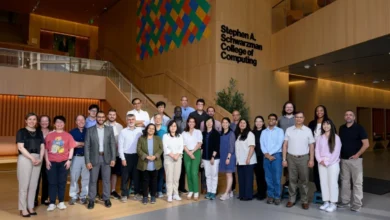
This collaborative dynamic crystallized during a private salon gathering hosted at the residence of Manolis Kellis, a prominent professor in MIT’s Department of Electrical Engineering and Computer Science. In an informal setting designed to encourage candid dialogue, executives shared personal motivations for mastering artificial intelligence.
Among the myriad narratives of supply-chain optimization and cost reduction, one story resonated with profound emotional clarity. A fellow participant revealed that her primary impetus for mastering advanced machine learning models was rooted in a deeply personal mission: developing computational tools to assist in the ongoing medical research and treatment of her mother’s Alzheimer’s disease and dementia.
For Jha, this moment transformed artificial intelligence from an abstract corporate metric into a deeply human endeavor. The realization that computational infrastructure could serve as an extension of familial care and societal healing left an indelible impression, altering her perception of the technology’s ultimate utility. It became evident that while corporations measure artificial intelligence through productivity gains and margin expansion, individuals experience the technology through the lens of human agency, health, and dignity.
Translating Insight Into Print: The AI Anthology
Determined to preserve the rich tapestry of human experiences shared during the program, Jha sought a mechanism to extend the classroom dialogue into the broader public sphere. She proposed that her cohort synthesize their collective insights into a unified literary volume, capturing the myriad ways artificial intelligence influences diverse sectors of society.
One year following the conclusion of the program, Jha, alongside twenty co-authors drawn from her peer network, published The AI Anthology. The collaborative volume serves as a comprehensive collection of essays examining the socio-technical impacts of automation, machine learning, and generative systems across global industries. Designed specifically to guide other leaders navigating the turbulent waters of digital transformation, the book reflects the multidisciplinary ethos cultivated during their time at MIT.
The publication reinforces a core pedagogical takeaway: leadership in the age of artificial intelligence requires the capacity to think beyond conventional corporate metrics. Jha argues that contemporary business culture remains anchored in legacy indicators of success—specifically revenue acceleration, capital expenditure reduction, and direct labor-cost conversion. While these fiscal measurements remain vital for fiduciary compliance in corporate America, Jha contends they are insufficient for capturing the holistic value generated by transformative technologies.
Redefining Corporate Success in the Age of Automation
As artificial intelligence transitions from an experimental frontier to an operational baseline, corporate strategists face mounting pressure to demonstrate return on investment. However, Jha warns that an obsessive focus on short-term financial returns risks blinding organizations to systemic shifts in workforce expectations and societal values.
Newer generations entering the professional sphere evaluate organizational utility through fundamentally different lenses. Questions regarding the qualitative improvement of daily life, the reduction of cognitive fatigue, and the pursuit of fulfilling labor increasingly supersede traditional corporate loyalty driven solely by compensation. Consequently, leaders must learn to harmonize bottom-line imperatives with human-centric design principles.
Within her role at Verizon, Jha applies this dual mandate daily. Telecommunications providers occupy a critical position within the modern infrastructural hierarchy, delivering essential connectivity to vulnerable populations, public safety entities, and emergency first responders. This heavy responsibility necessitates a commitment to operational reliability that leaves little margin for error.
Jha observes that artificial intelligence acts as a powerful force multiplier within this environment. By automating routine analytical tasks and accelerating complex problem-solving workflows, artificial intelligence empowers individual engineers and smaller teams to achieve outcomes that historically required extensive departmental resources. This technological leverage enhances both institutional productivity and the velocity at which critical services can be deployed to the public.
Future Horizons: Supporting Small and Medium Enterprises
Building upon her academic achievements at MIT, her ongoing operational responsibilities at Verizon, and her collaborative authorship, Jha’s current professional trajectory focuses on the democratization of technical competence. Her newest initiative is dedicated to guiding small and medium-sized enterprises (SMEs) through the intricate process of artificial intelligence adoption.
Smaller commercial entities frequently lack the capital reserves and dedicated research divisions required to navigate the rapidly expanding vendor ecosystem of artificial intelligence tools. Jha’s initiative aims to bridge this capability gap by providing targeted guidance on tool selection, operational integration, and realistic metric-setting. By helping smaller businesses identify where artificial intelligence genuinely drives value within their specific operating models, the initiative enables them to focus on core competencies while maintaining competitive viability in an increasingly automated marketplace.
Analytical Implications and Broader Industry Outlook
The trajectory of Prabha Jha offers a compelling case study in executive adaptation amid profound technological shifts. From a macro-level economic perspective, the successful integration of artificial intelligence within legacy enterprises depends less on algorithmic sophistication and more on leadership resilience and continuous professional development.
Industry analysts note that executive education programs bridging technical depth with human-centric management will remain crucial as artificial intelligence deployment matures. Institutions that mandate physical collocation and foster cross-industry collaboration provide a vital antidote to the isolation often experienced by modern decision-makers. Furthermore, the emergence of practitioner-led literature, such as The AI Anthology, signals a growing appetite for peer-vetted frameworks that prioritize ethical implementation alongside commercial utility.
Ultimately, Jha’s journey underscores a fundamental truth of the current technological era: artificial intelligence is not merely an operational instrument for financial optimization, but a mirror reflecting human capability, vulnerability, and aspiration. For contemporary enterprise leaders, the path forward requires embracing this dual reality—leveraging computational power to secure business resilience while keeping human purpose at the absolute center of innovation.