Google Updates Privacy Policy to Allow Gmail and Photos Data to Influence Personalized Ads Through Personal Intelligence

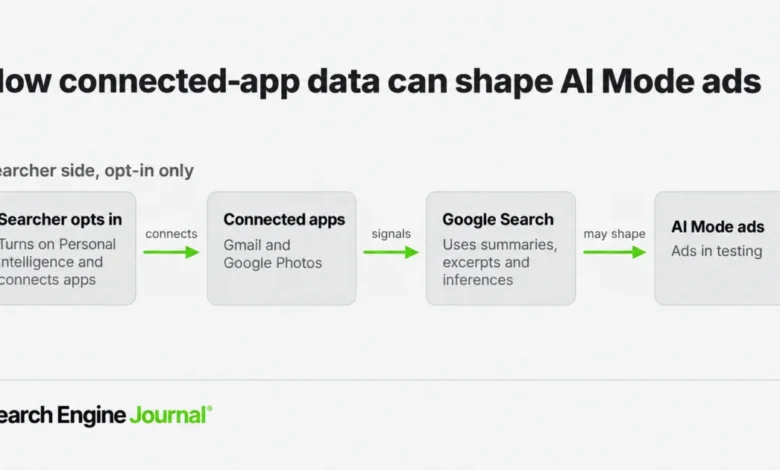
In a significant pivot to its long-standing privacy framework, Google has officially updated its global privacy policy to permit the integration of personal data from Gmail, Google Drive, and Google Photos into its personalized advertising ecosystem. This policy shift, which took effect on October 16, 2026, marks a departure from the company’s previous stance of keeping private user content siloed away from its advertising-driven business model. The change specifically targets users who have opted into the "Personal Intelligence" feature within Gemini and AI Mode in Google Search, fundamentally altering how the company leverages private user information to facilitate commercial engagement.
The Evolution of Google’s Privacy Stance
For nearly a decade, Google has navigated a complex landscape regarding user privacy. A defining moment occurred in 2017 when the tech giant officially ended the practice of scanning the contents of free Gmail accounts for the purpose of serving targeted advertisements. At the time, this was hailed as a significant win for consumer privacy, positioning Google as a company that respected the sanctity of private communications.
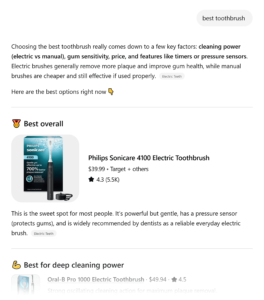
However, the rise of generative AI has necessitated a re-evaluation of data utility. In January 2026, Google introduced "Personal Intelligence" as a Labs experiment. Designed for Google AI Pro and AI Ultra subscribers, this feature allowed users to connect their personal Google apps to AI models to create a more personalized, context-aware experience. By accessing flight confirmations in Gmail or vacation photos in Google Photos, the AI could act as a sophisticated personal assistant. While initially launched as a strictly non-advertising experience, the recent policy update confirms that this data is now being funneled into the broader ad-serving machinery.
Understanding the Policy Shift
The revised policy language is nuanced but definitive. While the core promise that Google does not show ads based on private Drive, Gmail, or Photos content remains, it now includes a critical caveat: "unless you choose to make data from these services available to other Google services that support personalized ads."
This essentially shifts the burden of consent to the user. When a user connects their personal applications to Search or Gemini to utilize Personal Intelligence, they are providing explicit authorization for that information to be utilized by the platform. Google’s internal documentation clarifies that Search may utilize summaries, excerpts, and inferences drawn from these connected sources to refine the user experience, which now explicitly includes the delivery of personalized advertisements.
Chronology of the Personal Intelligence Expansion
- January 2026: Google debuts the Personal Intelligence Labs experiment in the United States, targeting English-speaking AI Pro and Ultra subscribers.
- March 2026: The company expands the reach of the feature, explicitly confirming that the environment would remain ad-free during the testing phase.
- October 16, 2026: The official privacy policy is amended to allow for the integration of connected app data into the advertising ecosystem.
- Late October 2026: Google begins active testing of ad placements within the AI Mode interface for users who have enabled Personal Intelligence.
Implications for the Digital Advertising Ecosystem
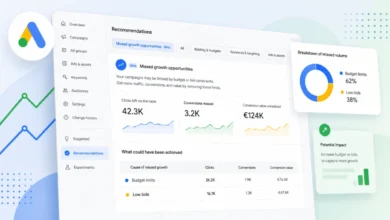
For digital marketers and advertisers, the development is significant, though currently opaque. Despite the technical shift in how ads are served, Google has not introduced a new "Personal Intelligence" audience segment or a dedicated targeting toggle within the Google Ads interface. Instead, advertisers must rely on their existing campaign structures—specifically Performance Max, Shopping, and Search campaigns utilizing broad match—to reach these users.
Because the personalization engine operates on the user’s side, advertisers lack granular visibility into how their ads are being tailored. An advertiser’s creative may appear to a user who is currently looking for a winter coat, but that ad might be served specifically because the AI analyzed a flight confirmation to Chicago in the user’s Gmail. The advertiser is essentially blind to the specific signal that triggered the impression, leading to a "black box" scenario where the efficacy of the ad is attributed to the campaign, but the context of the user’s intent remains obscured.
Data Privacy and Human Review
A critical aspect of this transition is how Google handles the data processed by its AI models. According to the company’s help pages, the inferences and summaries derived from user data may be utilized to train future generations of generative AI. Perhaps more controversially, Google has confirmed that a subset of data processed by AI Mode and Ask Maps is subject to human review.
This creates a dual-layer of data processing: automated, machine-learning-driven ad personalization, and manual quality assurance performed by human reviewers. While Google maintains that this process is necessary to improve accuracy and safety, privacy advocates have frequently raised concerns regarding the potential for human exposure to sensitive personal information contained within emails or photos, even if the data is purportedly anonymized or sampled.
Managing User Settings
Google has attempted to provide users with control over their data, though the process is not centralized. Simply turning off ad personalization in "My Ad Center" is insufficient to prevent Gmail or Photos data from being ingested into AI Mode. To effectively stop the flow of data, users must manually disconnect their apps from the Personal Intelligence feature within the Google settings dashboard.
Furthermore, Google is in the process of sunsetting its existing "Web & App Activity" and "Search Personalization" controls, replacing them with a more streamlined—though potentially less granular—system titled "Search Services History" and "Personalized Recommendations." As these changes roll out over the coming months, the ability for users to audit exactly what their AI assistant knows about them will likely become more restricted.
Strategic Analysis: The Future of Contextual AI
The integration of personal data into advertising is a logical progression for a company whose revenue model is fundamentally built on intent. By leveraging the "personal context" of a user’s life—what they own, where they are going, and what they buy—Google is attempting to bridge the gap between reactive search and proactive assistance.
From an economic perspective, this shift is designed to increase the "relevance" of ads, which historically leads to higher click-through rates (CTR) and conversion rates. If an AI can suggest a product that a user has a high latent probability of needing—based on an email they received yesterday—the value of that ad impression increases exponentially. However, the move also invites increased regulatory scrutiny. In regions with strict data protection laws, such as the European Union under the GDPR, the intersection of personal communications and targeted advertising is a sensitive area. Google’s insistence that this is an "opt-in" feature is likely a preemptive measure to mitigate potential legal challenges regarding data processing transparency.
The Outlook for Advertisers
For those managing ad spend, the current testing phase serves as a reminder that the "Search" environment is becoming increasingly automated. Advertisers should anticipate that campaign performance may fluctuate as the AI model learns to weigh "Personal Intelligence" signals against traditional search intent.
As of late 2026, there is no official word on when these tests will graduate to a permanent, global feature, nor whether Google will provide advertisers with performance reporting that isolates the impact of Personal Intelligence signals. For now, the strategy remains one of "wait and see," with a focus on ensuring that creative assets are optimized for a wide range of intents, as the AI system will be pulling from a vastly larger pool of personal context to determine which ads are shown to which users.
Conclusion
Google’s update is a definitive statement that the future of search is personal. By collapsing the barriers between private digital storage and the public advertising marketplace, the company is betting that users will trade a degree of privacy for a more seamless, predictive digital experience. Whether this bet pays off in terms of user adoption or whether it triggers a backlash from a privacy-conscious public remains to be seen. As the rollout of these new settings continues, both users and advertisers will need to remain vigilant regarding the fine print of their Google accounts, as the definition of "personal" continues to evolve in the age of artificial intelligence.