MIT and Tianjin University Engineers Develop X-Hinges Software to 3D Print Self-Aware, Multi-Axis Interactive Objects

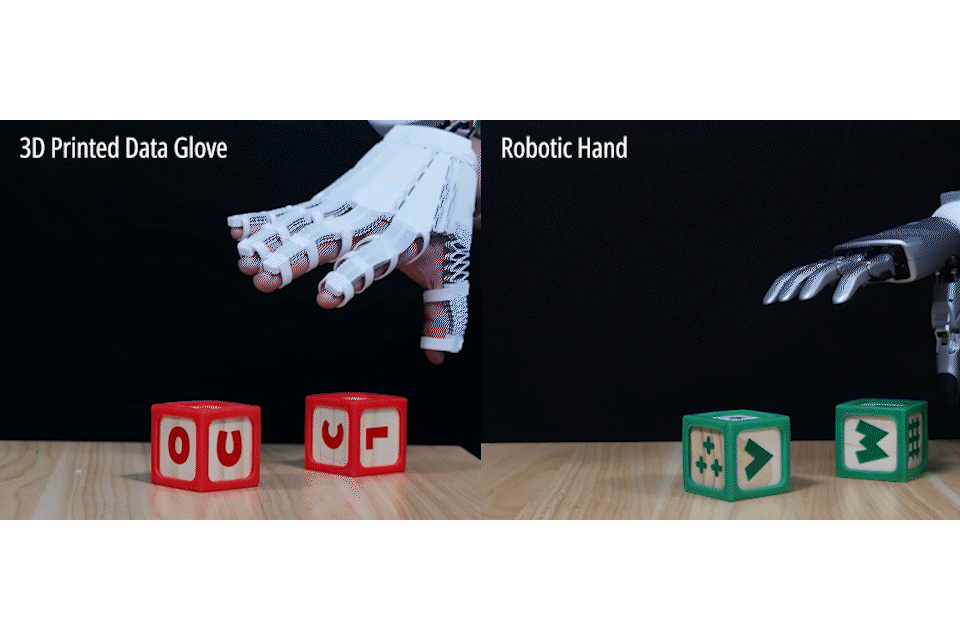
The intersection of additive manufacturing and artificial intelligence has taken a significant leap forward through a collaborative research initiative involving the Massachusetts Institute of Technology (MIT) and Tianjin University (TJU). Researchers at MIT’s Computer Science and Artificial Intelligence Laboratory (CSAIL), working alongside academic partners from TJU, have engineered a novel software framework known as "X-Hinges." This development addresses a longstanding engineering bottleneck in rapid prototyping: the inability of 3D-printed electronics to differentiate internal sensor signals from conductive traces without interference. By allowing users to automatically embed two distinct materials with tailored electrical properties into a single print, the technology transforms static, inanimate objects into dynamic, self-aware tools capable of perceiving and responding to human motion in real-time.
The breakthrough, detailed in a research paper scheduled for presentation at the ACM Symposium on User Interface Software and Technology, promises to reshape how engineers design robotics, human-computer interfaces, and smart household devices. Rather than relying on external sensors, wiring, and post-assembly integration, the X-Hinges method enables internal sensing to "grow" directly within the object during the fabrication process.
The Technical Challenge: Untangling the Signal Crosstalk
For years, 3D printing functional objects with embedded electronics has been hindered by material homogeneity. When engineers use multi-material 3D printers to fabricate both the structural sensors (which detect touch, pressure, or bending) and the internal wiring traces (which transmit those signals to a microcontroller), the materials chosen often share similar electrical profiles. This results in signal interference, commonly referred to as crosstalk.
In practical terms, it is comparable to listening to two radio stations simultaneously on the same frequency. When an object attempts to relay complex mechanical data—such as a data-collecting glove transmitting finger articulation angles to a humanoid robotic hand—the resulting signal noise obscures the fine details of the user’s motion. Consequently, the receiving robotic system struggles to filter out the interference, leading to mechanical errors and poor responsiveness.
Previous attempts to solve this issue largely restricted 3D-printed responsive objects to a single axis of motion. By limiting movement to one plane, engineers could minimize the complexity of the signal interpretation, but this severely restricted the functional capacity of the printed items.
The X-Hinges Solution: Multi-Material Integration and Multi-Axis Freedom
The X-Hinges software bypasses these limitations by automating the strategic deployment of two distinct filaments: one optimized for maximum signal generation in sensor regions, and another designed to act as clean, non-interfering conductive traces. This division ensures that complex interactions are not lost in translation.
Furthermore, the software liberates designers from single-axis constraints. Users can configure objects to move across up to three distinct axes simultaneously: compression, vertical movement, and lateral displacement. When designing a joint or a hinge within the software interface, the user selects the desired range of motion. The program then calculates the physical stress points and automatically embeds sensors directly into those bending zones. This allows the fabricated item to capture multi-directional motion data concurrently.
"It’s kind of like adding a conscious element to everyday objects," said Jiaji Li, an MIT electrical engineering and computer science (EECS) postdoc, CSAIL researcher, and senior author of the study. "What you get is objects that better understand how they’re being used and have more ways to respond. In the same way an AI agent is programmed to make certain decisions based on our instructions, these creations have built-in sensing to adaptively react to human touch."
Practical Applications Across Robotics, Lighting, and Object Detection
To demonstrate the versatility of the X-Hinges framework, the research team—led by TJU PhD student and CSAIL visiting researcher Xiang Chang, alongside Li, MIT associate professor Stefanie Mueller, and TJU graduate Haiyang Yan—fabricated several proof-of-concept devices.
Robotic Teaching Gloves
The researchers developed an adaptive glove designed to train robotic systems in physical manipulation tasks. The glove adjusts to the user’s hand dimensions, tracking the precise bending of finger joints via the embedded sensors. This kinematic data is rapidly transmitted to a humanoid robotic hand, allowing it to mirror the human user’s grip and pressure in real-time. Such systems could streamline training protocols in manufacturing environments and automated warehouses where robots frequently require rapid recalibration for new tasks.
Origami-Style Adaptive Lamps
Highlighting the technology’s application in consumer goods, the team constructed a portable, origami-inspired reading light. The device remains folded until activated. Once deployed, the lamp’s embedded sensors detect when a human pinches or compresses the structure, dynamically adjusting its luminosity based on the tactile input.
Tactile Object-Recognition Platforms
X-Hinges can also be utilized to build pressure-sensitive surfaces capable of identifying objects placed upon them. In laboratory demonstrations, placing items such as a banana on the fabricated platform yielded immediate recognition based on the unique tactile feedback recorded by the surface’s internal sensors. Researchers suggest this technology could eventually augment automated sorting systems in grocery retail and security screening environments.
Custom Design Interface
The backbone of the X-Hinges system is an accessible design interface. Users can assemble objects by combining four foundational shapes—custom profiles, cylinders, rectangles, and thin outlines—and defining their mechanical properties. To prove the interface’s flexibility, the researchers successfully designed and printed a video game controller styled after a cartoon shark, utilizing the animal’s tail as a multi-directional joystick that bends vertically and laterally.
Overcoming Calibration Bottlenecks
Despite its advancements, the X-Hinges methodology currently encounters a significant manufacturing hurdle: the calibration bottleneck.
Because 3D printing processes can introduce microscopic variations in the internal layout of electrical elements during fabrication, two physically identical devices often yield slightly different baseline sensor readings. This variance presents an obstacle for mass production or applications requiring standardized outputs, such as a deformable fitness glove intended for different users.
To mitigate this limitation in the interim, Chang and Li integrated an external computer vision system capable of recalibrating outputs to ensure data consistency between physically identical items. However, the research team acknowledges that developing a built-in, automated signal recalibration mechanism remains a primary objective for future iterations of the software.
Broader Implications and Future Research Directions
The development of X-Hinges aligns with a broader trajectory in Jiaji Li’s academic research: transitioning actuation and sensing capabilities from external additions to intrinsic properties that "grow" directly within a 3D-printed object. This work directly builds upon Li’s previous research into printed tendon-driven mechanisms, which provided objects with physical movement.
The convergence of internal actuation and internal sensing within a single fabrication run represents a critical milestone for the field of embodied intelligence. By merging these capabilities, researchers aim to create physical platforms where AI agents can interact with the physical world through native, sensor-rich structures rather than retrofitted mechanical assemblies.
The research team received financial support from a postdoctoral research fellowship provided by Zhejiang University and the MIT-GIST Program. The complete findings and technical specifications will be officially presented to the scientific and engineering communities at the ACM Symposium on User Interface Software and Technology in early November, marking another step toward integrating physical intelligence into the objects of daily life.
Related posts: