Ericsson Shares Surge Following Strong Third Quarter Earnings Beat Amidst Strategic Corporate Restructuring

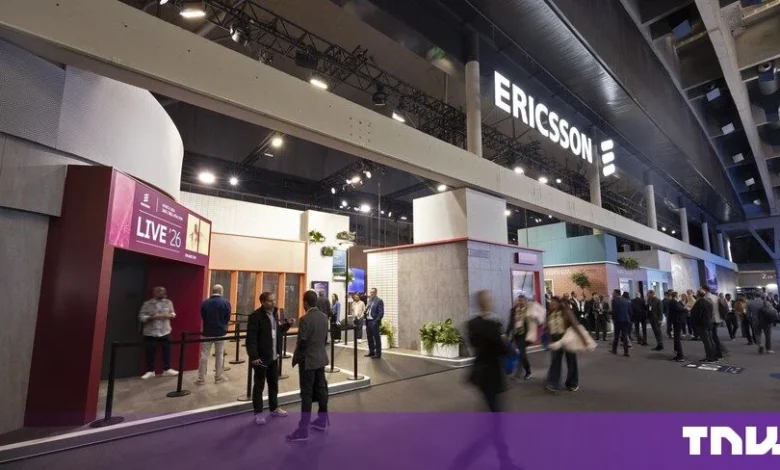
Ericsson reported a robust financial performance for the third quarter of 2026, delivering adjusted earnings before interest, taxes, and amortization (EBITA) of SEK 10.1 billion ($1 billion). This performance significantly surpassed the consensus expectations of market analysts, who had forecasted an average of SEK 7.93 billion, according to data compiled by Bloomberg. The market responded with immediate optimism, as shares in the Swedish telecommunications giant climbed as much as 11% in Stockholm trading on Thursday. This intraday rally marked the largest single-day gain for the company since January 23, contributing to a year-to-date share price appreciation of 18%.
The positive momentum arrived during a period of significant leadership transition for the Stockholm-based firm. Per Narvinger, who officially assumed the role of Chief Executive Officer earlier this month, presided over these results, which appear to validate the stringent cost-cutting and headcount reduction measures implemented by his predecessor, Börje Ekholm. While the reported net income fell to SEK 5.8 billion from SEK 11.3 billion in the year-ago period, the underlying operational metrics indicate a resilient core business despite a challenging global macroeconomic environment.
Financial Performance and Market Dynamics
The company’s reported sales for the quarter reached SEK 59.5 billion, an increase from the SEK 56.2 billion recorded in the same period last year. When adjusting for acquisitions, divestments, and currency fluctuations, organic sales grew by 7%. This expansion was primarily driven by strong demand within the company’s Networks division, with growth observed across three of its four primary global market areas.
A critical nuance in the financial reporting involves the year-over-year comparison of adjusted EBITA. While the current figure of SEK 10.1 billion is lower than the SEK 15.8 billion reported in the third quarter of 2025, the previous year’s results were buoyed by a one-time SEK 7.6 billion capital gain. When excluding this non-recurring item, the underlying trend shows a strengthening in adjusted EBITA. However, the adjusted EBITA margin stood at 17.0%, compared to 28.1% in the prior-year period, reflecting the impact of changing product mixes and cost structures.
The company maintained a disciplined approach to capital allocation, reporting free cash flow before M&A at SEK 4.9 billion. Furthermore, demonstrating confidence in its long-term value, Ericsson utilized SEK 4.8 billion to facilitate the buyback of its own shares, signaling to investors that the board remains committed to returning capital despite the necessity of navigating a volatile geopolitical landscape.
Leadership Transition and Strategic Realignment
The third quarter serves as a pivotal juncture for Ericsson, not only due to the earnings surprise but also as the starting point for a comprehensive internal reorganization. Effective January 1, 2027, Ericsson will streamline its group structure by merging the Market Areas of North East Asia and South East Asia, Oceania, and India into a singular, consolidated Market Area: Asia-Pacific (APAC).
This strategic consolidation is designed to enhance operational efficiency and focus. Patrick Johansson, currently the head of Market Area Europe, Middle East, and Africa (EMEA), has been appointed to lead the new APAC division. This shift necessitates a leadership change in EMEA, for which the company has initiated an active search. The organizational changes extend to the Enterprise Wireless Solutions business area, which will be dissolved. Its key components—Neutral Host solutions and Ericsson Private 5G—will be integrated into the core Business Area Networks, while Wireless WAN will function as a standalone unit reporting directly to Yossi Cohen, head of Market Area Americas.
These structural changes coincide with the departure of three senior members of the executive team: Åsa Tamsons, head of Enterprise Wireless Solutions; Chafic Nassif, head of North East Asia; and Andres Vicente, head of South East Asia, Oceania, and India. Narvinger characterized the upcoming leadership team as "leaner and more balanced," emphasizing that the reorganization is essential for sharpening the company’s focus on the Asian market and bolstering its competitive stance.
Addressing Competitive Headwinds and Market Reality
In his initial briefings as CEO, Narvinger provided a candid assessment of the current telecommunications infrastructure market. "Looking ahead, the RAN (Radio Access Network) market is flat, geopolitical uncertainty remains elevated and component costs are a headwind to gross margin next year," he stated. This outlook highlights the delicate balance Ericsson must strike: maintaining technical leadership while managing the fiscal pressure of rising input costs.
Chief Financial Officer Lars Sandström clarified that the company has successfully utilized short-term measures in product development to offset these rising component costs. Looking toward 2027, the company plans to pass these inflationary pressures on to customers as existing contracts reach their expiration dates. Narvinger also noted that a portion of the third-quarter demand was driven by customers accelerating orders in anticipation of these inevitable price adjustments.
Furthermore, the company is acutely aware of the shifting competitive landscape. During a broadcast interview with Bloomberg TV, Narvinger highlighted the growing influence of Elon Musk’s Starlink, noting that satellite-based connectivity is increasingly challenging traditional telecom operators. By simplifying the internal structure, Ericsson aims to remain agile enough to counter these disruptive market forces.
Industry Comparison: Ericsson vs. Nokia
The reorganization at Ericsson highlights a divergence in strategy compared to its primary Nordic rival, Nokia. While Nokia has aggressively pivoted its business model to prioritize networking equipment tailored for AI-powered data centers and has integrated Nvidia chips into its radio access networks, Ericsson has maintained a more traditional, "pure-play" strategy.
Ericsson’s decision to remain focused on its core equipment supply business for telecom operators reflects a belief in the long-term endurance of traditional mobile network infrastructure. However, the decision to fold the Private 5G unit into the Networks division suggests that Ericsson is not ignoring the industrial and enterprise applications of 5G, but rather seeking to integrate them more deeply into its established product ecosystem.
Broader Implications and Future Outlook
The financial success of the third quarter provides Ericsson with a stable foundation to execute its structural transition. By streamlining its regional management and centralizing its enterprise units, the firm is positioning itself to be more responsive to the specific demands of the Asia-Pacific region, a market critical for global 5G adoption.
Investors appear to have rewarded this clarity of purpose. The 11% surge in stock price suggests that the market finds the new, leaner organizational structure and the firm’s proactive management of component costs and contract pricing to be a credible path forward.
However, the path ahead is not without significant hurdles. The "flat" nature of the global RAN market implies that organic growth will be difficult to sustain through traditional hardware sales alone. Ericsson’s success in 2027 will likely depend on its ability to execute this organizational shift without disrupting the supply chain, as well as its capacity to navigate the "elevated geopolitical uncertainty" that threatens global trade and technology standards.
As the company enters the final quarter of 2026, the focus will shift from the successful integration of its new management team to the implementation of the new APAC structure. The market will be watching closely to see if the leaner executive team can successfully convert the current operational momentum into sustained profitability in a sector that is increasingly defined by rapid technological shifts and the persistent threat of non-traditional competitors like Starlink.
Ultimately, Ericsson’s third-quarter performance demonstrates a company in transition—one that is successfully managing the legacy costs of a previous era while aggressively reshaping its structure to remain relevant in a future where mobile connectivity is increasingly contested by both terrestrial and extraterrestrial infrastructure providers. The company’s ability to pass on rising costs while maintaining its market share will be the definitive test of its new leadership’s strategy over the coming twelve months.
Related posts: