Figma Expands AI Capabilities with Markdown Specs, Code Layers, and Payload CMS Integration at Inaugural India Config Event

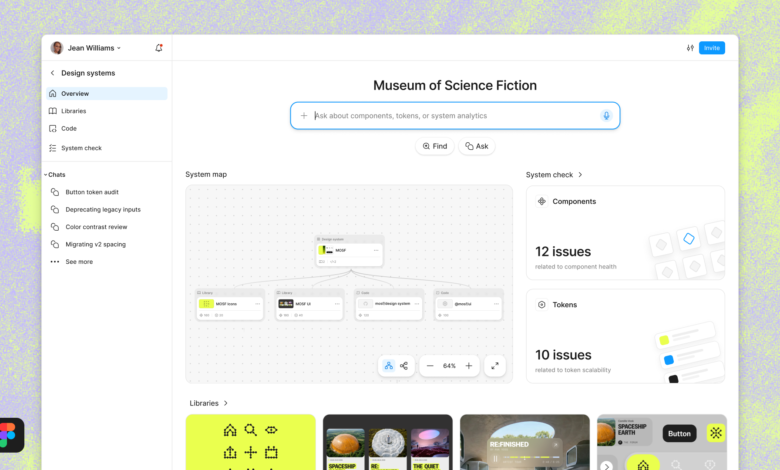
Design platform Figma used its first-ever Config event in India to announce a sweeping suite of developer-focused updates, highlighted by a new Markdown-based editor designed to establish strict corporate design standards. The announcements, which also include the public beta rollout of code layers and a deep integration with the recently acquired Payload headless content management system, arrive as the company attempts to bridge the widening gap between rapid AI-generated code and structured software production.
The centerpiece of the conference announcements is a new feature titled Figma Specs. Operating as an integrated Markdown editor, Specs allows design teams to articulate and codify their unique design languages in a clean, human-readable format. These documents can exist as standalone files within a project workspace or live directly on the canvas alongside visual assets. By centralizing design libraries, code repositories, and brand guidelines into a single reference point, Specs aims to solve a fundamental challenge in modern software development: ensuring that human designers, engineering teams, and autonomous AI agents all adhere to the exact same brand parameters.
Addressing the AI Alignment Problem
The introduction of Figma Specs directly targets the inherent volatility of generative artificial intelligence. As Figma rolls out its on-canvas AI agent to a progressively wider user base, the company faces the challenge of reining in the non-deterministic nature of large language models. Without strict boundaries, AI tools often produce unpredictable UI components that deviate from established design systems.
By feeding centralized context—such as the structured guidelines housed within Figma Specs—into both native and third-party AI agents, organizations can enforce predictable, brand-compliant outcomes. This capability aligns with Figma’s broader vision of functioning as the definitive source of truth where cross-functional product teams decide what software gets built and shipped.
Loredana Crisan, Figma’s chief design officer, emphasized this philosophy during the event, pointing to the macroeconomic shift in how code is currently generated versus how products are actually released. According to Crisan, software teams are currently producing roughly 17 times more lines of code than in previous years, yet overall product release volume has only grown by a factor of 1.3.

"A lot of that code actually is not necessarily built to ship, but really built to discover what the product is. It’s built to design," Crisan noted, highlighting why tight integration between rapid prototyping and rigorous design systems has become paramount.
Public Beta for Code Layers and Model Context Protocol Expansion
Building upon a private beta introduced in June, Figma has officially pushed its code layers feature into public beta. This capability allows developers and designers to inject raw code directly into visual canvas elements, paving the way for significantly more interactive and high-fidelity prototypes. Users can prompt Figma’s native AI agent to translate a visual design into executable code or request code-level modifications directly on the fly to accelerate iterative prototyping cycles.
To further cement its ecosystem compatibility, Figma announced robust support for over 20 new external development and AI tools via its Model Context Protocol (MCP). The newly supported utilities include Open Code, Dia, Grok Bot, and Sarvam, an emerging Indian AI startup. By opening its data pipelines to third-party tools, Figma is positioning its platform as an interoperable hub that can sync fluidly with regional and global developer toolchains.
Payload CMS Integration and the Power of Dynamic Publishing
The latest updates also showcase the practical applications of Figma’s corporate acquisitions. Last year, the company acquired Payload, an open-source headless content management system. Since the acquisition, Payload’s adoption metrics have surged, with downloads increasing sixfold over the past twelve months.
At the Config event, Figma demonstrated how Payload is being woven into Figma Make, a product geared toward generating dynamic, content-driven websites. By merging a headless CMS directly with a design and prototyping platform, teams can manage live content, update backend data structures, and visualize frontend layouts simultaneously, streamlining the journey from static layout to production-ready web application.

Strategic Expansion in the Indian Market
Figma’s choice of India for its inaugural international Config event underscores the country’s strategic importance to the company’s global roadmap. Late last year, Figma established its first formal corporate office in India, complete with dedicated sales, partnership, go-to-market, and product engineering support functions.
The investment has yielded rapid adoption. India currently stands as Figma’s largest user market outside of the United States. Furthermore, the platform has successfully penetrated enterprise accounts within the region, with adoption reported across 40% of India’s top 100 companies listed on the Bombay Stock Exchange.
Broader Industry Implications and Outlook
The convergence of design systems, AI agents, and content management represents a fundamental evolution in software production tools. Historically, design platforms and code editors existed in isolated silos, requiring extensive manual translation by frontend developers to turn UI mockups into production code.
By unifying Markdown-based governance, programmatic code layers, and headless CMS integrations, Figma is attempting to compress the product lifecycle. If successful, these tools could significantly reduce the friction between conceptual design and software deployment, ensuring that the exponential rise in AI-generated code results in cleaner, more consistent, and production-ready applications across global enterprises.