Embracing Controlled Chaos: The Rise of CSS Randomness and the Quest for Universal Web Design


The integration of unpredictable, generative elements into user interface design has shifted from an experimental niche to a burgeoning industry standard, spearheaded by the introduction of the CSS random() function. This development mirrors a broader trend in software development where engineers are moving away from rigid, deterministic layouts toward "controlled chaos"—a design philosophy that seeks to replicate the natural, non-linear fluidity of the physical world within the digital browser environment. As web standards evolve to accommodate these aesthetic and functional shifts, the industry faces a critical juncture regarding implementation, cross-browser compatibility, and the philosophical implications of meritocracy in design.
The concept of randomness in user experience is increasingly relevant as developers look to move away from the "pixel-perfect" homogeneity that has defined the last decade of web design. In his work exploring moral philosophy and the role of luck, Michael Schur, creator of the sitcom The Good Place, posits that the "myth of meritocracy" often blinds individuals to the inherent role of chance in their personal successes. Similarly, in the digital realm, web designers are beginning to acknowledge that a static, perfectly controlled layout may not be the most effective way to engage a user. By introducing subtle, randomized flux—such as dynamic starfields, varied grid patterns, or organic animation offsets—developers are creating interfaces that feel more like a living river than a frozen snapshot, aligning with the Heraclitean principle that one cannot step into the same river twice.
The Evolution of CSS Standards
The journey toward native CSS randomness began in earnest as browser vendors sought to "pave the cowpaths" of common developer pain points. Historically, achieving randomized UI effects—such as a confetti burst upon completing a task or a scattered layout of design elements—required heavy reliance on third-party JavaScript libraries. This approach frequently created performance bottlenecks and introduced unnecessary complexity, violating the W3C’s "Rule of Least Power," which advocates for solving problems using the simplest language capable of expressing the solution.
In late 2025, Safari emerged as the first browser to support the CSS random() specification. This milestone was part of a larger initiative by the WebKit team to shift common UI patterns from the scripting layer to the declarative styling layer. The intent was clear: reduce the dependency on JavaScript frameworks and enable developers to execute complex, non-deterministic layouts using HTML and CSS alone. This transition represents a significant shift in web architecture, moving the burden of calculation from the main thread of the browser to the layout engine itself, potentially offering performance optimizations that JavaScript-based solutions cannot match.
A Fragmented Landscape: The Compatibility Gap
Despite the promise of native CSS randomness, the current landscape remains fragmented. As of mid-2026, while the WebKit engine has pushed the feature into production, implementation in Chromium (Chrome, Edge) and Gecko (Firefox) remains in the exploratory phase. The specification itself is currently an editor’s draft, and as is standard with early-stage W3C drafts, the syntax is subject to refinement and potential breaking changes.
This disparity has led to a "browser-envy" dynamic among front-end developers. The inability to use the random() function across all platforms has created a demand for polyfills—a bridge technology designed to mimic the behavior of native features in browsers that have not yet implemented them. Polyfilling CSS, however, is notoriously difficult. Unlike JavaScript, which can be easily monkey-patched, CSS is designed to be resilient; unknown syntax is typically ignored by the browser. Consequently, creating a polyfill for a new CSS function requires a combination of clever DOM manipulation and a deep understanding of the browser’s render loop.
Technical Implementation and the Polyfill Approach
Recent efforts by independent developers have resulted in the creation of robust polyfills that allow the CSS random() syntax to function in non-supporting browsers. The technical mechanism typically involves identifying elements marked for randomization, parsing the computed styles for the random() function call, and using a JavaScript-based calculator to resolve these values before injecting them back into the DOM.
The process often relies on custom properties (CSS variables). By defining a variable such as –random-offset: random(0, 100px), the polyfill script can scan the stylesheet, evaluate the mathematical expression, and apply the resulting value directly to the element. This method is superior to previous attempts at polyfilling because it avoids the need to re-parse or rewrite entire stylesheets, which can be a significant performance drain. Instead, it targets specific elements on page load, minimizing the impact on the browser’s critical rendering path.
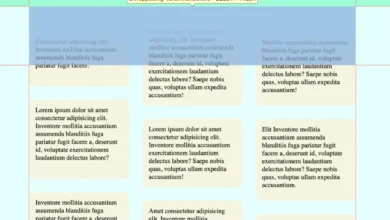
The efficacy of this approach was recently demonstrated in a series of "starfield" and "grid" demos. These projects showed that a properly implemented polyfill could achieve parity with native Safari implementations, allowing developers to use the exact same CSS code that will eventually become the native standard. This "forward-compatible" approach ensures that once browser vendors roll out native support, the polyfill can be removed without requiring a refactor of the underlying codebase.
The Broader Impact on UX Design
The implications of generative UI (GenUI) extend beyond mere aesthetics. As companies like Google explore the use of generative layouts in search results, the question arises: is unpredictable UX inherently helpful, or does it risk confusing the user? Critics argue that by removing consistency, designers may compromise the accessibility and predictability that users rely on to navigate the web. Conversely, proponents argue that a degree of controlled chaos can increase engagement, make interfaces feel more human, and reduce the "robotic" sterility of modern enterprise software.
Data from recent pilot programs suggests that users often find randomized elements—such as varying color palettes or non-standard grid alignments—more "delightful" and memorable, provided that the underlying navigation logic remains stable. The key, therefore, is to constrain randomness to the presentational layer, ensuring that while the look of a site might change, the utility and functionality remain constant.
The Future of CSS Functions
As the industry looks toward the next iteration of CSS, the focus is expanding beyond simple random number generation to include the random-item() function. This proposed feature would allow developers to select a random value from a predefined list, such as a set of brand colors or a collection of image assets, directly within their CSS files. While currently only existing in the conceptual stage or experimental Safari Technology Previews, it highlights the direction of the language: toward a more expressive, data-aware styling environment.
Furthermore, the recent emergence of CSS custom functions and inline conditionals in Chromium-based browsers suggests a future where the line between CSS and a full programming language will continue to blur. Developers can now simulate complex logic—such as selecting items from a collection—using a combination of custom functions and CSS logic. While some industry veterans urge caution, suggesting that these "hacks" should be treated with the same skepticism as early JavaScript experiments, others view them as the inevitable evolution of the web.
Conclusion: A Pragmatic Path Forward
The transition toward native CSS randomness is a testament to the maturation of the web as a design medium. While the current reality involves a patchwork of browser support and the occasional necessity of polyfills, the direction is clear: the web is becoming a more dynamic, flexible, and expressive space. For developers, the challenge lies in balancing the urge to innovate with the need for stability.
As the W3C works to finalize the specifications for CSS values and units, the contributions of the open-source community in polyfilling these features provide a vital bridge. They offer a window into the future of web design, allowing for the creation of interfaces that embrace the role of luck and randomness, ultimately fostering a more vibrant and human-centric digital experience. For now, the "random guy" on the web can take comfort in the fact that while the river is always changing, the tools to navigate it are finally catching up.