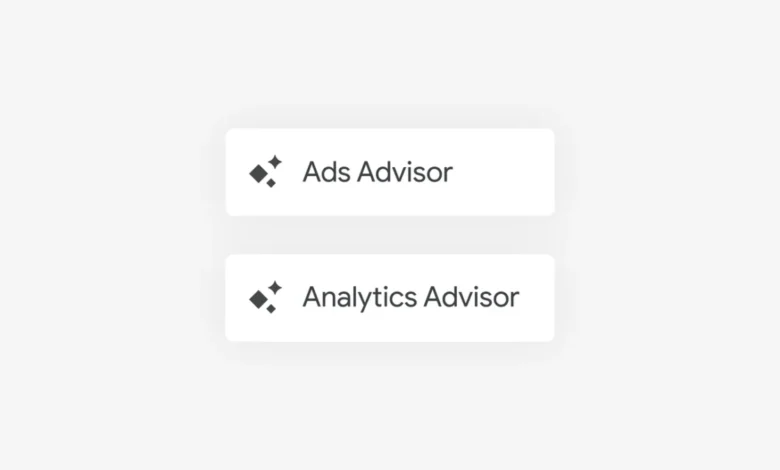
The digital advertising landscape is currently undergoing a structural transformation driven by the integration of large-scale artificial intelligence. As market competition intensifies and consumer behaviors become increasingly fragmented across digital channels, Google has announced the upcoming deployment of two sophisticated "agentic" tools: Ads Advisor and Analytics Advisor. These platforms, powered by Google’s most advanced Gemini models, are designed to transition the role of AI from a passive reporting mechanism to an active, diagnostic, and prescriptive partner for marketers. The rollout is scheduled to begin in December for English-language accounts, with a broader global expansion planned for early 2026.
The Shift Toward Agentic AI in Marketing
For years, digital advertising platforms have relied on machine learning to automate bidding strategies and audience targeting. However, the introduction of "agentic" tools marks a distinct evolution. Unlike traditional predictive models, agentic AI has the capacity to reason, propose strategic shifts, and—with human authorization—execute changes directly within the campaign ecosystem.
Dan Taylor, Vice President of Global Ads at Google, notes that the complexity of managing multi-channel campaigns has created a cognitive load for advertisers that is often unsustainable. By embedding AI advisors directly into the workflows of Google Ads and Google Analytics, the company aims to reduce the time spent on manual data reconciliation and technical troubleshooting, allowing marketers to focus on higher-level creative and business strategy.
Ads Advisor: Operational Precision and Performance Optimization
The primary function of Ads Advisor is to serve as an intelligent interface within the Google Ads dashboard. It is designed to function as an "always-on" consultant that understands the specific business context of an account.
One of the most significant capabilities of the tool is its ability to perform real-time diagnostics. For instance, when a campaign experiences a sudden performance dip—a common occurrence during high-traffic periods like the holiday season—the AI can ingest vast amounts of account data to identify the root cause. Rather than requiring the user to navigate through multiple report tabs to find an anomaly, the user can simply ask the AI for an explanation. The tool then presents a breakdown of potential issues, such as fluctuations in search volume, budget exhaustion, or shifts in competitive auction dynamics.
Furthermore, Ads Advisor provides automated support for campaign hygiene. One of the most persistent frustrations for digital marketers is the sudden disapproval of ads due to policy violations. Ads Advisor acts as a policy liaison, explaining the specific violation, offering the necessary correction, and, where applicable, facilitating the change directly. This feature is expected to reduce the downtime between ad rejection and compliance, ensuring that campaigns remain active during critical sales windows.
Analytics Advisor: Data Interpretation and Strategic Foresight
Parallel to the advertising updates, Analytics Advisor is set to upgrade the capabilities of Google Analytics (GA). As businesses struggle to reconcile fragmented data points across the customer journey, Analytics Advisor serves as an automated data scientist.
The tool’s core strength lies in "key driver analysis." When a user identifies a performance spike—such as an unexpected surge in site traffic on a specific day—the AI does not merely report the numbers. It performs an attribution analysis to determine the factors that triggered the event. By asking "Why did my traffic increase?" the user receives a contextual explanation, such as an uptick in organic social referrals or a successful email campaign, categorized by its impact on business outcomes.
This capability is designed to bridge the gap between observation and action. Once the tool identifies the driver of success, it can generate step-by-step recommendations for how to replicate that success in future campaigns. For example, it might suggest increasing bid modifiers for a specific demographic that showed high conversion intent during the observed spike.
The Broader Implications for the Digital Economy
The move by Google to integrate Gemini-powered agents is indicative of a broader industry trend. With the total global digital advertising market exceeding $600 billion annually, even marginal improvements in operational efficiency can translate into billions of dollars in improved return on ad spend (ROAS).
Industry analysts suggest that these tools are a direct response to the "complexity tax" that advertisers pay when managing campaigns across multiple platforms. By simplifying the interface and providing natural language access to complex data sets, Google is attempting to lower the barrier to entry for small-to-medium-sized enterprises (SMEs) while simultaneously providing large enterprises with a way to scale their operations without a linear increase in headcount.
Data-Driven Efficiency and Human Oversight
While the efficiency gains offered by these tools are significant, Google has emphasized that the "agentic" nature of the software is fundamentally collaborative. In every instance where the AI proposes a change—whether it is adding a sitelink extension or adjusting an ad headline—the system requires explicit human review and approval. This "human-in-the-loop" architecture is designed to mitigate the risks associated with AI hallucinations or unintended strategic deviations.
Feedback from early testers, such as D2C growth leads and senior search engine marketing (SEM) experts, underscores the time-saving benefits of this technology. Many professionals report that tasks which previously took hours of manual analysis—such as cross-referencing conversion paths or troubleshooting campaign performance—are now condensed into a few minutes of conversational interaction. This shift allows marketing teams to transition from data collectors to strategic orchestrators.
A Roadmap for the Future
The rollout in December represents only the first phase of this initiative. Google has indicated that the roadmap for these tools extends through 2026, with planned updates focusing on deeper integrations across the Google Marketing Platform and more sophisticated predictive modeling.
As these tools gain wider adoption, the industry can expect a shift in how marketing success is measured. Success will likely be defined less by a marketer’s ability to manipulate technical dashboards and more by their ability to provide the AI with the right business context, goals, and brand constraints.
For advertisers looking to prepare for this transition, Google recommends ensuring that account settings, conversion tracking, and data signals are fully optimized. The effectiveness of any AI advisor is fundamentally bound by the quality and accuracy of the data it is fed. By ensuring that their foundational data infrastructure is robust, businesses will be best positioned to leverage these new tools to navigate the increasingly competitive digital landscape.
As we look toward the start of 2026, the integration of agentic AI into advertising workflows will likely become a standard expectation rather than a competitive advantage. The focus for businesses will remain on the intersection of human creativity and machine-led efficiency, ensuring that while the technology handles the "how," the human remains firmly in control of the "why."