What Can Bloggers Learn from Pickleball: A Strategic Analysis of Growth, Engagement, and Digital Sustainability


Pickleball has emerged as the fastest-growing sport in the United States, a designation officially recognized by the Sports & Fitness Industry Association (SFIA). With participation figures skyrocketing to over 13.6 million players in the U.S. alone as of 2023—a 223.5% increase over three years—the sport’s meteoric rise offers a compelling case study for digital content creators. While the crossover between a court-based racquet sport and professional blogging may initially appear tangential, the structural parallels between managing a successful content platform and navigating a competitive pickleball match are profound. Both domains rely heavily on audience retention, strategic positioning, iterative improvement, and the ability to adapt to a rapidly shifting landscape.
Historical Context and Evolution
The origins of pickleball date back to 1965 on Bainbridge Island, Washington. Founded by Joel Pritchard, Bill Bell, and Barney McCallum, the game was conceived as a family-friendly pastime to alleviate boredom. Over the subsequent six decades, it transformed from a backyard improvisation into a highly regulated, internationally recognized discipline. This trajectory—starting with a minimal viable product and scaling into a global phenomenon—serves as a blueprint for the modern blogger.
In the digital sphere, the transition from a solitary, experimental blog to a professionalized content hub follows a similar timeline. The initial phase is characterized by experimentation and grassroots growth, followed by a period of infrastructure building and community cultivation. Data from content marketing firms suggest that blogs failing to move beyond the "backyard phase"—failing to establish a clear content calendar, audience persona, or SEO strategy—often succumb to the high failure rate of the industry, where approximately 80% of blogs cease updates within the first year.
The Dynamics of Community Engagement
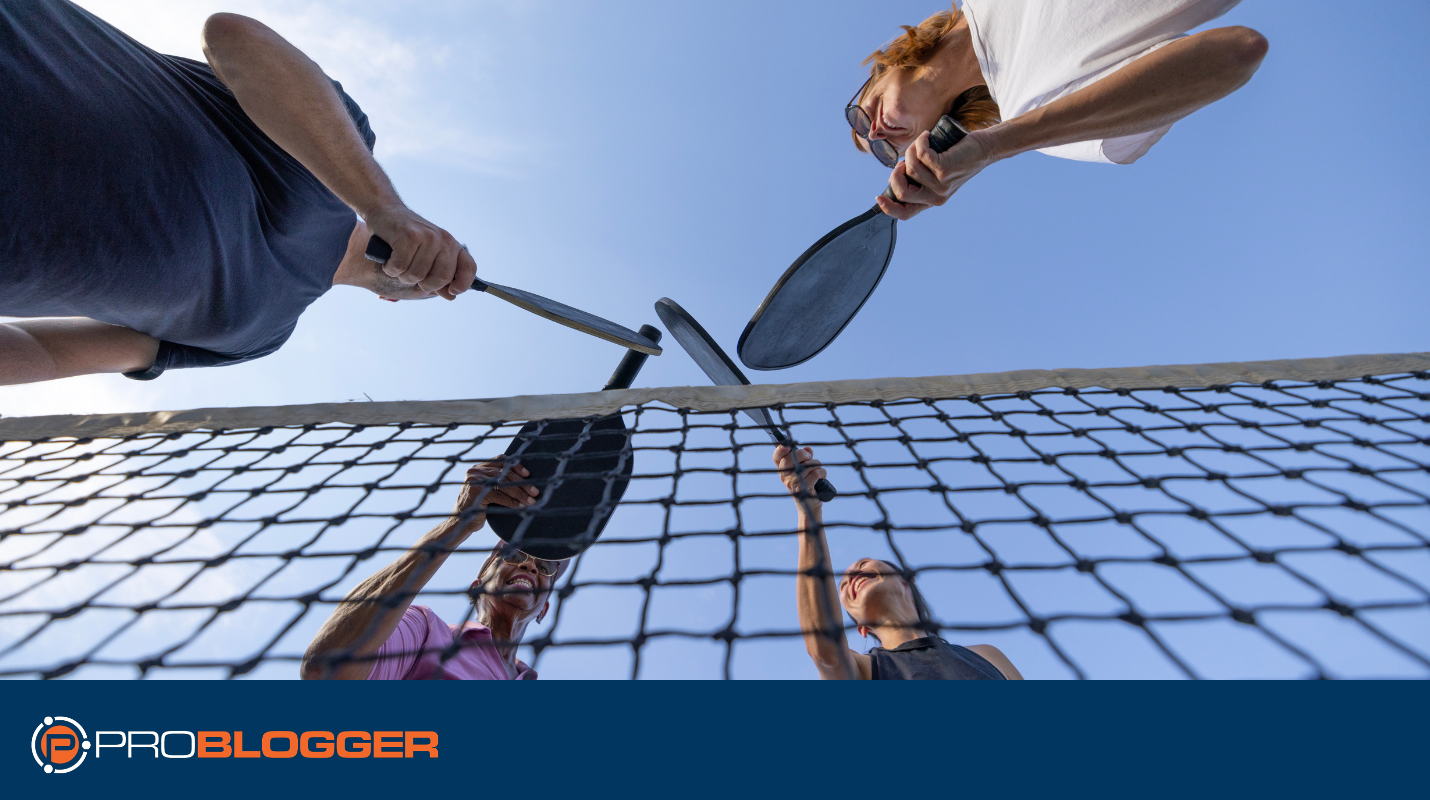
In professional pickleball, the "rally" is the fundamental unit of the game; the longer a rally continues, the higher the level of engagement for both the participants and the spectators. For the digital publisher, the "rally" is represented by the comment section, social media discourse, and email subscriber interactions.

Industry analysts emphasize that community-driven platforms exhibit higher "stickiness," a metric defining the frequency and duration of user returns. By responding to reader inquiries, hosting live Q&A sessions, and fostering a sense of shared purpose, bloggers effectively extend the rally. Statistics from community management platforms indicate that brands that actively interact with their user base see a 30% increase in retention rates. The takeaway is clear: content is not merely a broadcast; it is a collaborative, iterative process that thrives on feedback loops.
Strategic Simplicity: The Philosophy of the Dink
One of the most nuanced aspects of pickleball is the "dink"—a soft, intentional shot designed to neutralize an opponent’s power and reset the pace of the game. In the context of blogging, this translates to the art of simplification. As the digital information ecosystem becomes increasingly saturated, the ability to distill complex data into accessible, digestible content is a competitive advantage.
Technical communication experts argue that the "cognitive load" of an average internet reader is finite. Posts that utilize concise, jargon-free language and clean, logical layouts consistently outperform dense, academic-style articles in terms of time-on-page metrics. The "dink" philosophy advocates for a strategic pause in the barrage of information, favoring quality and clarity over the sheer volume of content. This approach prevents reader fatigue and establishes the blogger as a reliable, authoritative source.
Navigating the "Kitchen": Balancing Authority and Accessibility
In pickleball, the "kitchen" (or non-volley zone) is a restricted area that dictates the boundaries of play, forcing players to exercise discipline. Similarly, bloggers must operate within a "strategic zone"—a balance between being too sales-driven and too abstract.
Market research indicates that audiences are increasingly sensitive to overt commercialism. The "sweet spot" for digital creators lies in the intersection of providing high-value, altruistic content and maintaining a sustainable business model. When a creator drifts too close to a "hard sell," they risk losing the trust of their readership. Conversely, neglecting the revenue-generating aspects of a platform can lead to burnout. Establishing a consistent, transparent value proposition is the equivalent of maintaining one’s position on the court; it allows for sustained engagement without compromising the integrity of the brand.
Iterative Improvement and the Science of the Whiff
The inevitability of the "whiff"—a missed shot—is a reality in both professional athletics and professional writing. However, the data-driven approach to these failures separates the amateur from the professional. In the sporting world, video analysis is used to identify the root cause of a missed swing. In the blogging world, this function is served by analytics dashboards.
Key performance indicators (KPIs) such as bounce rates, click-through rates (CTR), and conversion funnels act as the scoreboard. When a post fails to generate the intended engagement, high-performing bloggers analyze the data to determine whether the issue was one of topic relevance, headline efficacy, or distribution timing. This objective, analytical mindset converts failure into an actionable insight, ensuring that each subsequent piece of content is more refined than the last.
Adapting to the Digital Environment
The landscape of digital publishing is in a constant state of flux, driven by algorithmic updates from search engines like Google and the emergence of new content consumption formats such as short-form video and generative AI. Pickleball players who fail to adapt their defensive techniques to an opponent’s changing serve patterns quickly find themselves at a disadvantage.
Similarly, bloggers must remain agile. A report by the Content Marketing Institute underscores the importance of "platform diversification." Relying solely on a single traffic source—such as organic search—is a high-risk strategy. By staying informed on technological shifts and maintaining a flexible editorial calendar, creators can pivot their strategies to maintain relevance. This adaptability is not merely a tactical choice but a requirement for long-term survival in the digital economy.
Strategic Positioning and the Future of Content
The final lesson from the pickleball court is the importance of "serve strength." In the game, the serve sets the tone for the entire point. In blogging, the introduction serves as the primary hook. Studies on reader behavior consistently show that a user decides whether to continue reading a piece of content within the first 10 to 15 seconds. A strong, value-oriented introduction that addresses a specific pain point or provides a compelling hook is essential for engagement.

Furthermore, strategic positioning—understanding one’s niche and identifying the unique value proposition—allows a blog to stand out in an increasingly crowded marketplace. Just as a pickleball player identifies their strengths (e.g., net play vs. baseline power), a blogger must lean into their specific expertise.
The parallels between pickleball and blogging are not merely metaphorical; they represent a fundamental alignment between success in physical, high-performance environments and the professionalization of digital content creation. By applying the principles of intentionality, community focus, strategic simplicity, and continuous, data-backed adaptation, creators can move beyond the "backyard" stage and build sustainable, influential digital platforms. As the digital landscape continues to evolve, those who treat their blogging with the same disciplined, competitive, and enthusiastic spirit as a high-stakes pickleball match are the ones most likely to emerge as leaders in their respective niches. The game is ongoing, the strategies are evolving, and the opportunity for growth remains open for those willing to pick up the paddle—or the keyboard—and commit to the long-term rally.