The Unseen Force: How WordPress Community Cultivates Connection, Drives Innovation, and Confronts Modern Challenges

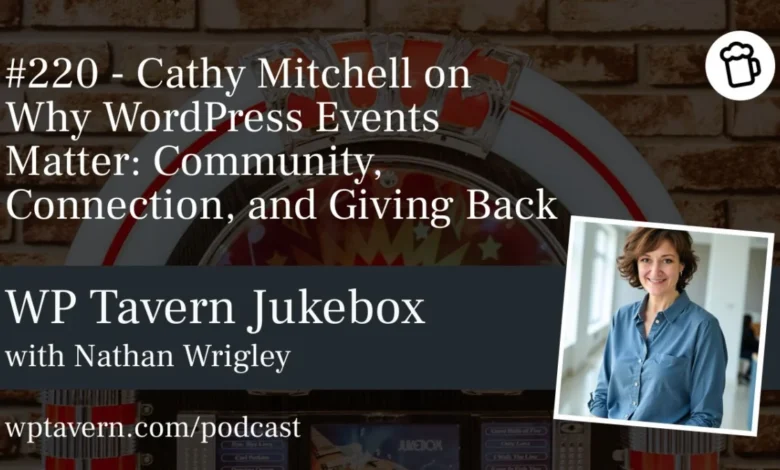
The digital realm, often perceived as a landscape of isolation, is paradoxically a fertile ground for profound human connection, as illuminated in a recent episode of the Jukebox Podcast from WP Tavern. Host Nathan Wrigley engaged in a compelling discussion with Cathy Mitchell, a seasoned WordPress professional and lead organizer for WordCamp Canada 2026, exploring the multifaceted importance of community within the WordPress ecosystem. Their conversation underscored how this global, open-source collective not only drives technological innovation but also offers a vital antidote to contemporary societal challenges like loneliness, while navigating evolving economic landscapes.
Cathy Mitchell’s Journey: From Personal Project to Community Leadership
Cathy Mitchell’s immersion into the WordPress world began in 2007, a journey she described as starting with a "fun personal project" during her maternity leave. This initial engagement quickly blossomed into a professional venture, leading to the establishment of WPBarista in 2008. For years, Mitchell honed her expertise in the WordPress space, primarily focusing on her business. However, a significant shift occurred more recently, driven by a personal desire for deeper community involvement.
"I was looking for something to do in the WordPress community last year," Mitchell recounted on the podcast. This search led her to connect with Dan in the Canada Slack channel, who invited her to assist with WordCamp Canada 2025. Her involvement rapidly escalated, surprising her with the level of trust and responsibility she was accorded. "He got me in and brought me right up to like being on the organizing team. And it was so fun but so shocking," Mitchell stated, contrasting it sharply with the "lot of red tape in the corporate world before they let you do anything meaningful." This rapid ascent culminated in her unexpected appointment as the lead organizer for WordCamp Canada 2026, a role she embraces with enthusiasm, particularly for its potential to foster community.
The Unique Fabric of the WordPress Community
Both Mitchell and Wrigley shared insights into the distinctively open and welcoming nature of the WordPress community, setting it apart from more conventional corporate or volunteer environments. Wrigley, who began his WordPress journey several years after Mitchell, initially stumbled upon the community. He recalled attending WordCamp London, feeling like a "timid rabbit" at first, questioning his motives for being there. Yet, he quickly discovered an environment free from "boastful" individuals or "corporate speech," where people were genuinely helpful. This experience transformed his perception, leading him to dedicate a significant portion of his free time to "WordPressy things."
Wrigley emphasized the profound impact of this community on his life, describing it as "a seriously important part of my life," to the extent that its absence would leave a significant void. Mitchell, whose initial interaction was primarily through support forums in 2008-2009, learned from "the best of the best," receiving answers to her "ridiculous questions" from individuals who are now prominent figures in the WordPress space. She observed the community’s international flavor and openness, a stark contrast to her experiences in other volunteer settings. "This one’s very open," she affirmed.
The absence of typical barriers to entry and "red tape" is a recurring theme. Mitchell highlighted her surprise at being given significant organizational responsibility almost immediately, a testament to the community’s trust-based approach. "We have to say yes, like it’s part of the culture is, if people volunteer, we have to find a way to say yes," Mitchell explained, encapsulating the community’s inclusive ethos. This willingness to empower volunteers, even those without extensive prior experience in specific roles, creates a dynamic environment where individuals can quickly contribute and develop new skills.
Addressing Modern Challenges: Loneliness and Technology
The conversation transcended the technical aspects of WordPress to delve into broader societal implications, particularly the growing concern of loneliness in the digital age. Wrigley pondered whether technology itself, while connecting people virtually, might inadvertently contribute to isolation by offering endless solitary entertainment options.
Mitchell cited alarming statistics, referencing a 2023 report by the U.S. Surgeon General, Vivek Murthy, who declared a "loneliness epidemic." The report highlighted that the health impact of loneliness is comparable to smoking 15 cigarettes a day. Significantly, the highest rates of reported loneliness (79%) were found among the 18-24 age group, a demographic that has grown up immersed in technology, contrasting with 41% among those aged 66 and above. While acknowledging the challenge of definitively proving correlation versus causation, Mitchell observed the parallel rise of technology during this period.
This phenomenon has led to a re-evaluation of technology’s role, even among younger generations. Mitchell shared that her own Gen Z children, despite being raised with an open-minded approach to tablets and technology, now express intentions to significantly restrict technology access for their future offspring. This sentiment aligns with emerging policy discussions globally; for instance, Australia recently implemented widespread bans on social media for children under 16, and similar legislation is being considered in the UK and other European countries.
In response to this growing loneliness, Mitchell advocated for service and volunteerism as a powerful antidote. Drawing from her "faith background," where service is seen as an integral part of life, she noted a growing secular recognition of service as a means to combat isolation. "Service is an antidote to loneliness," she asserted, emphasizing that collaborative efforts toward a shared goal foster "camaraderie" and a sense of belonging. Wrigley reinforced this by recalling research on happiness, which identifies frequent social interaction and altruism (giving without expectation of return) as two of the strongest indicators of overall well-being. The WordPress community, with its emphasis on collective contribution and shared experiences at events like WordCamps, inherently provides these elements.
The Altruistic Core: Motivations for Volunteering
The podcast delved into the diverse motivations behind volunteering within the WordPress community, distinguishing between "newbies" seeking connection and purpose, and business owners assessing return on investment (ROI).
For newcomers, the community offers an accessible entry point to meaningful engagement. The lack of stringent requirements or "red tape" means that individuals can quickly contribute in various capacities, from coding to non-coding roles like event organization, documentation, design, or translation. This ease of involvement provides a powerful sense of purpose and connection, particularly for individuals undergoing life changes, such as Mitchell, who, as an "empty nester," found herself seeking new opportunities for fulfillment. The community provides a space to "practice a skill, you get to do something meaningful, you get direction, you get camaraderie all by serving," Mitchell explained.
For business owners and corporate sponsors, the motivations are often framed in terms of a pragmatic ROI. However, Mitchell noted that the benefits extend beyond direct financial returns. Sponsoring open-source projects, and participating in the community, can significantly ease talent acquisition and vetting processes. Companies gain visibility among potential hires and demonstrate their commitment to the ecosystem, making them more attractive employers. Moreover, a healthier, thriving WordPress community directly benefits businesses built upon the platform. "If WordPress doesn’t do well, then they don’t do well," Mitchell observed, highlighting the symbiotic relationship between corporate success and community vitality.
Economic Headwinds and the Future of Sponsorship
The conversation acknowledged a shift in the landscape for corporate sponsorship, contrasting the current climate with the "stratospheric growth" experienced by WordPress in previous years. For much of its history, WordPress has seen remarkable expansion, growing its market share from the low twenties to now powering over 43% of all websites on the internet. During this period of continuous growth, companies often found it easier to justify sponsorship, viewing it as a natural investment in a "rising tide" that lifted all boats.
However, the past few years, marked by global economic uncertainty, the aftermath of the COVID-19 pandemic, and the rapid emergence of Artificial Intelligence (AI), have introduced new challenges. Mitchell described this as a "perfect storm," leading to tighter corporate budgets and a heightened demand for demonstrable ROI from sponsorships. Competition within the WordPress ecosystem itself has also intensified, with a proliferation of agencies, plugins, and themes. Concurrently, the WordPress Foundation has implemented stricter guidelines regarding trademark use for sponsored events, adding another layer of complexity for potential partners.
Wrigley expressed a sense of unfamiliarity and even "fear" regarding this new phase, wondering if it signifies a mere "levelling off" or a potential decline for the community. Mitchell, while acknowledging the challenges, framed it as a necessary adjustment. "Every industry can’t just, go, go, go, go," she said, suggesting that the era of effortless growth and "never advertised" business success (like her own for 19 years) is likely drawing to a close. This period of adjustment necessitates a more strategic and value-driven approach to community engagement and sponsorship.
Strategic Imperatives: Engaging the Next Generation and Sustaining Open Source
Despite the economic headwinds, Mitchell articulated a strong sense of optimism, particularly regarding the future of open source. She views WordCamp Canada 2026 as a "light at the end of this tunnel," emphasizing her belief that "open source and AI are probably the way of the future." The critical imperative, she argued, is to actively engage the next generation.
"We need to get those young people involved in open source," Mitchell stressed, irrespective of whether their focus is specifically on WordPress. This sentiment echoes broader initiatives within the global WordPress community, such as "Campus Connect" and programs offering university credits for open-source contributions. Events like WordCamp Asia have increasingly prioritized this focus, recognizing that the long-term health and sustainability of WordPress depend on cultivating new contributors.
These educational initiatives are foundational for the future, ensuring that students and young professionals gain early exposure to the principles and practices of open source. By integrating open-source projects into academic curricula, the community aims to build a pipeline of talent and foster a culture of collaborative development. Mitchell is keen to introduce and expand these programs at WordCamp Canada, collaborating with universities in Canada and the U.S. to offer credits for student involvement. This proactive approach ensures that the "harbor wall" is continuously built, providing a stable foundation for future growth and innovation.
WordCamp Canada 2026: A Beacon of Optimism
Under Cathy Mitchell’s leadership, WordCamp Canada 2026 is poised to be more than just a technical conference; it is envisioned as a powerful testament to the enduring values of the WordPress community. Mitchell expressed immense gratitude for the positive and uniquely open culture she has encountered, attributing much of its genesis to the overarching vision of WordPress co-founder Matt Mullenweg, despite any criticisms. "Somehow he put something in place that became very, very popular," she reflected, marveling at a culture where the default response to volunteerism is "yes."
This "secret sauce" of the WordPress community – its unwavering commitment to openness, collaboration, and mutual support – remains a powerful force. Mitchell’s optimism for WordCamp Canada stems from this deep-seated belief in the community’s capacity to adapt, innovate, and continue providing a meaningful space for connection. The event will not only showcase the latest in WordPress development but also serve as a crucial platform to address the strategic imperatives of youth engagement and the long-term viability of open source in a rapidly changing world.
The discussion between Nathan Wrigley and Cathy Mitchell vividly illustrates that the WordPress community is far more than a collective of developers and users; it is a vibrant social ecosystem. It is a place where professional growth intersects with personal fulfillment, where technological advancement is intertwined with human connection, and where altruism drives innovation. As the community navigates new economic realities and societal challenges, its inherent strengths – its openness, its welcoming spirit, and its commitment to service – position it as a resilient force, continuing to cultivate belonging and drive the future of the open web.