The Invisible Revolution in Personal Health Technology Why Screenless Wearables Are Capturing the Multi Billion Dollar Market

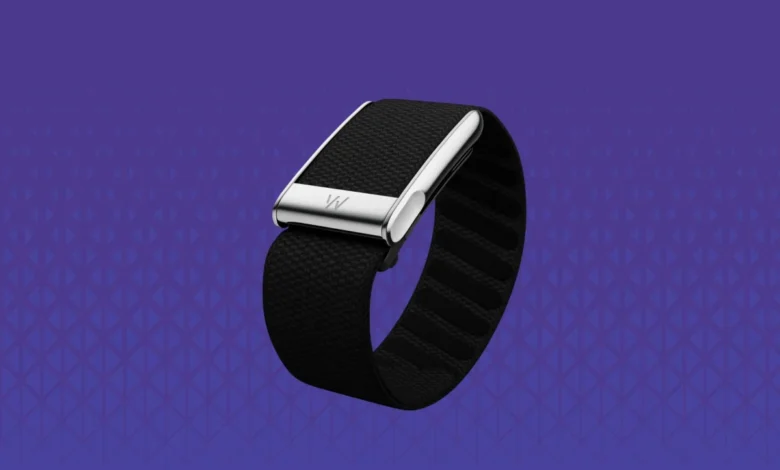
The landscape of personal health technology is undergoing a radical transformation as consumers increasingly reject the constant intrusion of digital displays in favor of "invisible" technology. Leading this shift are multi-billion-dollar brands such as Whoop, Oura, and Fitbit, which are betting that the future of the wearables market lies not in adding more features, but in strategically removing them. This counterintuitive approach has proven exceptionally lucrative; between 2024 and 2025, sales for screenless fitness trackers surged by 88%, signaling a major pivot in consumer behavior and a direct challenge to the dominance of the multi-functional smartwatch.
The rapid growth of this sector is underscored by massive capital infusions and soaring valuations. In March 2026, the performance-tracking company Whoop announced it had raised $575 million in a late-stage funding round. Simultaneously, Oura, the pioneer of the smart ring category, secured over $900 million in investment. Both companies have now seen their private valuations climb north of $10 billion, placing them in the upper echelon of the global health technology industry. The momentum has become so significant that even industry giants like Google have felt compelled to pivot. On May 7, 2026, Google unveiled the Fitbit Air—a $100 screenless tracker designed to compete directly with Whoop’s minimalist aesthetic—with a scheduled shipping date of May 26.
The Philosophical Shift: From Notifications to Insights
For the past decade, the wearables market has been defined by the "wrist-top computer" philosophy championed by the Apple Watch. These devices aimed to condense the functionality of a smartphone into a smaller form factor, providing users with text messages, emails, app notifications, and even cellular calling capabilities. However, as "notification fatigue" has become a recognized psychological phenomenon, a growing segment of the population is seeking a "digital detox" without sacrificing the benefits of high-level biometric data.
The screenless movement is predicated on the idea that a health tracker should be a passive observer rather than an active distractor. By removing the screen, companies like Whoop and Oura have eliminated the primary source of user interruption. This allows the device to focus exclusively on its core mission: the collection and analysis of physiological data. For the user, the experience shifts from managing a secondary smartphone to wearing a discrete piece of jewelry or a simple fabric band that works silently in the background.
A Chronology of the Wearable Evolution
To understand the current surge in screenless technology, one must look at the trajectory of the industry over the last twenty years:
- The Early Era (2000s – 2012): Early wearables were primarily pedometers and basic clip-on trackers. Fitbit’s original products were screenless or featured simple LED dots, focusing on step counts and basic activity.
- The Smartwatch Explosion (2014 – 2020): With the launch of the Apple Watch and various Android-based competitors, the industry moved toward high-resolution OLED screens and complex operating systems. Health tracking became one of many "apps" on the wrist.
- The Specialized Divergence (2021 – 2023): As the market matured, elite athletes and biohackers began gravitating toward specialized tools like the Whoop Strap 4.0 and the Oura Ring Gen3. These users prioritized data accuracy and recovery metrics over the ability to read a tweet on their wrist.
- The Minimalist Surge (2024 – 2026): The current era is defined by the mass-market adoption of screenless tech. The 88% growth rate recorded over the past year suggests that the preference for minimalist hardware has moved from a niche enthusiast market to the mainstream consumer.
Technical Superiority Through Omission
The decision to remove the screen is not merely an aesthetic choice; it provides significant engineering advantages that directly enhance the utility of the device as a health monitor. The most immediate benefit is battery life. While high-end smartwatches typically require daily charging—a requirement that creates "data gaps" during sleep or exercise—screenless trackers can operate for a week or more on a single charge.
This longevity is crucial for 24/7 health monitoring. By maintaining constant contact with the skin without the need for frequent removal, these devices provide a more holistic view of a user’s Heart Rate Variability (HRV), skin temperature, and sleep architecture. Whoop, for instance, utilizes this continuous data stream to calculate "Strain" and "Recovery" scores, which would be statistically less reliable if the device were sitting on a charger for two hours every evening.
Furthermore, the absence of a screen allows for more efficient internal architecture. Without the need for a bulky display assembly and the power-hungry processors required to drive a graphical user interface, manufacturers can dedicate more space to high-fidelity sensors and larger batteries. This has enabled the miniaturization of technology seen in the Oura Ring, which packs advanced infrared sensors, gyroscopes, and temperature sensors into a form factor no larger than a standard wedding band.
The "Two-Watch" Problem and the Fashion Factor
A significant driver of the screenless trend is the intersection of technology and personal style. For many consumers, a watch is more than a utility; it is a fashion statement, an heirloom, or a status symbol. The "Two-Watch" problem, as identified by Whoop CEO Will Ahmed, refers to the social and aesthetic awkwardness of wearing a digital smartwatch on one wrist and a traditional mechanical timepiece on the other.
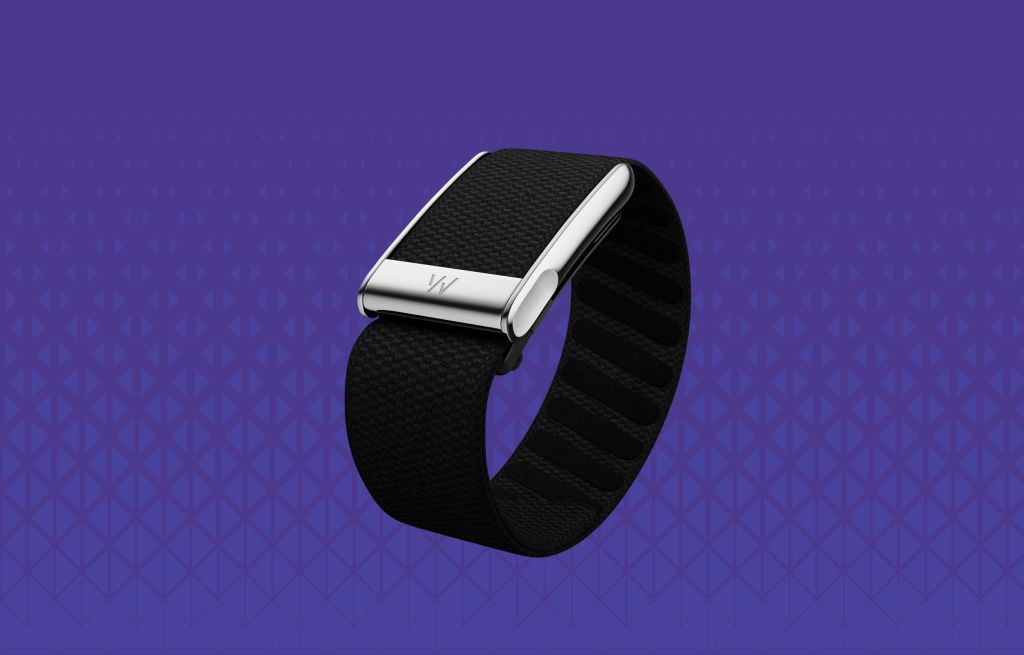
"If it has a screen, then it’s a watch," Ahmed recently told the Wall Street Journal. "If it’s a watch, then you can’t wear two watches."
By designing trackers that look like simple bracelets or rings, companies have bypassed this conflict. A user can wear a luxury Swiss watch on their left wrist while a Whoop band remains hidden under a shirt sleeve or an Oura ring sits unobtrusively on a finger. This "invisible" nature allows the technology to integrate into the user’s existing wardrobe rather than dictating it. This has opened the door for high-profile collaborations, such as Oura’s partnership with luxury fashion houses, positioning the tracker as a premium accessory rather than a piece of "tech gear."
Market Disruption: Google’s Fitbit Air Strategy
The entry of Google into the screenless market via the Fitbit Air represents a significant shift in the competitive landscape. At a $100 price point, the Fitbit Air is positioned as an entry-level gateway into the "quantified self" movement. This move is widely seen as a tactical strike against Whoop’s subscription-heavy model and Oura’s premium hardware pricing.
Industry analysts suggest that Google’s goal with the Fitbit Air is to capture the vast middle-market of consumers who are curious about their health data but are unwilling to commit to a $30-per-month subscription or a $300 smart ring. By offering a screenless, "always-on" tracker that integrates seamlessly with the Google Health Connect ecosystem, the tech giant is attempting to commoditize the very minimalism that Whoop and Oura have used to build their premium brands.
The Fitbit Air’s launch on May 26 is expected to trigger a price war in the wearables sector. Early reports indicate that other manufacturers, including Garmin and Samsung, may be developing their own screenless "lite" versions of flagship products to maintain market share in this rapidly expanding segment.
Data Privacy and the Subscription Model
As screenless wearables collect increasingly intimate physiological data, the business models behind these devices have come under scrutiny. Whoop has famously leaned into a membership model, where the hardware is provided at a low initial cost, but the user pays a recurring fee to access the data analytics platform. This "Health-as-a-Service" model ensures a steady revenue stream for the company and allows for continuous software updates that improve the device’s predictive capabilities.
However, this model also raises questions about data ownership. Consumers are increasingly wary of "renting" their own health data. In response, some newer entrants in the screenless space are experimenting with "local-first" data storage and one-time purchase models. The industry’s ability to maintain consumer trust regarding the privacy of heart rate, sleep, and reproductive health data will be a critical factor in whether the 88% growth rate can be sustained into the late 2020s.
Broader Implications and Future Outlook
The success of screenless wearables suggests a broader trend toward "ambient computing"—a future where technology is embedded into the environment and the objects we wear, rather than requiring our constant attention via a screen. As artificial intelligence becomes more adept at processing large datasets, the need for a visual interface on the device itself diminishes. Instead, the "interface" becomes the insights delivered to a user’s phone once a day, or the subtle haptic feedback provided by a ring when a specific physiological threshold is met.
Looking forward, the next frontier for screenless wearables lies in non-invasive glucose monitoring and hydration tracking. Several startups are currently in the clinical trial phase for sensors that can measure blood chemistry through the skin without a screen or a needle. If successful, these sensors will likely be integrated into the next generation of screenless bands and rings, further cementing their status as essential medical-grade tools rather than mere fitness gadgets.
In conclusion, the surge in screenless fitness trackers represents a maturation of the wearables market. Consumers are no longer enamored with the novelty of a wrist-mounted screen; they are demanding specialized tools that provide deep, actionable insights without contributing to digital clutter. As Whoop, Oura, and Google continue to innovate in this space, the "less is more" strategy appears poised to redefine the relationship between humans and their personal technology for the foreseeable future. The billion-dollar bets made by these companies are not just on a different type of hardware, but on a different way of living—one where health is monitored constantly, but the technology itself remains out of sight and out of mind.
Related posts: